Intel Regains Desktop CPU Market Share as AMD Slips in Q3 2026
Intel has made a surprising comeback in the desktop CPU market, gaining back a notable portion of the share it had previously lost to AMD. However, the shift may not be as simple as buyers suddenly choosing Intel processors over AMD Ryzen chips. Instead, the latest numbers suggest that supply changes, weak gaming PC demand, and broader component pricing pressures may have played a major role.
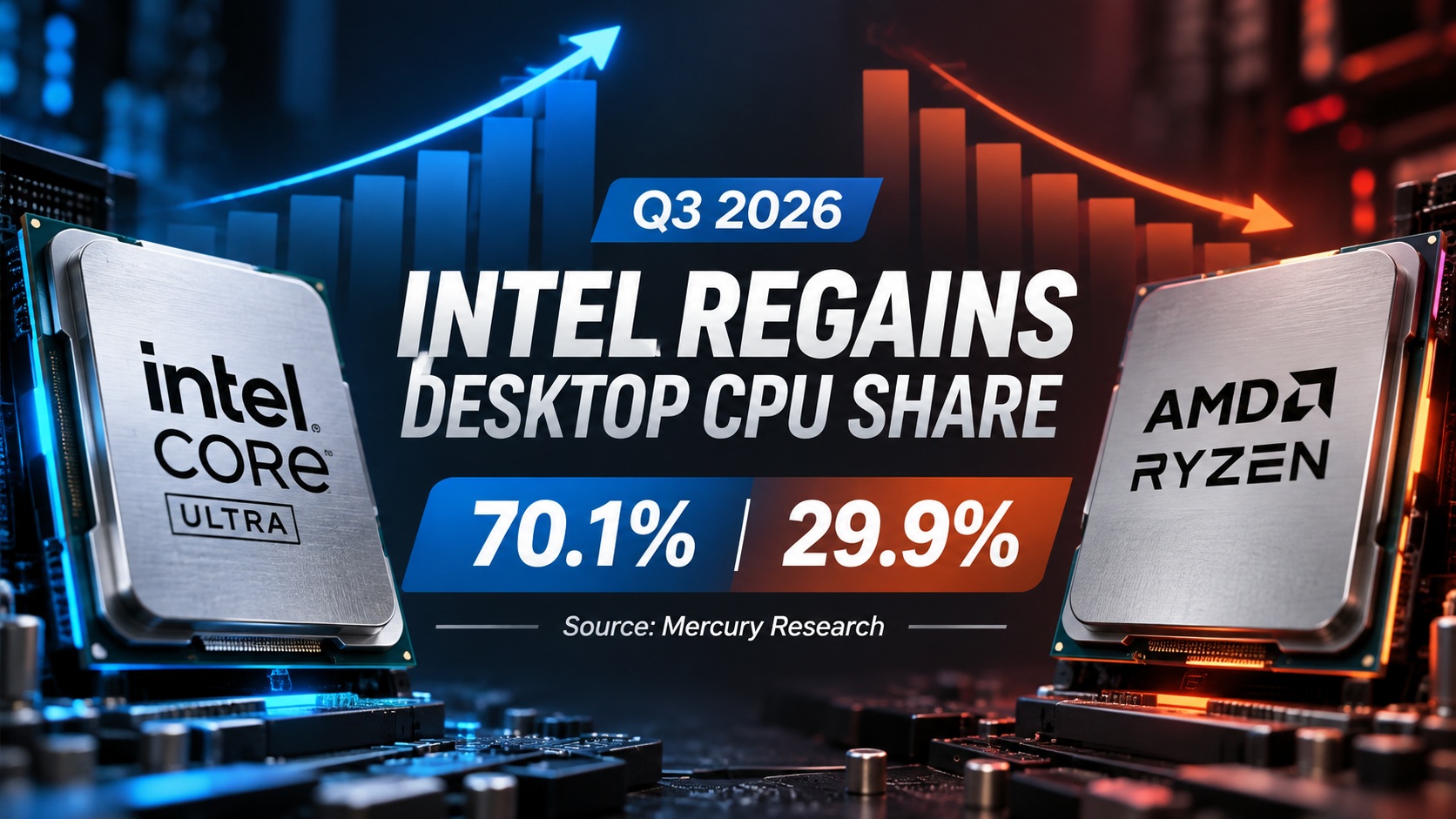
According to Q3 2026 data from Mercury Research, Intel’s desktop x86 CPU shipment share rose to 70.1%, up from 65.1% in the previous quarter. AMD, meanwhile, dropped from 34.9% to 29.9%. That represents a five-point swing in Intel’s favor in just one quarter, an impressive move in a market where AMD has been gaining momentum for years.
The shift is especially interesting because AMD has recently performed strongly across multiple CPU segments. Earlier in 2026, Intel’s overall x86 processor share had reportedly fallen to levels not seen in decades, while AMD continued making progress with Ryzen desktop chips, EPYC server processors, and its growing data center business.
So why did Intel suddenly gain ground in desktop CPUs?
One likely reason is supply. Mercury Research suggests Intel may have shifted more processor inventory toward the desktop market after seeing softer demand for mobile CPUs. The third quarter is typically a stronger period for desktop CPU shipments, and Intel appears to have been in a better position to respond to that seasonal demand.
In other words, Intel’s gain may have been driven less by a dramatic change in product preference and more by improved availability. If Intel had undersupplied the desktop channel earlier in the year, then Q3 may simply reflect a correction as more chips reached system builders, retailers, and distributors.
AMD, on the other hand, does not appear to have benefited from the same seasonal boost. That could be partly due to its stronger position in the enthusiast gaming segment. AMD’s Ryzen X3D processors remain highly popular among PC gamers thanks to their strong gaming performance, particularly in CPU-heavy titles. But the gaming PC market has faced pressure from several directions.
One major issue is graphics card availability and pricing. If gaming GPUs are expensive or hard to find, many buyers delay building or upgrading their PCs. Since AMD has a strong following among performance-focused desktop users and gamers, weaker demand for new gaming systems may have affected its desktop CPU shipments more heavily.
Memory prices may also be hurting the broader PC market. Rising DRAM costs can make full system upgrades more expensive, discouraging consumers from buying new desktop PCs or building custom rigs. Intel has also acknowledged that higher component costs, especially memory, have negatively affected client demand.
Interestingly, Intel’s desktop shipment share improved even though its client business was not exactly booming. The company’s Client Computing and Physical AI Group revenue declined 5% year over year in Q3 2026. That suggests Intel’s market share gain does not necessarily mean the desktop CPU market is suddenly thriving. It may simply mean Intel captured a larger slice of a difficult market.
AMD’s financial results tell a different story. The company is increasingly focused on the data center sector, where demand for AI and enterprise computing remains extremely strong. AMD reported record quarterly data center revenue of $8.5 billion, up 97% year over year. AMD CEO Lisa Su has also emphasized that the company is now “data center first,” making it clear where AMD sees its biggest long-term opportunity.
That focus appears to be paying off. While AMD lost ground in desktop CPU shipments during Q3 2026, it continued gaining share in server processors. AMD’s server CPU shipment share increased from 34.5% to 35.5%, showing that the company remains highly competitive in one of the most important and profitable areas of the processor market.
For consumers, the key takeaway is that shipment share does not always reflect real-world demand at the checkout counter. These figures measure CPUs shipped into the market, not necessarily processors purchased by end users. Intel’s desktop CPU rebound may reflect better supply positioning, seasonal trends, and weaker gaming PC demand rather than a major shift away from AMD Ryzen processors.
Intel’s Q3 2026 desktop market share gain is still important. Moving from 65.1% to 70.1% is a meaningful recovery, especially after AMD’s recent momentum. But it should not be viewed as proof that Intel has suddenly regained a clear performance lead in desktop gaming CPUs.
AMD remains strong in high-performance gaming with its Ryzen X3D lineup, continues to grow in server CPUs, and is seeing major success in data center and AI-related markets. Intel, meanwhile, has shown that it can still use supply strength and market timing to regain ground in the desktop processor space.
The desktop CPU battle between Intel and AMD is far from over. Q3 2026 shows that market share can shift quickly, especially when supply, pricing, and demand all move at once. For now, Intel has reclaimed a larger share of desktop x86 CPU shipments, while AMD continues to build strength in the server and data center markets that may shape the future of computing.