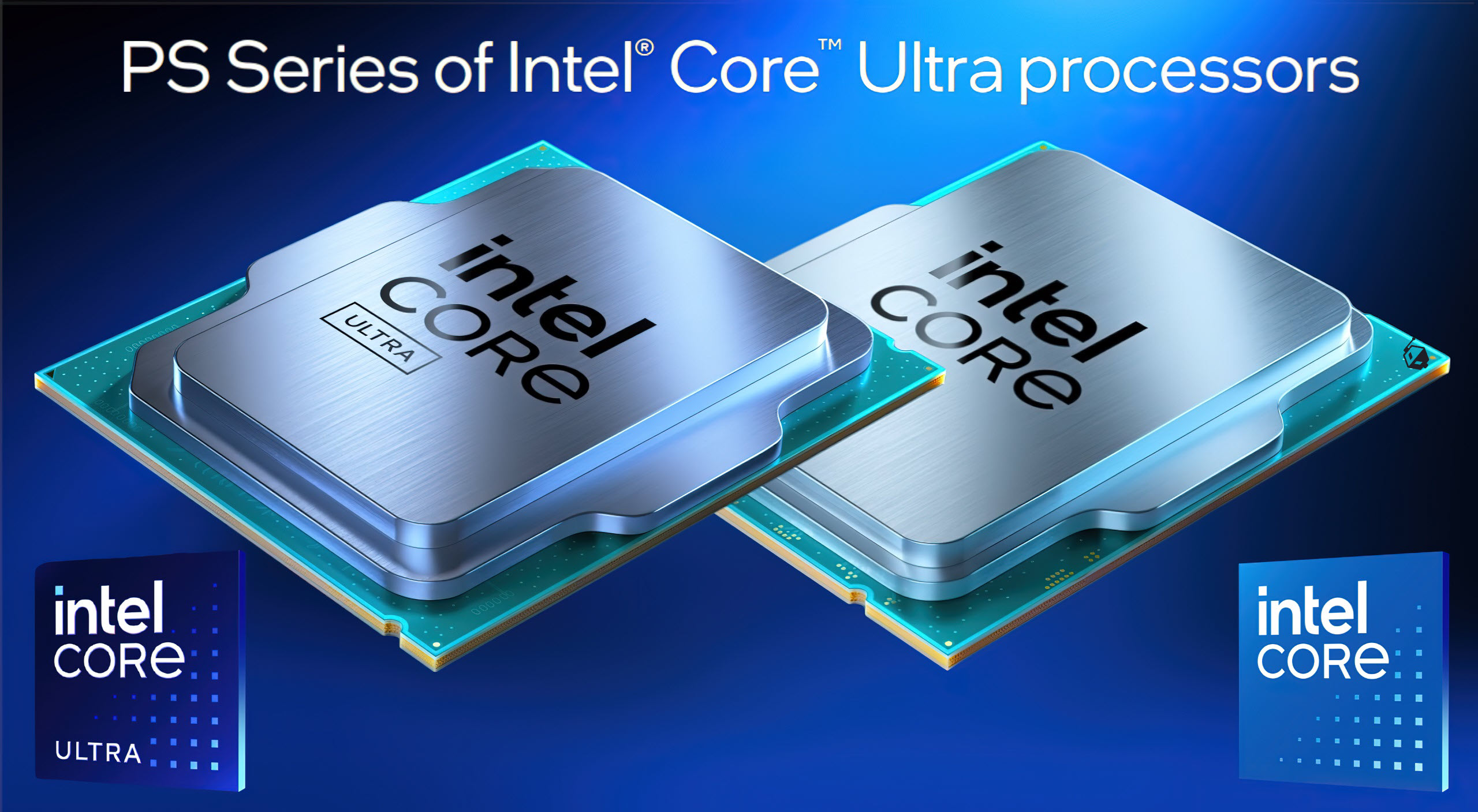
Intel has expanded its CPU offerings tailored for edge computing with the introduction of the Core Ultra “Meteor Lake PS” and the Core “Raptor Lake PS” chipsets. Based on the LGA 1851 and LGA 1700 socketed platforms respectively, these CPUs aim to cater to the growing AI workloads by incorporating Intel’s Arc integrated graphics processing units (iGPUs) and Intel AI Boost neural processing units (NPUs).
Intel Core Ultra “Meteor Lake PS” CPUs on LGA 1851
The Core Ultra “Meteor Lake PS” family features CPUs similar to those launched for mobile devices but with socketed variations exclusive to Intel’s LGA 1851 platform. This platform is set to be the foundation for future desktop CPUs like Arrow Lake. With configurations offering up to 16 cores and 22 threads, these CPUs are designed for performance-intensive tasks, boasting GPU performance up to 5.02 times faster and AI performance up to 3.13 times faster than their predecessors.
Performance Specifications for Intel Core Ultra “Meteor Lake PS”
The units range from high-performance CPUs like the Core Ultra 7 165HL with 16 cores, 22 threads, and a boost clock of 5.0 GHz to energy-efficient models like the Core Ultra 3 105UL with 8 cores, 10 threads, and a boost clock of 4.2 GHz. They feature Intel’s Alchemist Arc iGPUs with 8 Xe-cores, L3 cache amounts up to 24MB, and TDP ranges designed to accommodate various power requirements.
Intel Core “Raptor Lake PS” CPUs on LGA 1700
The “Raptor Lake PS” lineup, while using the LGA 1700 socket similar to the standard Raptor Lake-S series, offers improved integrated GPU capabilities. These CPUs claim up to 2.57 times faster graphics performance compared to the 13th Gen equivalents.
Performance Specifications for Intel Core “Raptor Lake PS”
From the top-tier Core 7 160HL with 14 cores and a 5.20 GHz boost clock to the entry-level Core 3 100UL with 6 cores and a 4.50 GHz boost clock, the Raptor Lake PS series CPUs support both DDR5-5200 and DDR4-3200 memories, with PCIe lane configurations to cater to various user requirements.
Intel’s Embedded Atom Processors x7000RE Series for Edge Computing
In addition to the aforementioned CPUs, Intel has introduced the new embedded Atom Processors x7000RE series, boasting significantly improved performance over the previous Atom x6000RE series. These Atom CPUs are tailored for edge computing platforms needing low power and efficient performance, with models offering up to 8 cores and impressive clock speeds for their category.
Intel Expands Arc GPUs to Edge Computing
Intel has also extended the Arc GPU lineup for edge computing, with six SKUs that update and optimize existing models for these new platforms. Although some VGA variants like the A750E and A580E are currently under planning, they are expected to include competitive features like high bandwidth and GDDR6 memory.
Availability and Upcoming Releases
The initial rollout will include the Raptor Lake PS and Atom CPU families, with the Core Ultra “Meteor Lake PS” CPUs slated for release in the second quarter of 2024. Meanwhile, the Intel Arc A-Series Desktop & Mobile GPUs for edge computing present a range of graphics solutions for different user needs and pricing segments, ensuring that edge computing enthusiasts and professionals have access to the latest technological advancements.
Intel is pioneering performance and power efficiency for AI and graphics-intensive tasks with its new CPU lines, and the computing world can expect more information and specifics about their release and capabilities as the release dates approach.