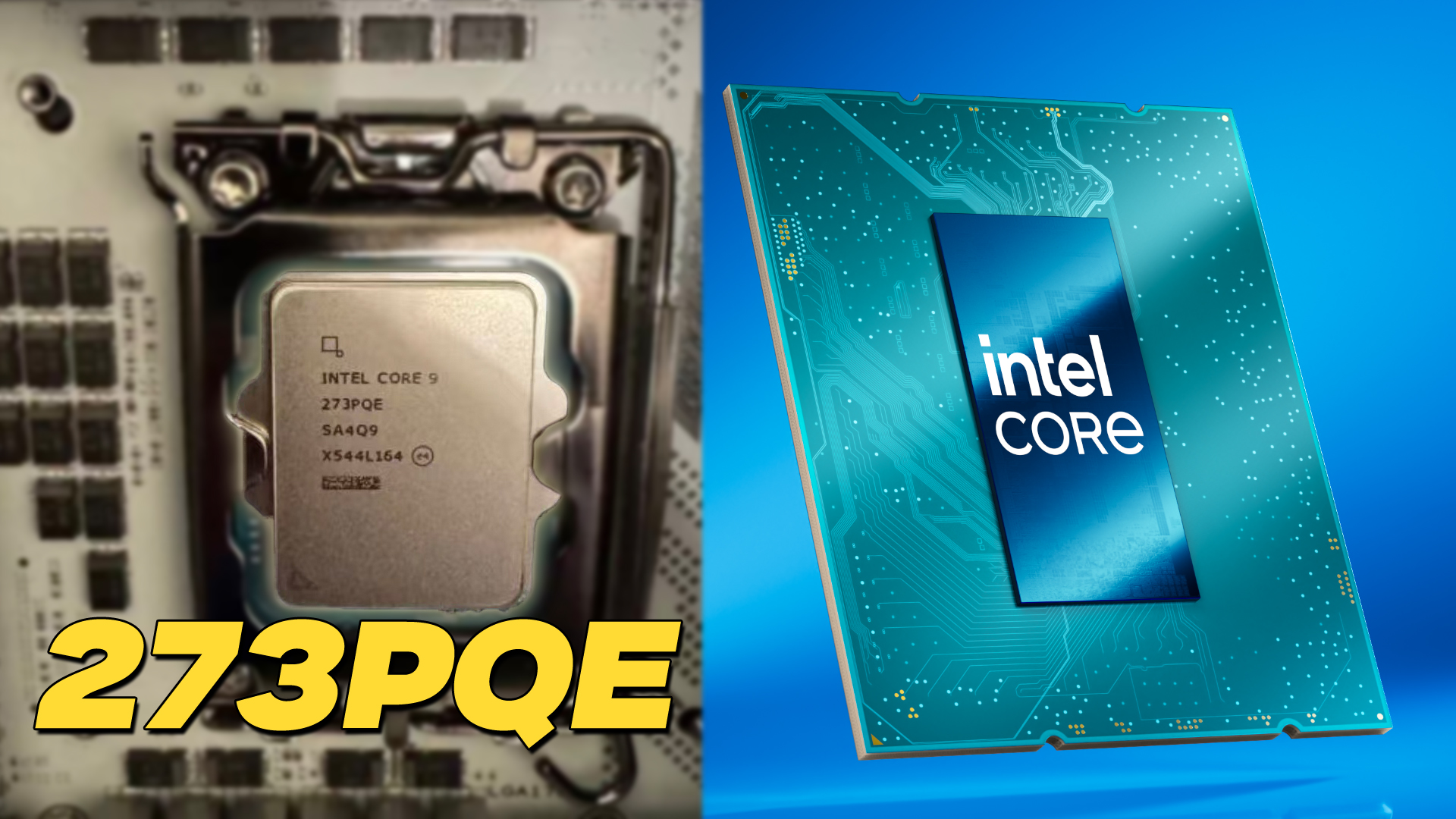
Intel’s Bartlett Lake CPUs are turning heads for an unexpected reason: even though they aren’t designed for everyday consumer PCs, one of these chips can edge out Intel’s top mainstream gaming processor in several popular titles.
The spotlight is on the flagship Bartlett Lake part known as the Core 9 273PQE, a rare 12 Performance-core (P-core) processor. Unlike Intel’s typical hybrid desktop design, this chip skips Efficient cores entirely and focuses only on P-cores. That makes it especially interesting for gaming comparisons, because higher-clocked performance cores are often the deciding factor in frame rates and responsiveness.
What makes this story even more unusual is that Bartlett Lake is aimed at the embedded market, not standard desktop buyers. Still, because it uses the LGA 1700 socket, enthusiasts have experimented with installing it on regular motherboards. The catch is that there’s no official motherboard BIOS support for these P-core-only CPUs, so getting one running on a consumer board requires a custom BIOS solution. It can be done, but it’s far from plug-and-play.
In gaming tests shared by German YouTuber Zed Up, the Core 9 273PQE was compared directly with Intel’s Core i9-14900K, the flagship Raptor Lake Refresh chip. The i9-14900K uses a hybrid layout with 8 P-cores and 16 E-cores, while the 273PQE relies on 12 P-cores. Both are built around the same general Performance core family, which makes the matchup especially relevant for anyone curious about how “more P-cores” might affect real-world gaming.
Results showed that the Bartlett Lake Core 9 273PQE can be faster, but not universally. In some games, it delivered up to around 9% higher performance, including titles like Shadow of the Tomb Raider and Outcast. In other games such as Horizon Zero Dawn and Monster Hunter Wilds, the lead was still noticeable, often landing in the 5–6% range. However, it didn’t win across the board—Counter-Strike 2 and Rainbow Six Siege were exceptions where the advantage wasn’t there.
Overall, the testing suggests a 12 P-core configuration can provide a tangible boost in many gaming workloads compared with an 8 P-core flagship that leans heavily on Efficient cores for multithreaded scaling. For gamers chasing maximum FPS in certain titles, Bartlett Lake’s approach looks surprisingly effective.
That said, there’s a major reason most people still shouldn’t treat Bartlett Lake as a “new gaming CPU to buy.” Since these processors are released for embedded use, availability is limited, and even if you manage to find one, the total platform cost can be higher once you factor in the extra effort and compatibility hurdles. Without easy, official motherboard support, the real-world value proposition tilts back toward standard 14th-gen desktop chips, which are far simpler to build with and typically offer better performance per dollar.
The takeaway: Bartlett Lake’s Core 9 273PQE shows that a P-core-only design can shine in gaming and even beat the Core i9-14900K in several titles—but unless you’re an experienced tinkerer willing to deal with custom BIOS work and higher overall costs, Intel’s mainstream desktop lineup remains the more practical choice.