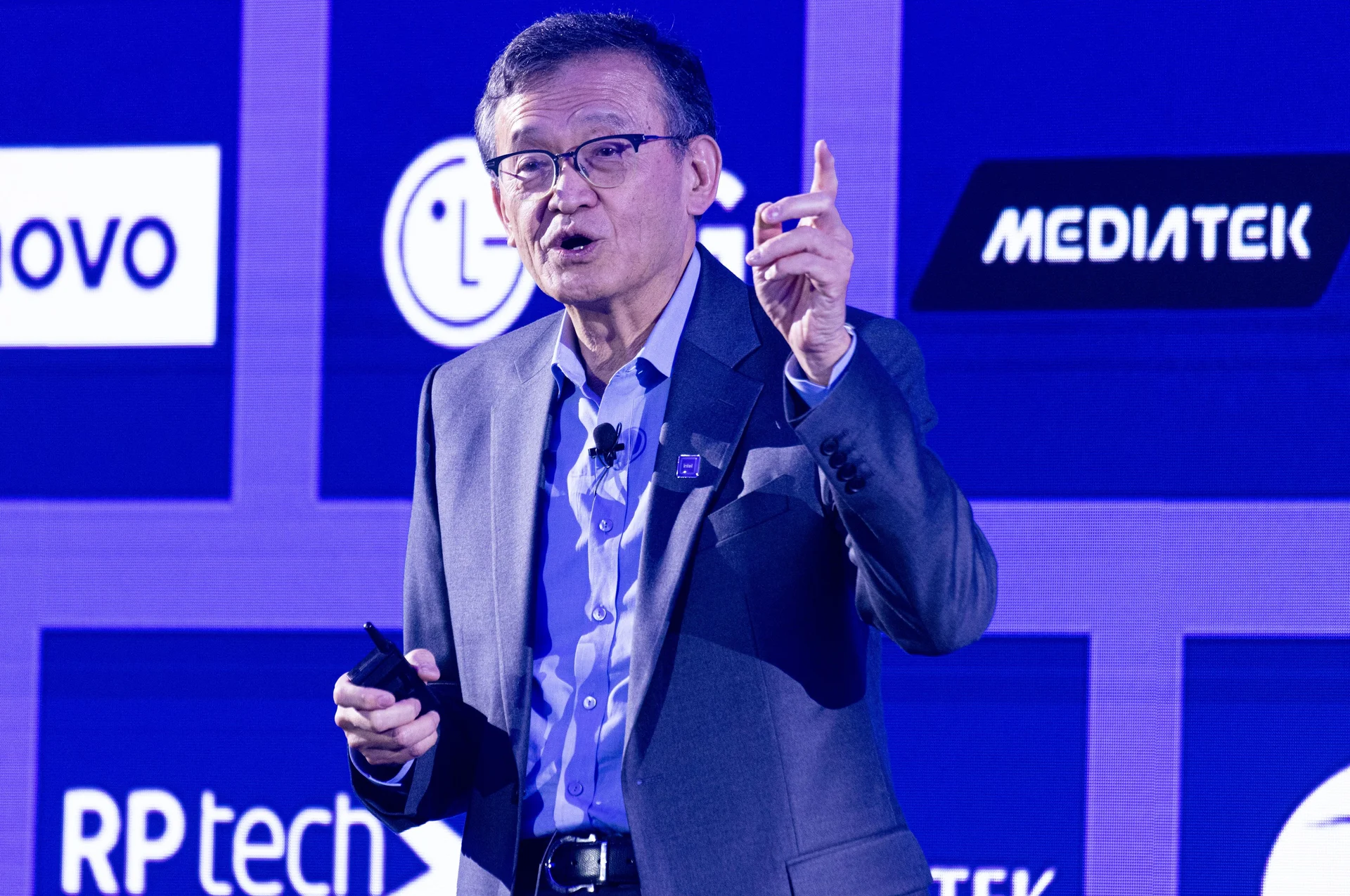
Intel CEO Lip-Bu Tan says quantum computing will only become a real business if it solves problems customers are willing to pay for. Speaking on the QuantumJane podcast, Tan discussed the future of quantum computing, his personal investments in the field, his use of agentic AI, and several advanced technologies he believes could shape the next era of semiconductors and data centers.
Tan said he has become a strong user of agentic AI, a form of artificial intelligence designed to act more independently than traditional chatbot-style AI. Instead of only answering questions, agentic AI can break tasks into steps, gather information, and carry out research with less human direction.
The Intel chief explained that he uses AI agents to “do all the homework” and checks their progress first thing in the morning. He described the tools as “amazing,” adding that they reduce the need for multiple assistants when he is researching complex topics.
Agentic AI has also become an important theme for Intel. Tan has previously expressed optimism that AI agents could help drive demand for CPUs as companies continue building out AI infrastructure. While much of the AI boom has centered on GPUs, agentic AI workloads may increase the need for broader computing resources across data centers.
A major part of the conversation focused on quantum computing, an area Tan has followed not just as a technology executive but also as a personal investor. He revealed that some of his investments in quantum computing companies were made with his own money rather than through a venture capital fund.
One of his earliest investments in the sector was IonQ, a company focused on trapped ion quantum computing. Unlike some quantum systems that rely on artificial qubits, IonQ uses naturally occurring atoms as qubits, suspended in a vacuum. The company works with ytterbium atoms, using lasers to turn neutral atoms into positively charged ions by removing an electron.
The advantage of this approach is stability. IonQ believes trapped ions can hold their quantum states for longer periods, making it possible to perform more complex calculations. The company also argues that its method can reduce cooling requirements and lower the number of logic gates needed to complete certain operations.
Tan said the idea caught his attention after IonQ’s founder reached out to him. Because he was unsure what kind of returns the company might deliver, he chose to invest personally. After IonQ went public, Tan sold half of his position but said he still follows the company’s progress closely.
Tan also discussed PsiQuantum, another quantum computing company using a very different approach. Instead of trapped ions, PsiQuantum uses photons, or particles of light, as qubits. The company’s strategy is closely tied to silicon photonics and traditional semiconductor manufacturing methods, making it especially interesting in the context of chip production.
Photon-based quantum computing could offer several advantages. It can enable data transfer through fiber, reduce the need for signal converters, and operate faster than trapped ion systems in certain areas. While some parts of the system, such as photon detectors, still require cryogenic cooling, the broader architecture could be more scalable.
Tan said photons allow better control over direction and position and can make networking more effective. He also sees the approach as highly scalable, which influenced his decision to invest in PsiQuantum and later join its board after Victor Peng, the former CEO of Xilinx, became the company’s permanent CEO.
However, Tan’s main message was clear: quantum computing cannot succeed on technology alone. The industry needs practical applications and real market demand.
He emphasized that scaling quantum computing depends on identifying the right use cases. In his view, the companies most likely to succeed will be those that understand their target customers and can solve valuable problems in sectors such as chemistry, medicine, and advanced materials.
On the software side, Tan highlighted an Israeli quantum software engineering company that aims to become a major design platform for quantum computing. He praised its focus on customer needs and its work across industries where quantum computing could eventually deliver meaningful advantages.
He also pointed to the importance of hybrid computing, where classical computers and quantum systems work together. This model is widely seen as one of the most realistic paths forward, since quantum computers are unlikely to replace traditional computers outright. Instead, they may be used to accelerate specific workloads that are difficult or inefficient for classical systems.
Beyond quantum computing and AI, Tan named several emerging technologies he believes could become important as conventional semiconductor scaling faces new limits.
One of them is silicon carbide, a material already gaining momentum in power electronics because it can handle higher voltages and temperatures than traditional silicon. Another is indium phosphide, which is important for high-speed optical and communication technologies. As CMOS technology approaches physical and performance limitations, materials like these could play a bigger role in next-generation chips.
Tan also expressed interest in microfluidic cooling, a technology that could become critical as AI data centers consume more power and generate more heat. Instead of cooling chips from the outside, microfluidic cooling brings liquid directly closer to the heat source by etching microscopic channels into the chip or package. This could dramatically improve thermal performance compared with conventional cooling techniques.
Artificial diamonds were another technology on Tan’s list. Synthetic diamond materials have exceptional thermal conductivity and strong electrical breakdown resistance, making them attractive for advanced semiconductor applications. As chips become more powerful and heat becomes harder to manage, diamond-based materials could help improve performance and reliability.
Tan’s comments show a broad view of where computing is headed. He sees agentic AI as a near-term productivity tool and a driver of infrastructure demand. He views quantum computing as promising but dependent on real-world applications. And he believes future breakthroughs in semiconductors may come not only from smaller transistors, but also from new materials, better cooling, and hybrid computing architectures.
For Tan, the key lesson is simple: advanced technology must connect to real market needs. Whether it is quantum computing, AI, silicon photonics, microfluidic cooling, or artificial diamonds, the winners will be the companies that turn scientific progress into practical solutions customers actually need.