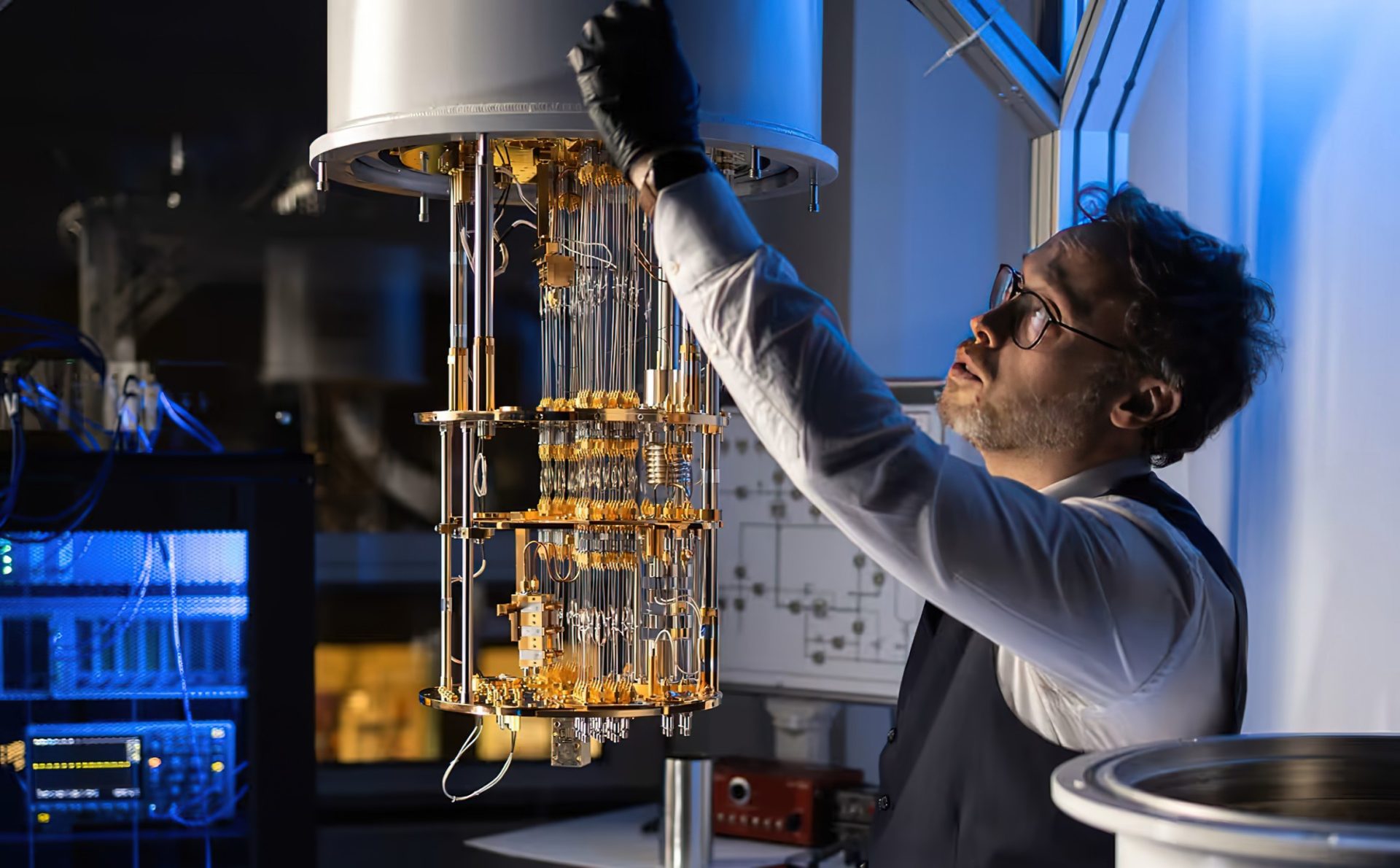
Quantware is making an ambitious push to redefine what’s possible in quantum computing, and it’s getting serious backing to do it. The company has raised $176 million (€152 million) in a Series B funding round to accelerate work on what it describes as the world’s most powerful quantum processor, while also expanding manufacturing in a big way to meet rising demand.
A key part of this announcement is Quantware’s next-generation design, the VIO-4K quantum processor. Built on the company’s proprietary VIO architecture, VIO-4K is designed to scale up to 10,000 qubits. That’s a massive leap—about 100 times larger than many of today’s leading state-of-the-art quantum systems—positioning Quantware as one of the most aggressive players aiming for practical, large-scale quantum computing.
The funding round brought in major new investors, including Intel Capital, In-Q-Tel, and ETF Partners, joining existing supporters such as FORWARD.one, Invest-NL Deep Tech Fund, Innovation Quarter Capital, Ground State Ventures, and Graduate Ventures. The mix of strategic and deep-tech investors signals strong confidence in Quantware’s roadmap and its approach to building scalable quantum hardware.
Alongside the processor effort, Quantware is launching KiloFab, described as the world’s largest dedicated quantum open architecture fabrication facility. The goal is straightforward: scale production dramatically. Quantware expects KiloFab to increase its production capacity by 20 times, helping it keep pace with strong global customer demand as more organizations move from quantum research toward real-world experimentation and deployment.
Quantware’s origins trace back to researchers from QuTech, and it has grown into a leading supplier of commercially available quantum processing units (QPUs). Unlike many quantum efforts that remain largely experimental, Quantware emphasizes industrial-scale hardware production, with a strong footprint in Europe and an increasing international customer base.
What makes the VIO-4K strategy especially notable is its emphasis on openness and scalability. Quantware highlights an open platform approach that can scale qubit “chiplets” and support third-party designs, allowing partners and customers to build on top of the VIO ecosystem rather than being locked into a closed, single-vendor stack. That ecosystem includes Quantware’s own QPUs, foundry services, and chiplet packaging—components meant to speed up development and make it easier to build larger, more capable quantum systems over time.
Quantware also claims VIO-4K won’t just be larger—it’s targeting leadership in efficiency as well. The company says the new processor is designed to be both extremely fast and highly power-efficient, aiming for the most compute per watt compared to other quantum processors.
The traction is already there. Quantware says it has shipped to more than 50 customers across 20 countries, making it the largest commercial QPU supplier by volume. With the VIO-4K roadmap and expanded manufacturing through KiloFab, the company expects demand to grow further—especially as the quantum computing market shifts toward scalable architectures that can support the next wave of applications.
Quantware is targeting availability of its first VIO-4K 10,000-qubit processors by 2028, a timeline that—if met—could significantly accelerate adoption and experimentation across industries working toward the quantum computing era.


