IBM says it has cleared a major hurdle on the path to practical quantum computing: a key quantum error-correction algorithm now runs on standard AMD hardware—and does so up to 10 times faster than the target performance. That matters because error correction is the bridge between today’s noisy machines and tomorrow’s fault-tolerant quantum computers that can tackle real-world problems.
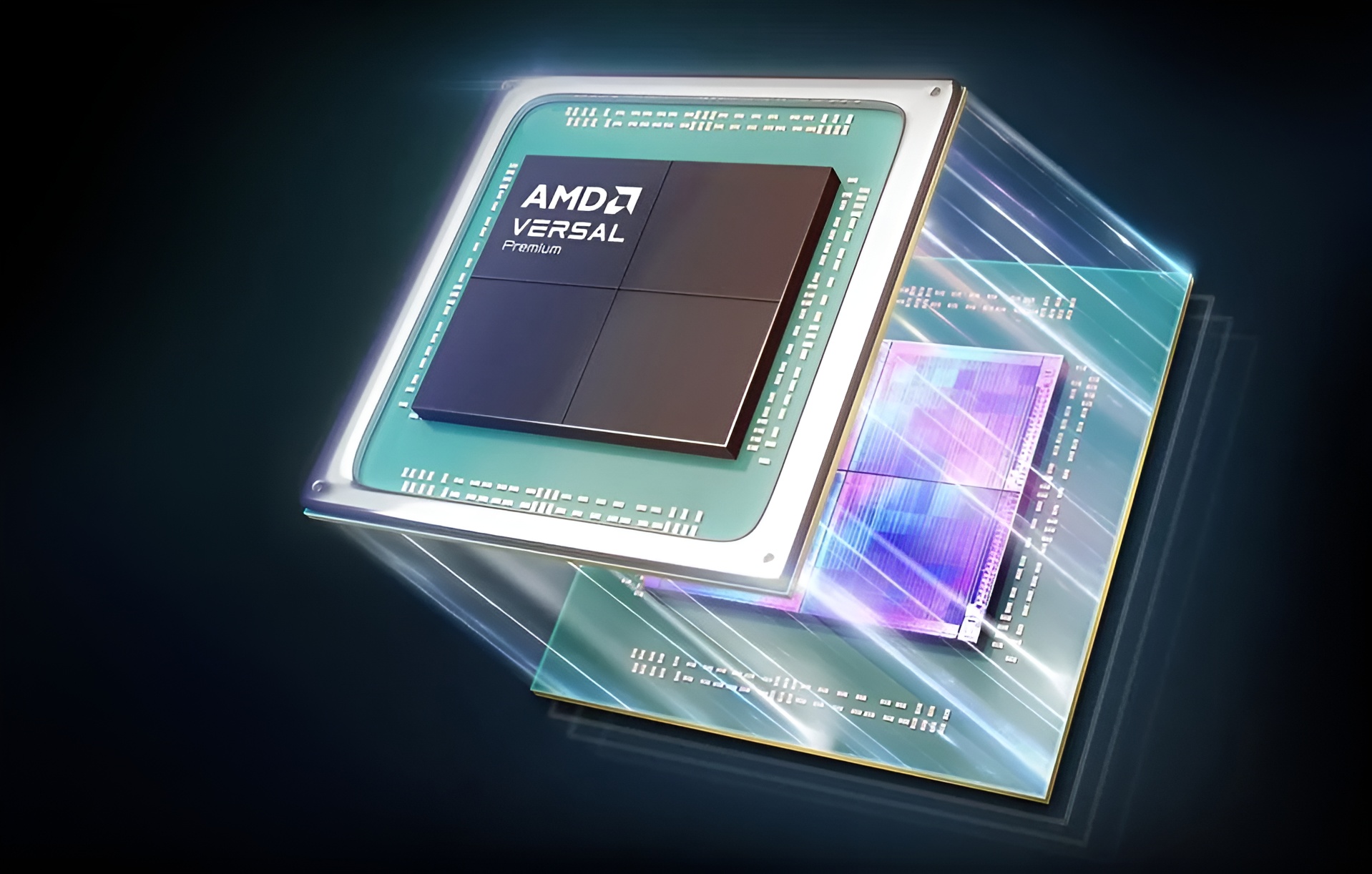
At the heart of the advance is an AMD FPGA, a reconfigurable chip known for ultra-low latency and deterministic control. Those traits are exactly what quantum systems need. Qubits are extraordinarily sensitive to their environment—tiny vibrations, thermal fluctuations, or electromagnetic noise can nudge them off course. Quantum error correction continuously detects and corrects those tiny missteps without collapsing the fragile quantum state, but to work, it requires lightning-fast feedback loops. FPGAs excel here: they can be tuned to the task, run with minimal overhead, and deliver the real-time responsiveness qubits demand.
IBM’s research lead, Jay Gambetta, noted that the algorithm isn’t just a lab curiosity. It runs on readily available AMD hardware rather than exotic, custom chips—underscoring that practical quantum control can be built on commodity components. That’s a big deal for scalability and cost. Shifting portions of the classical control stack—data ingestion, decoding, and correction signaling—to off-the-shelf silicon reduces the need for specialized controllers and opens the door to faster iteration and wider adoption.
Why this is a breakthrough for error correction
– Qubits differ from classical bits: they can exist in superpositions, gaining computational power but also extreme fragility.
– Quantum error correction (QEC) preserves information by detecting and correcting errors in real time, enabling stable “logical” qubits built from many physical qubits.
– The challenge is latency. If the system can’t sense and fix errors quickly, noise wins. FPGAs provide the low-latency, high-throughput control logic QEC needs.
What makes AMD’s platform a fit
– Reconfigurable logic enables custom pipelines tuned to specific QEC codes and decoders.
– Deterministic timing ensures corrective signals arrive when they matter most.
– Availability and cost advantages turn a niche, bespoke control problem into something that can leverage mainstream hardware and supply chains.
How this compares with other approaches
The broader industry is exploring multiple routes to classical-quantum control. Some vendors focus on GPU-centric stacks and comprehensive software frameworks for quantum workloads. Those platforms can drive high throughput for simulation, compilation, and some decoding tasks. AMD’s result highlights a complementary path: using FPGAs—bolstered by its acquisition of Xilinx—to nail the ultra-low-latency control loops that physical qubits demand. The differentiator here isn’t just raw speed; it’s achieving reliable QEC on widely available, non-specialized hardware.
Why it matters for the next wave of quantum progress
This demonstration is a step toward fault-tolerant quantum computing, where logical qubits remain stable long enough to run useful algorithms. By proving that high-performance QEC can run on commodity chips, IBM and AMD are signaling that the classical side of quantum systems can scale without waiting for expensive, one-off controllers. That could accelerate:
– Integration of larger qubit arrays with tighter feedback control
– Deployment of standard toolchains for QEC decoding and scheduling
– Hybrid systems that blend FPGAs, CPUs, and GPUs for different parts of the quantum control stack
– Faster iteration cycles as hardware and software co-design evolve in tandem
What to watch next
– Scaling from single or few-qubit demonstrations to large logical qubits with surface codes
– Benchmarks that compare different decoders and hardware back ends under realistic noise models
– Tooling that lets quantum developers target FPGAs with high-level languages and compilers
– Interoperability across control stacks so labs and data centers can mix and match hardware
Quantum computing is arriving alongside an AI boom, and the two fields will increasingly intersect. As quantum processors grow, the classical infrastructure that surrounds them—data movement, calibration, decoding, and scheduling—will look more like a heterogeneous compute problem spanning FPGAs, GPUs, and CPUs. This milestone suggests that the classical side can ride mainstream silicon roadmaps, while quantum hardware focuses on stability and scale.
Bottom line: running quantum error correction at up to 10x the target performance on AMD’s off-the-shelf FPGAs is more than a speed record. It’s a validation that practical, affordable, and scalable control for quantum systems is within reach—and that the path to fault tolerance can leverage the best of today’s conventional computing hardware.