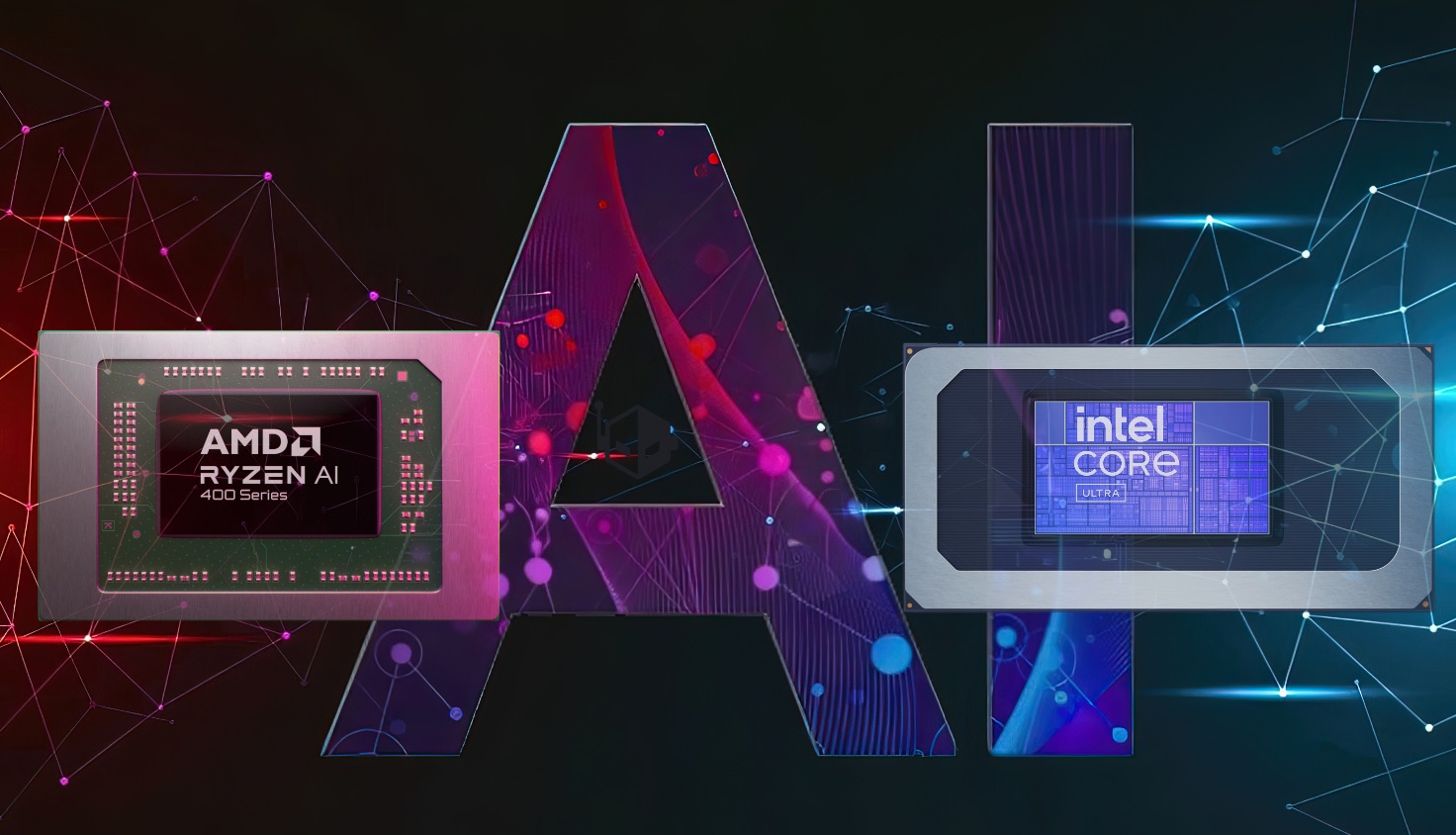
Intel and AMD are reportedly moving to secure long-term CPU supply agreements with Chinese data center companies as demand for AI computing hardware continues to accelerate. The deals are said to focus on guaranteeing chip volumes rather than locking in fixed prices, reflecting growing concern in China over tight server CPU supply and rising costs.
The shift highlights a major change in the artificial intelligence hardware market. While GPUs have dominated AI headlines for years, CPUs are becoming increasingly important again, especially as agentic AI workloads gain momentum. These systems often require strong central processors to coordinate tasks, manage data flow, and act as the control layer across complex AI infrastructure.
According to the report, Intel and AMD are expected to cover up to a year of CPU supply for several Chinese AI data center operators. Some agreements could extend for two years or longer, showing how urgently companies are trying to secure access to server processors amid rising demand.
CPU prices in China have reportedly climbed sharply this year. Certain server CPU products are said to be up around 40% year-to-date, with some showing annual increases of about 10%. That price movement has pushed Chinese firms to pursue longer-term supply arrangements with major chipmakers instead of relying only on short-term purchasing.
The demand comes at a time when advanced AI GPUs face tighter export scrutiny from the U.S. government. With access to some high-end accelerators becoming more complicated, data center companies are placing greater emphasis on CPUs that can support AI infrastructure, scheduling, orchestration, and general compute needs.
Intel and AMD have also been preparing their x86 CPU platforms for the next phase of AI computing. In 2024, the two companies formed an advisory group focused on strengthening x86 architecture for modern AI workloads. In 2025, they outlined several technical milestones, including FRED, AVX10, ChkTag, and ACE.
ACE, short for Advanced Matrix Extensions, is especially important for artificial intelligence. The technology is designed to improve matrix multiplication performance, a core operation used in AI models and machine learning workloads. By enhancing how CPUs handle these calculations, Intel and AMD aim to make server processors more capable in AI-driven environments.
This does not mean CPUs are replacing GPUs in AI data centers. Instead, the industry appears to be moving toward a more balanced infrastructure model. GPUs and accelerators remain vital for heavy AI training and inference, but CPUs are increasingly seen as the backbone that coordinates the entire system.
Intel CEO Lip-Bu Tan recently emphasized this shift, noting that high-performance computing has been heavily centered on GPUs and accelerators in recent years. However, he said the CPU is now re-emerging as a critical foundation for the AI era, serving as the orchestration layer and control plane across the AI stack.
Tan also pointed to strong demand for Intel’s Xeon server processors, suggesting that customers are once again viewing CPUs as essential components in large-scale AI deployments.
For AMD, the opportunity is similarly significant. The company has built strong momentum in the data center market with its EPYC server CPUs, and rising AI infrastructure demand could further strengthen its position. As Chinese data centers expand capacity, both AMD and Intel are positioned to benefit from the growing need for reliable, high-performance server processors.
The reported supply agreements show how quickly the AI hardware market is evolving. What began as a race for GPUs is now expanding into a broader competition for compute resources, including CPUs, memory, networking, and storage. As AI workloads become more complex and autonomous, data centers need processors that can manage massive coordination tasks efficiently.
For Chinese AI companies, locking in server CPU supply could be a strategic move to avoid shortages and manage future expansion. For Intel and AMD, these agreements could provide stable demand and reinforce the importance of x86 CPUs in the global AI computing market.
The renewed focus on CPUs suggests that the next stage of artificial intelligence infrastructure will not be defined by one type of chip alone. Instead, AI data centers will likely depend on a tightly integrated mix of CPUs, GPUs, and specialized accelerators, with Intel and AMD competing to supply the processors that keep those systems running.