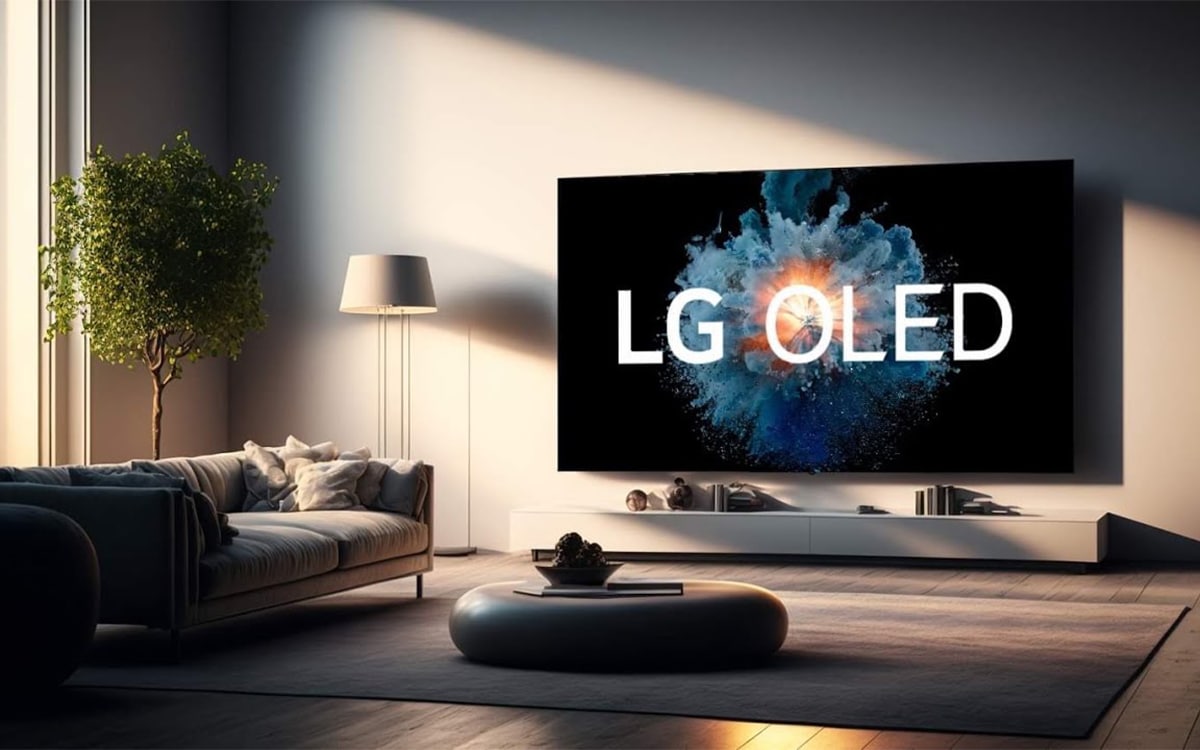
LG has made significant strides in improving the brightness and efficiency of OLED technology through the introduction of a novel Two-Stack Tandem structure aimed at enhancing Blue OLED panels. OLED panels, widely acclaimed for their superior image quality, infinite contrast, and swift response times, have long battled with achieving high levels of brightness—an area where traditional LCDs have maintained dominance. With this advancement, LG addresses one of the most prevalent issues associated with even the highest quality OLED displays.
The latest development from LG, as revealed by a Korean news outlet, revolves around combining both phosphorescent and fluorescent materials within the Two-Stack Tandem structure for Blue OLEDs. This key innovation targets the fundamental challenges of low brightness and efficiency that have hindered OLED technology.
Unlike red and green OLEDs that are more efficiently produced using phosphorescent materials, blue OLEDs have historically been at a disadvantage due to their need to rely on fluorescent materials. These fluorescent materials are inherently less efficient, about four times less so compared to their phosphorescent counterparts, leading to higher energy consumption and lower brightness outputs.
The Blue OLED, challenged by its shorter wavelength, has now been enhanced by LG’s approach to integrate both phosphorescent and fluorescent materials, thereby significantly extending lifespan, while concurrently boosting brightness and efficiency. Phosphorescent materials can convert almost 100% of electrical power into light, a stark contrast to fluorescent materials which only manage to turn about 25% of power into visible light—leading to weak brightness and more rapid degradation.
With this two-stack tandem structure, originally developed by the company in 2019 initially for the automotive sector, LG has achieved what industry experts hail as the final step in perfecting OLED technology. This innovation is poised to play a pivotal role in manufacturing more power-efficient and brighter OLED panels.
The promising implication of LG’s breakthrough is not just limited to visuals. It is anticipated that this technological leap will improve the battery life of mobile devices featuring OLED displays by an estimated 10-20%. It also offers an alternative to quantum dot layers, which, while enhancing light output, don’t address efficiency and reliability concerns as effectively.
The industry eagerly anticipates LG’s plans to conduct an annual performance assessment geared toward the mass production of this advanced OLED panel, with the potential for full-scale product implementation in the near future. This significant advancement suggests a brighter, more efficient future for OLED panels, thus enhancing the viewing experience for users worldwide.