InnoGrit Unveils PCIe Gen6 SSD Controller for AI, Data Centers, and Enterprise Storage
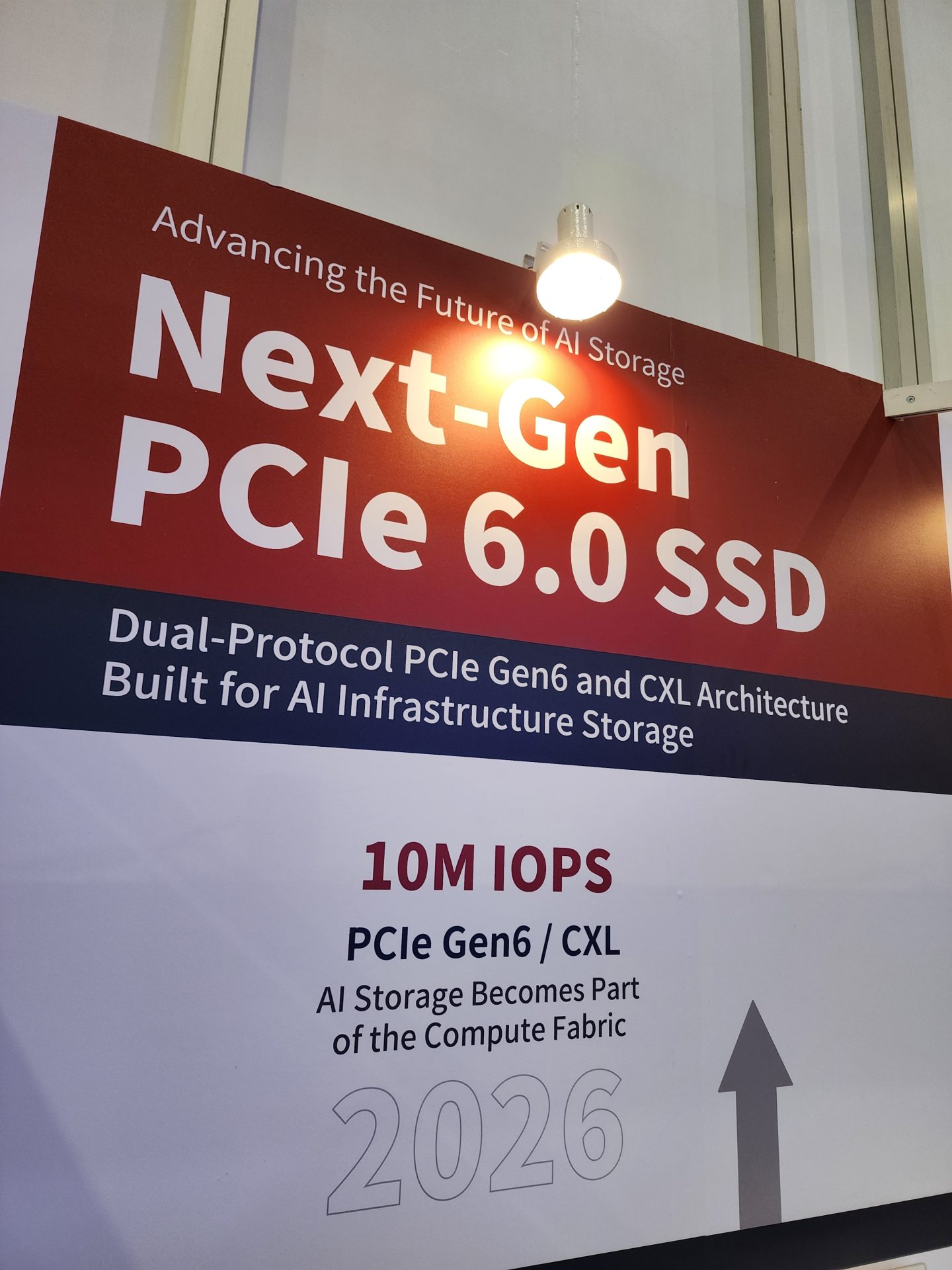
Chinese storage controller maker InnoGrit is stepping deeper into the next-generation SSD market with the reveal of its first PCIe Gen6 SSD controller. The new controller, known as Crestone IG5686, is designed for high-performance enterprise storage, large-scale data centers, and demanding AI workloads where speed, capacity, and low latency are becoming increasingly critical.
The announcement highlights China’s growing push into advanced storage technology, especially as PCIe Gen6 and future PCIe Gen7 SSDs begin to take shape for enterprise platforms. While consumer PCs are still largely focused on PCIe Gen4 and PCIe Gen5 drives, data center customers are already preparing for the next major leap in SSD performance.
InnoGrit’s Crestone IG5686 PCIe Gen6 controller targets enterprise-class SSDs with PCIe Gen6 x4 connectivity and support for the NVMe 2.3 standard. The controller is built to deliver up to 28 GB/s sequential read speeds and up to 22 GB/s sequential write speeds, making it significantly faster than today’s mainstream PCIe Gen5 SSD solutions.
Random performance is also a major focus. InnoGrit claims the IG5686 can reach up to 7 million random read IOPS and up to 5 million random write IOPS. These numbers are aimed at workloads such as AI training, AI inference, database acceleration, cloud computing, and high-throughput storage environments.
One of the biggest highlights is capacity. SSDs using the Crestone IG5686 controller are expected to support up to 256 TB of storage, placing them firmly in the enterprise and hyperscale data center category. The controller supports SLC, MLC, TLC, and QLC NAND, as well as storage-class memory, giving manufacturers flexibility to build drives that prioritize endurance, speed, density, or cost efficiency.
InnoGrit also says the controller supports NAND speeds of up to 4800 MT/s. This is important because faster NAND interfaces are necessary to fully take advantage of the bandwidth offered by PCIe Gen6. Without faster NAND, SSDs would struggle to reach the high sequential and random performance numbers promised by the new interface.
The PCIe Gen6 SSDs powered by this controller are expected to appear primarily in E1.S and E3.S form factors. These compact, data-center-focused designs are increasingly popular because they offer high density, better cooling potential, and efficient deployment in modern server racks.
Alongside the Crestone IG5686, InnoGrit also introduced details about another controller called Cascade IG5676. This controller is designed for CXL 3.1 Type-3 devices and focuses on memory expansion and low-latency storage applications. It supports high-speed XL-FLASH as storage-class memory and offers up to 2 TB of capacity.
The Cascade IG5676 is positioned as a cost-effective solution for systems that need fast memory-like storage without the higher cost of traditional DRAM expansion. As CXL adoption grows in servers and AI infrastructure, controllers like this could become increasingly important for balancing performance, capacity, and cost.
InnoGrit’s roadmap also gives a glimpse of where enterprise storage may be heading over the next few years. By 2027, the company expects to reach performance levels between 25 million and 50 million IOPS through further PCIe Gen6 and CXL optimization. These advances are expected to support large-scale AI inference clusters and long-context AI workloads, both of which require extremely fast access to massive amounts of data.
By 2028, InnoGrit aims to push storage performance even further, targeting up to 100 million IOPS. That level of performance would be aimed at what the company describes as AI-native storage architectures, where storage is built specifically around the needs of artificial intelligence systems rather than traditional server workloads.
Despite the excitement around PCIe Gen6 and future PCIe Gen7 SSDs, these technologies are still far away from mainstream consumer systems. PCIe Gen6 SSDs are expected to appear first in enterprise and data center environments, where the need for extreme bandwidth and high IOPS justifies the cost and complexity.
For regular desktop and laptop users, PCIe Gen6 SSDs are unlikely to become common for several more years. Consumer platforms may not see widespread PCIe Gen6 SSD adoption until around 2029 or 2030. Until then, PCIe Gen5 drives will remain the high-end option for PC enthusiasts, gamers, creators, and workstation users.
InnoGrit is entering a competitive and fast-moving market. Major storage companies are already preparing their own PCIe Gen6 SSD solutions, and the enterprise storage race is heating up as AI and cloud workloads continue to expand. With the IG5686 controller, InnoGrit is signaling that it wants to be a serious player in the next wave of ultra-fast SSD technology.
The rise of PCIe Gen6 storage will not only improve raw SSD speeds but also reshape how data centers handle AI, real-time analytics, high-performance computing, and memory expansion. If InnoGrit can deliver on its performance goals, its next-generation controllers could play a meaningful role in the future of enterprise SSDs and AI-focused infrastructure.