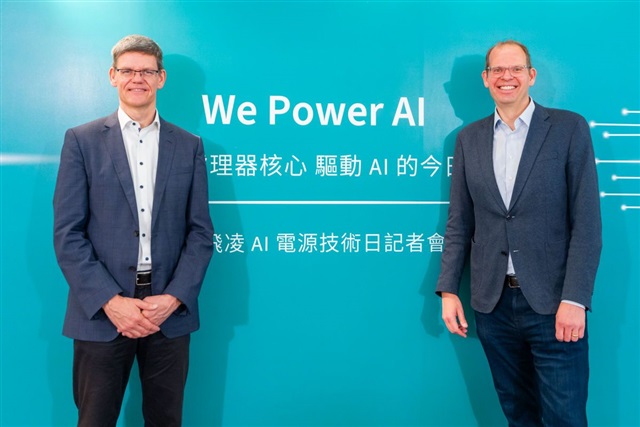
Infineon is doubling down on one of the biggest bottlenecks in the AI boom: power. This week in Taipei, the company hosted its “We Power AI” event, marking the second year in a row it has staged a large-scale forum in Taiwan centered on power technologies designed specifically for AI data centers.
The message from the event was clear: as AI servers grow more powerful, the infrastructure behind them has to evolve just as fast. Modern AI workloads don’t just demand faster chips and more memory; they require far more electricity, more efficient conversion of that electricity, and better ways to manage heat and energy loss across the entire data center stack. That puts power semiconductors—components that control, convert, and deliver electricity—right at the center of next-generation AI infrastructure.
Infineon used the Taipei gathering to spotlight how the “power content” inside AI data centers is rising quickly. As AI computing expands, the value of power semiconductor components per kilowatt of delivered power is expected to increase, reflecting the growing complexity of power delivery, tighter efficiency requirements, and the push to reduce operating costs and emissions. In other words, boosting performance in AI data centers increasingly depends on smarter, more advanced power electronics—not just bigger power supplies.
Adam White, President of Infineon’s Power & Sensor Systems division, was among the leaders outlining the company’s focus on enabling efficient, scalable AI infrastructure. The event emphasized the need for end-to-end innovation, from the grid connection and power distribution systems to server power units and the advanced semiconductor technologies that help reduce energy loss at each step.
Why does this matter to the broader tech world? Because energy is becoming one of the defining constraints of AI growth. Data center operators are under pressure to expand capacity while keeping electricity costs manageable and meeting sustainability targets. Every improvement in power conversion efficiency can translate into significant savings when scaled across thousands of servers running around the clock. That’s why solutions built around advanced power semiconductors are drawing increased attention as AI adoption accelerates.
By hosting “We Power AI” in Taiwan for the second consecutive year, Infineon is also signaling how strategically important the region is to the future of AI infrastructure and the global semiconductor ecosystem. Taiwan remains a central hub for hardware innovation and supply chains, and events like this create a platform for collaboration around the power technologies that will shape the next era of AI data centers.
As AI demand continues to surge, the race won’t be won by compute alone. The companies that can deliver more performance per watt—and help data centers scale without power becoming a hard limit—will play a major role in what the AI future looks like. Infineon’s Taipei event underscored that power electronics are no longer background components; they’re becoming a primary driver of AI scalability.