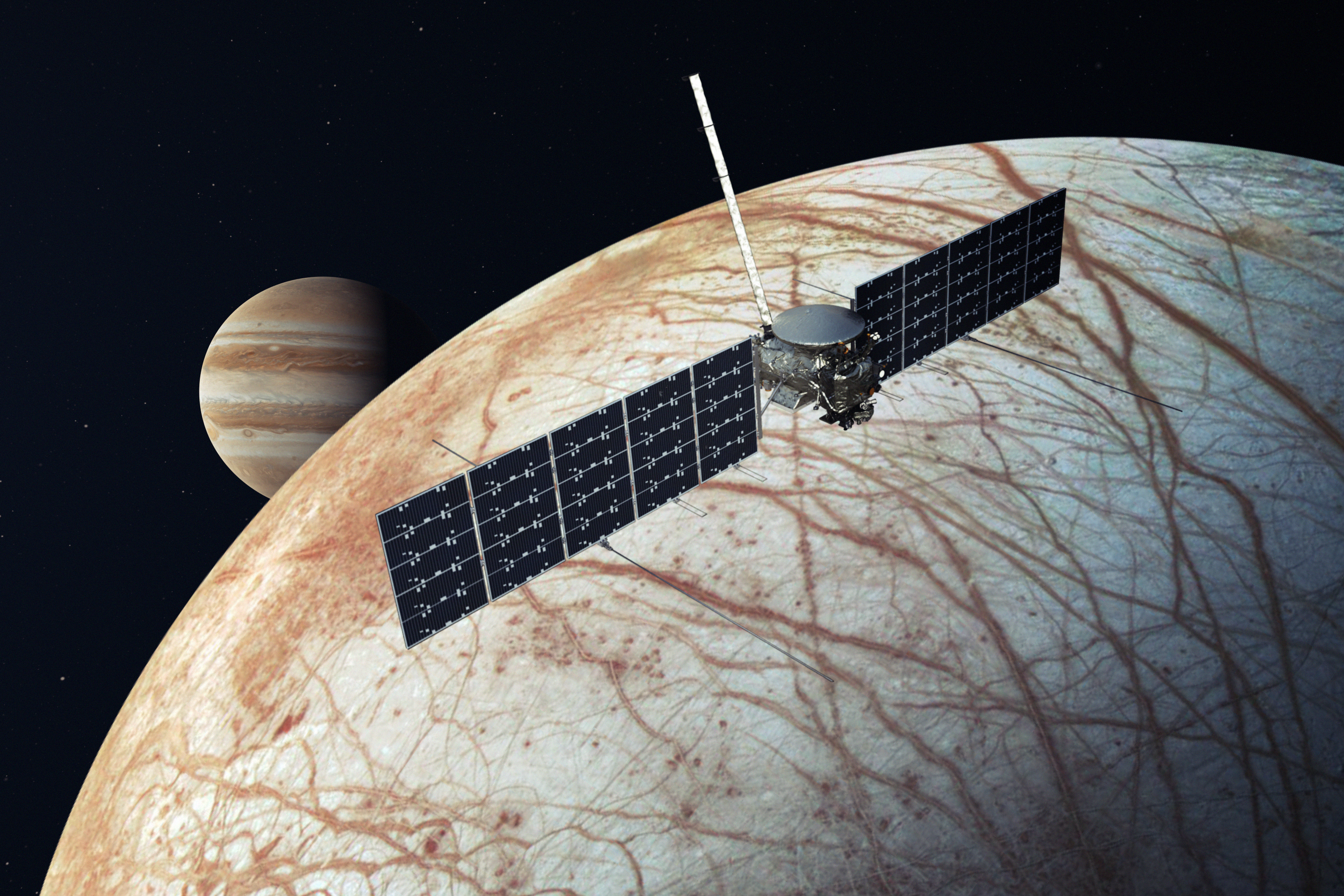
NASA is on the brink of a groundbreaking exploration with the much-anticipated Europa Clipper mission, set to delve into the mysteries of Jupiter’s intriguing moon, Europa. After a brief rescheduling caused by Hurricane Milton, all systems are go for this monumental launch slated to lift off on October 14, 2024, at precisely 12:06 p.m. EDT. A mighty SpaceX Falcon Heavy rocket will serve as the launch vehicle for this ambitious mission.
The core objective of the Europa Clipper is to scrutinize Europa’s potential to foster life. The spacecraft aims to determine if the moon’s hidden ocean, lying beneath a thick crust of ice, might be hospitable for living organisms. This ambitious endeavor involves NASA’s largest spacecraft yet specifically dedicated to planetary research. It will embark on an epic journey stretching over 1.8 billion miles, expected to reach Jupiter by April 2030.
Once it arrives, the spacecraft will perform an astounding series of 49 flybys, meticulously gathering data on Europa’s icy terrain, subsurface waters, and any possible traces of organic material. Equipped with nine state-of-the-art instruments, the mission will provide an in-depth look into the moon’s secrets. Instruments like the Mapping Imaging Spectrometer for Europa (MISE) will closely examine the moon’s surface for salts, icy formations, and organic matter. Meanwhile, the Europa Thermal Emission Imaging System (E-THEMIS) is poised to detect thermal anomalies that might point to active plumes, potentially originating from the ocean itself.
NASA is gearing up to offer live streams of the prelaunch activities and the highly anticipated launch event. Coverage will begin on October 13 and will also be accessible in Spanish, inviting a global audience to witness this scientific milestone.
A successful mission could yield unprecedented insights into Europa’s conditions, particularly its vast ocean, which is thought to be twice the size of Earth’s combined oceans. This ocean, veiled beneath an icy blanket potentially 15 miles thick, will be explored for signs of hydrothermal activity reminiscent of Earth’s own deep-sea thermal vents. The findings could not only enhance our understanding of Europa’s habitability but also pave the way for future exploratory missions, possibly involving landers or probes that could directly investigate this enigmatic moon’s depths.