NVIDIA’s push to dominate the AI accelerator market isn’t only about faster GPUs and bigger server platforms. It’s also about securing one of the most contested resources in the industry right now: DRAM, especially high-bandwidth memory (HBM). With AI demand surging and memory supply staying tight, NVIDIA is moving aggressively to lock in long-term access to the parts that power today’s and tomorrow’s data center chips.
DRAM shortages have been squeezing the market for several quarters, and the pressure isn’t coming from just one place. Hyperscalers continue to soak up massive volumes of memory, while demand has also climbed for mainstream products such as LPDDR, DDR, and GDDR. For modern AI accelerators, though, the real battleground is HBM. As AI workloads scale, HBM has become a core ingredient for performance, making it increasingly difficult for chipmakers to treat memory as a simple off-the-shelf component. That’s why securing supply agreements early has become a major competitive advantage.
NVIDIA appears to be better positioned than many rivals, thanks to a combination of early planning and unusually strong relationships with major Korean memory suppliers. CEO Jensen Huang has been particularly active on this front, and recent reports suggest those connections are continuing to deepen.
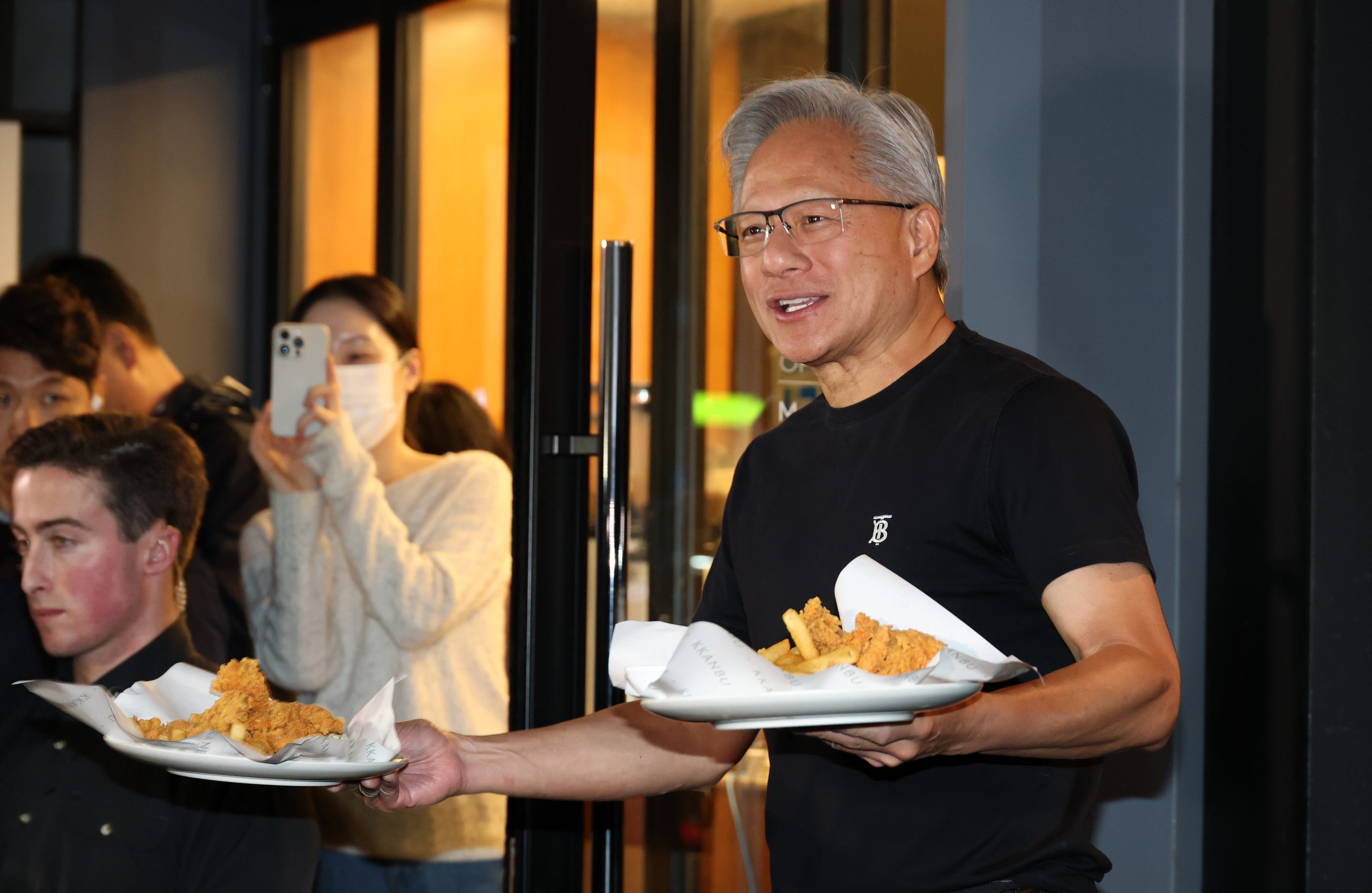
After last year’s highly publicized dinner meeting with Samsung leadership, a new report says Jensen Huang recently met SK Group Chairman Chey Tae-won (also known as Tony Chey) in the United States. The two reportedly talked business over a casual meal at a fried chicken restaurant in Santa Clara. Beyond the optics, the meeting is said to have carried strategic weight, especially following SK hynix’s relatively limited visibility during Jensen’s trip to South Korea last year.
According to the report, the conversation centered on two key areas that could shape NVIDIA’s next-generation AI infrastructure plans.
One topic was SOCAMM, described as a low-power memory module that’s expected to play an important role in Rubin-based AI servers. As power efficiency becomes more critical in data centers, memory designs that reduce energy use without sacrificing performance are gaining attention, and SOCAMM is positioned as part of that shift.
The other major focus was HBM4, the next step in high-bandwidth memory technology. HBM4 is expected to be crucial for future AI accelerators as models grow larger and faster interconnect and memory throughput become non-negotiable. The report claims SK hynix could take more than half of NVIDIA’s early HBM4 supply in initial planning discussions, potentially giving it a dominant share of NVIDIA’s HBM4 inventory at launch.
The meeting also reportedly touched on SK’s changes to Solidigm, with the chairman briefing Jensen Huang on recent restructuring aimed at positioning it more clearly as an “AI company” and strengthening collaboration with customers in the United States.
NVIDIA, for its part, has already suggested it’s taking protective measures against ongoing memory volatility. When asked whether the company could be impacted by memory shortages, Jensen Huang pointed to early long-term agreements, signaling that NVIDIA has been working in advance to secure capacity and reduce supply risk. In a market where demand spikes can upend production plans overnight, locking down long-term memory supply can be just as important as the silicon itself.
Taken together, these developments highlight a simple reality in the AI era: memory is strategy. NVIDIA’s ability to maintain close ties with key suppliers, negotiate early commitments, and align future product roadmaps with next-gen memory technologies like SOCAMM and HBM4 may be one of the biggest reasons it continues to stay ahead in the race for AI infrastructure.