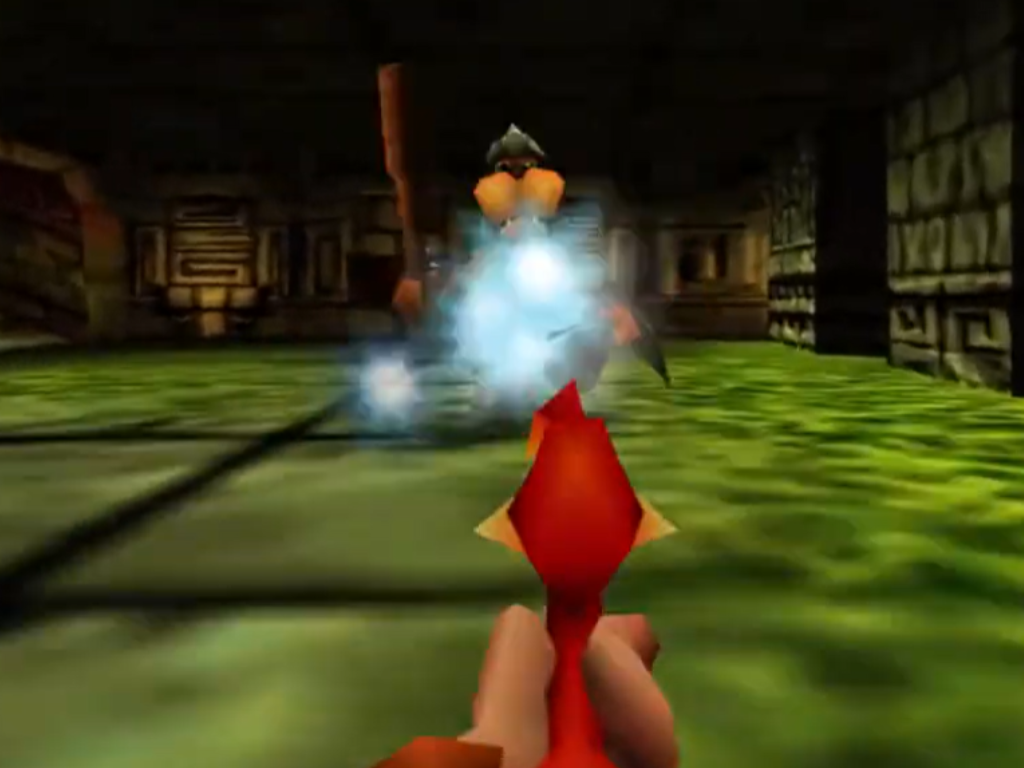
GoldenEye 007 didn’t just redefine console shooters on the Nintendo 64—it quietly reshaped one of Rare’s most beloved platformers. Former Rare developer Chris Sutherland has revealed that daily, four-player lunchtime deathmatches of GoldenEye at the studio were a major influence on Banjo-Tooie’s design.
Speaking to Retro Gamer Magazine, Sutherland recalled a small group on the Banjo team playing GoldenEye “probably every lunchtime for a couple of years,” and that the obsession inevitably bled into Banjo-Tooie, released in 2000. You can feel that DNA most clearly in the moments where the camera snaps to a first-person view and Banjo wields Kazooie to rapid-fire eggs—an unmistakable nod to the studio’s blockbuster FPS.
That shooter flavor didn’t stop at single-player. Banjo-Tooie’s multiplayer mini-games also borrowed elements from GoldenEye’s competitive spirit, mixing light shooting mechanics with the series’ character-driven platforming. It was a fresh twist for the bear-and-bird duo and a clever way to expand the sequel’s toolset.
Sutherland also touched on a key creative pillar from director Gregg Mayles: splitting Banjo and Kazooie apart, then letting players bring them back together. Separating the pair reduced each character’s abilities, which forced new strategies and opened the door for missions built around altered move sets. It was, as Sutherland put it, the logical next step—and a perfect canvas for folding in first-person ideas the team loved.
At the turn of the millennium, GoldenEye’s four-player split-screen battles were a cultural phenomenon inside the studio. That energy didn’t just inform Banjo-Tooie; it echoed across Rare’s lineup, influencing projects from Perfect Dark to Conker’s Bad Fur Day.
A quarter century on, Rare—now under Xbox—sails forward with the ongoing success of Sea of Thieves, even as turbulent projects like Everwild’s cancellation remind fans how unpredictable development can be. As for Banjo, a full return to the N64-era platforming glory remains uncertain, but the series’ legacy—and the surprising cross-genre sparks that helped shape it—still resonates with players who grew up swapping Jiggies by day and trading paintball shots by lunch.