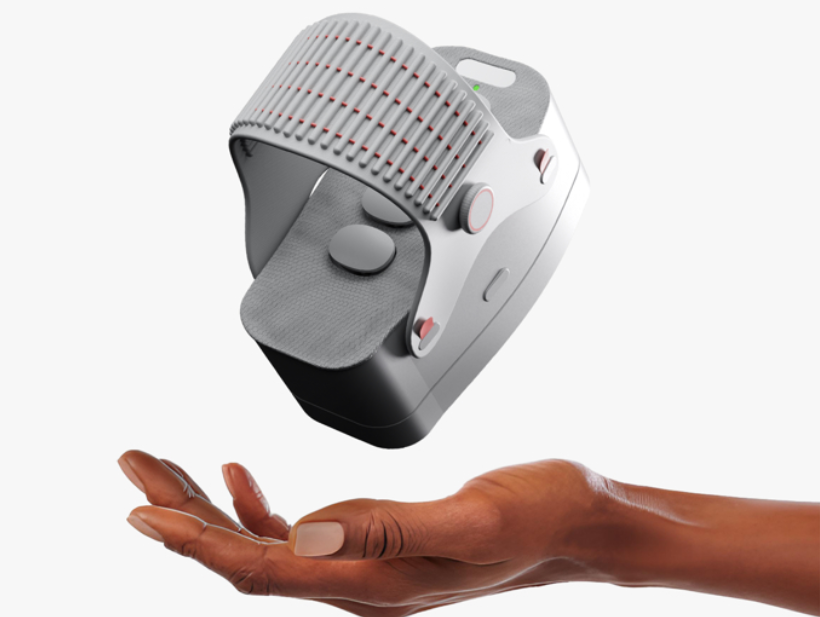
A new Kickstarter campaign is taking aim at one of modern life’s most stubborn health challenges: staying seated for hours at a time. Called the ARCH walking simulator, this compact wearable is designed for people who spend long stretches sitting at a desk, relaxing on the couch, or stuck in situations where getting up to stretch simply isn’t practical—like driving.
Sitting itself isn’t automatically “bad,” but the amount of time many people remain sedentary has steadily climbed. When your legs aren’t regularly engaged, the muscles can miss out on the kind of repeated activation that helps support healthy circulation and balanced muscle use. While standing up periodically is ideal, it’s not always possible in the moment. ARCH is built to help fill that gap by simulating a key part of walking motion while you remain seated.
The device targets the muscle group connected to the Achilles tendon, creating a movement pattern intended to mimic natural muscle activity. The goal is to help encourage blood flow back toward the heart rather than allowing it to linger in the lower leg. To do this, ARCH uses an array of microactuators—tiny components that produce controlled motion and pressure—along with sensors that track vital signals such as heart rate and tissue oxygen saturation (SpO2). By monitoring these readings, the system aims to better align its stimulation with the user’s circulatory rhythm, with the team saying this approach allows the device to circulate blood more frequently than competing options.
When it comes to intensity, the developers say each microactuator can deliver up to 3 kg of force. For a simple comparison, a human thumb can typically apply around 5 kg of force, which places ARCH’s stimulation in a gentler range rather than an aggressive one.
Despite the technology packed into a small form factor, the early discounted Kickstarter price is set at $594 for a single unit. That may raise an obvious question: why sell a product designed for the legs as a one-unit option? The team says this is intentional, keeping the entry price more accessible while adding flexibility. Many real-world activities can involve uneven leg use—driving is a common example—and some users may experience issues primarily on one side, making a single-unit setup a practical starting point.
Overall, ARCH is positioning itself as a wearable walking simulator for sedentary lifestyles, designed to provide lower-leg stimulation and circulation support in situations where standing breaks aren’t realistic.