Samsung’s HBM4 Boom Could Cut Foundry Losses by Nearly 42% as AI Demand Surges
Samsung’s semiconductor business may be finding a much-needed lifeline from an unexpected but powerful source: high-bandwidth memory. While stronger DRAM pricing and growing interest in 2nm wafer production were previously seen as the key drivers behind a recovery, recent analyst estimates suggest HBM is playing the biggest role in easing pressure on Samsung’s foundry operations.
According to market projections from Kiwoom Securities, Samsung’s non-memory and foundry-related operating losses are expected to shrink sharply over the next year. The estimate indicates that annual operating losses could fall from 6.74 trillion won, or about $5.1 billion, in 2025 to 3.92 trillion won, roughly $2.95 billion, in 2026. That would represent a major 41.8% reduction in losses.
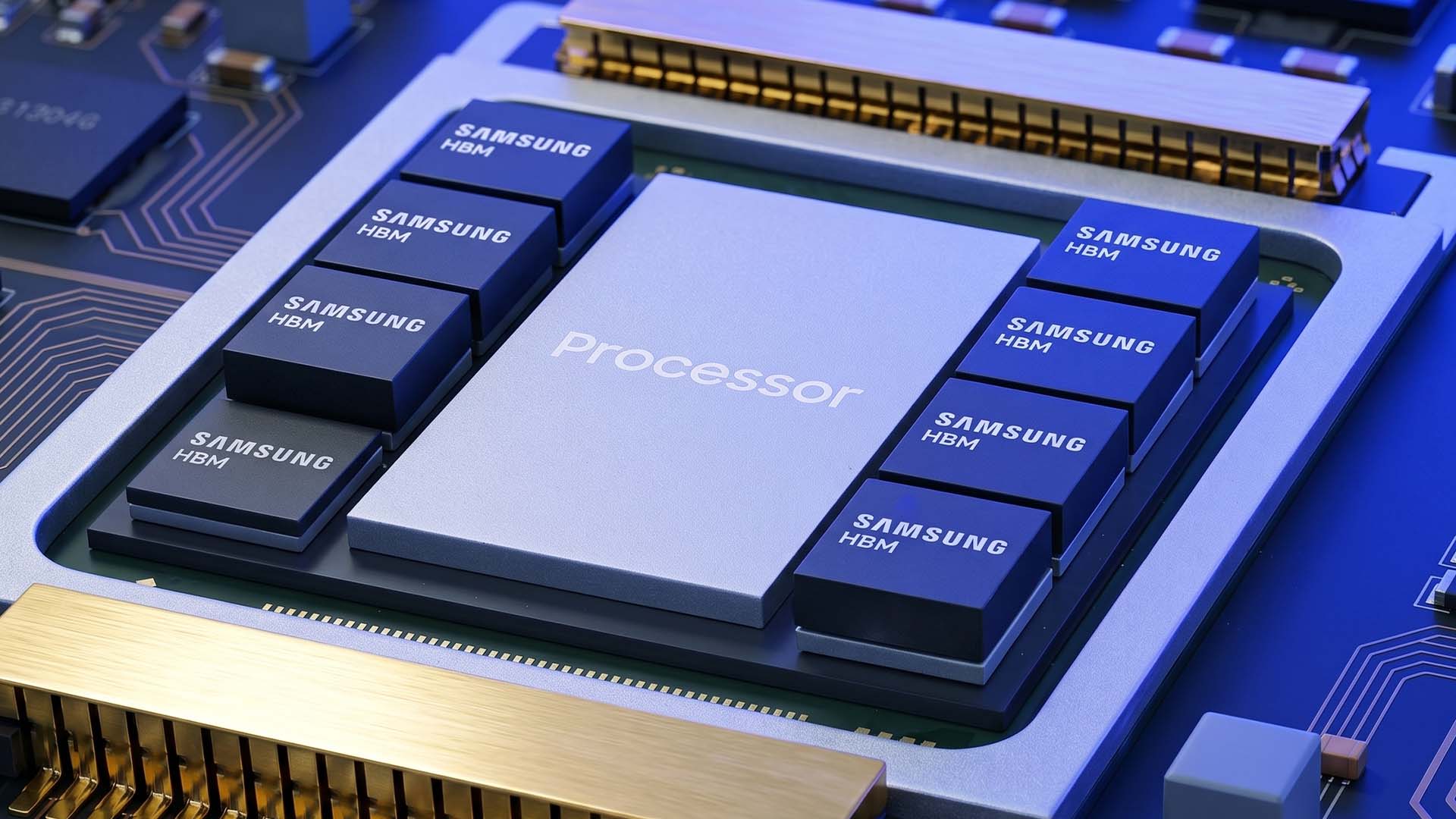
The main reason behind this improvement is Samsung’s growing role in HBM4 manufacturing. As artificial intelligence workloads continue to expand, demand for faster and more efficient memory has skyrocketed. HBM4 is becoming increasingly important for AI accelerators, data centers, and next-generation computing systems because it delivers the high bandwidth needed to process massive amounts of data quickly.
Unlike earlier HBM generations, HBM4 depends more heavily on custom logic processes, especially for the base die located at the bottom of the memory stack. This is where Samsung has a major advantage. As an integrated device manufacturer, the company can produce these key base dies using its own 4nm process technology, allowing it to keep more of the manufacturing value within its own ecosystem.
This shift is helping Samsung improve utilization rates across its advanced fabrication lines. Stronger HBM production volume is reportedly pushing usage of advanced nodes, including 8nm and below, closer to full capacity. Higher fab utilization is crucial for any chipmaker, as underused production lines can quickly become a major financial burden.
The impact could be significant on a quarterly basis as well. Losses that previously exceeded 2 trillion won, or around $1.47 billion, during earlier periods are now expected to narrow to about 777 billion won, or approximately $572 million. While still a loss, the improvement signals that Samsung’s foundry business may be stabilizing faster than previously expected.
HBM is especially attractive for Samsung because it sits at the center of the AI hardware boom. As companies race to build more powerful AI servers and custom accelerators, demand for advanced memory solutions continues to rise. Every HBM4 unit Samsung produces not only supports its memory business but also strengthens its foundry and advanced packaging operations.
Samsung’s long-term recovery will still depend on several factors. DRAM pricing, 2nm wafer demand, customer adoption, and competition in advanced chip manufacturing will all influence future profitability. However, for the near term, HBM appears to be the strongest engine behind the company’s improving financial outlook.
Another advantage for Samsung is its ability to offer a full turnkey semiconductor solution. By combining memory production, foundry manufacturing, and advanced packaging under one roof, the company can appeal to major customers looking for simplified supply chains and tightly integrated AI chip platforms.
This strategy could help Samsung secure more custom AI accelerator contracts and strengthen its position in the fast-growing artificial intelligence semiconductor market. As AI demand continues to reshape the chip industry, Samsung’s HBM4 capabilities may become one of its most important competitive assets.