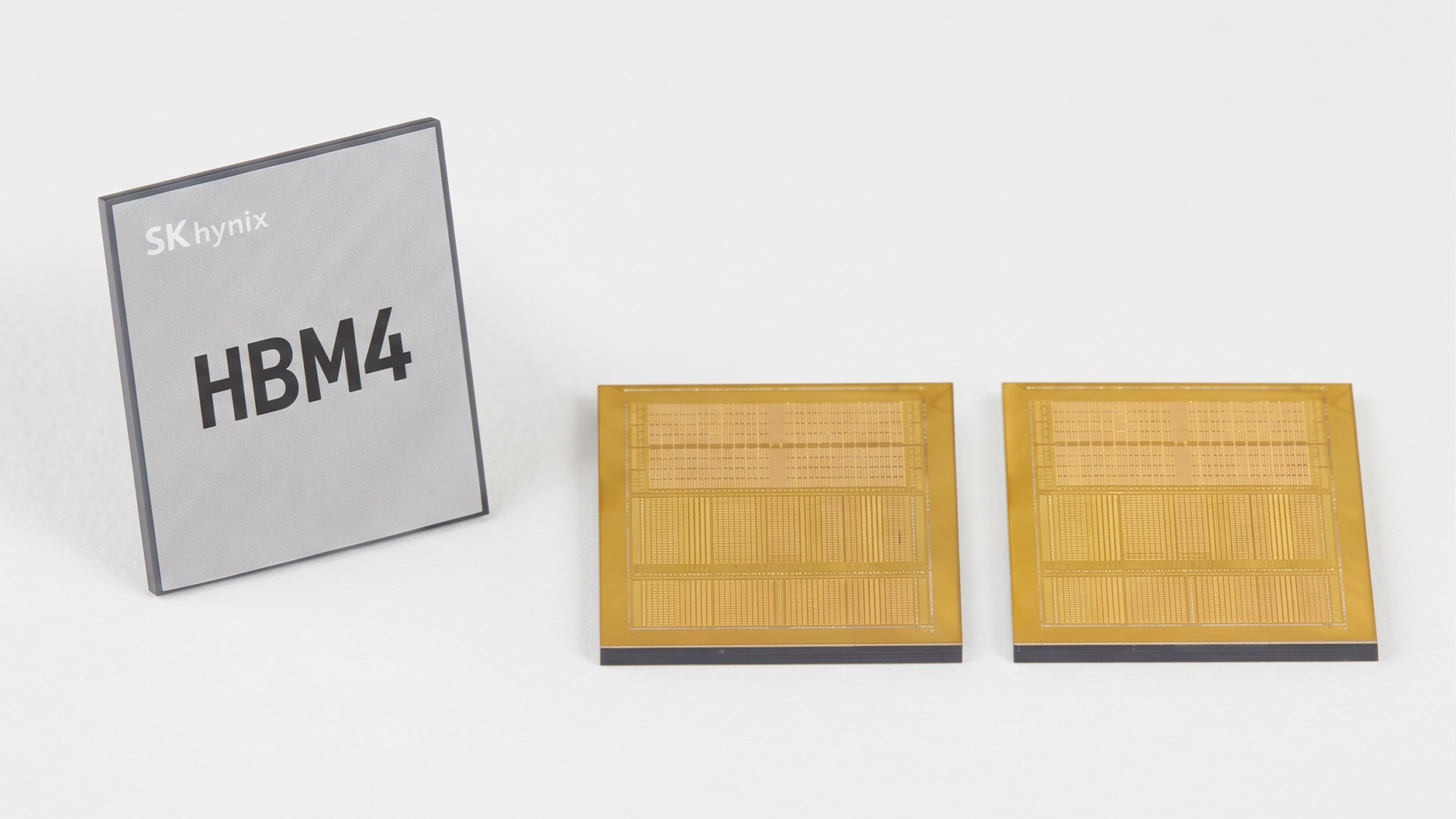
SK hynix HBM4 Equipment Delay Raises Questions as DRAM Market Strengthens
SK hynix may have completed a major HBM4 development milestone last year, but the company’s next-generation memory roadmap is now drawing fresh attention. A new industry report claims that backend equipment needed for HBM4 production, originally expected to arrive this year, has been pushed back to 2027.
The delay has sparked speculation that SK hynix could be dealing with technical challenges in its HBM4 manufacturing process. However, the situation may not be as straightforward as it appears. Some analysts believe concerns around the company’s HBM4 quality issues are being exaggerated, while others suggest SK hynix may be adjusting its investment timing as general-purpose DRAM prices continue to rise.
HBM4, or fourth-generation High-Bandwidth Memory, is expected to play a major role in future AI accelerators, high-performance computing platforms, and advanced data center hardware. Demand for HBM has surged as artificial intelligence workloads require faster memory with greater bandwidth and efficiency. Because of that, any delay involving HBM4 production equipment naturally attracts attention from investors, suppliers, and major chip customers.
According to the latest report, orders for SK hynix’s backend HBM4 equipment have been delayed until 2027. Backend equipment is essential for the later stages of chip production, including packaging and assembly, which are especially complex for stacked memory products like HBM.
If the delay is related to technical issues, it could affect SK hynix’s ability to ramp up HBM4 production on its original timeline. That would be significant, given how profitable the HBM market has become. Samsung is reportedly preparing to charge much higher prices for HBM4 compared to earlier memory products, showing how valuable this segment has become for major memory manufacturers.
At the same time, the equipment delay does not automatically mean SK hynix is falling behind. The company could be choosing to slow certain HBM-related investments because conventional DRAM is currently delivering stronger returns. General-purpose DRAM remains a core earnings driver for SK hynix, and rising prices in that market may be influencing capital spending decisions.
Daishin Securities analyst Ryu Hyung-geun has reportedly pushed back against the idea that SK hynix is facing severe HBM4 quality problems. He suggested that the concerns are being overstated and that backend-related challenges are not impossible to solve.
Industry sources have also pointed out that SK hynix remains a leader in advanced memory packaging. The company has already supplied 16-layer HBM4 samples to important customers, which suggests that development is still progressing. From that perspective, a delay in equipment orders may reflect a strategic adjustment rather than a serious production setback.
Still, there are reasons why the market is watching closely. One reported issue involves Molded Underfill, often referred to as MUF, a packaging technology that helped SK hynix gain an edge in earlier HBM generations such as HBM2E, HBM3, and HBM3E.
MUF works by filling the tiny gaps between stacked DRAM dies, helping improve reliability and thermal performance. However, HBM4 introduces tighter design requirements. To meet JEDEC standards, the spacing between DRAM dies has reportedly been reduced, making the underfill process more difficult. This has led to claims that the same packaging technology that once gave SK hynix an advantage could now be creating complications in HBM4 production.
The key question is whether these backend challenges are temporary engineering hurdles or signs of a broader delay in SK hynix’s HBM4 ramp. For now, there is no confirmed indication that the company has lost its position in the HBM race. SK hynix remains one of the most important suppliers in the high-bandwidth memory market, and its technology is closely tied to the growth of AI computing.
The timing, however, is critical. HBM demand is expected to remain strong as AI chipmakers, cloud providers, and data center operators continue expanding infrastructure. If competitors move faster in commercial HBM4 production, SK hynix could face pressure in a market it has worked hard to lead.
For now, the reported equipment delay leaves room for multiple interpretations. It may point to packaging difficulties, a shift in investment priorities, or simply a revised production schedule. What is clear is that HBM4 will be one of the most important memory technologies in the next phase of AI hardware, and SK hynix’s progress will remain under close industry scrutiny.