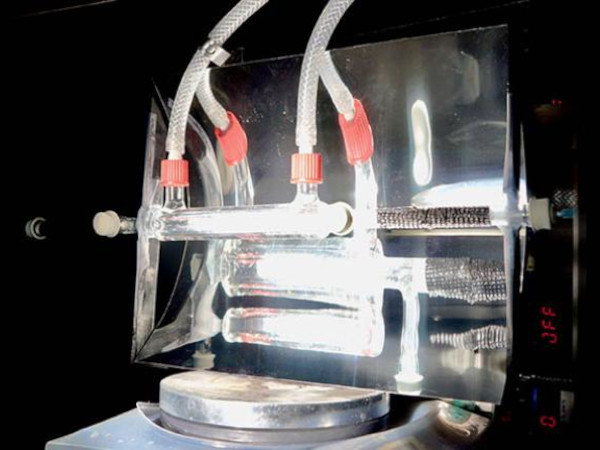
Imagine a world where carbon dioxide, the gas we’re constantly told is harmful to our environment, could be turned into something beneficial, even sustainable. That’s exactly what researchers from the University of Cambridge are working towards. Led by Erwin Reisner, this team has made significant strides in transforming waste, water, and air into usable energy, all with the help of sunlight.
The researchers have developed a portable, self-sustaining generator that’s not only effective but also scalable. This machine can convert carbon dioxide (CO2) captured from the atmosphere into gases that are then transformed into synthetic fuels or useful industrial chemicals. This breakthrough was recently highlighted in a study published in Nature.
Here’s how it works: Using special filters, CO2 is collected from the air even in darkness. Once sunlight hits, amplified by mirrors, the system is heated up through infrared radiation. The critical transformation begins with ultraviolet light from the sun, kickstarting the chemical reaction.
This method boasts a sustainable cycle by converting CO2 into something useful, unlike many traditional carbon capture and storage (CCS) techniques that simply store the CO2 underground. Many CCS solutions are criticized for high energy consumption and the risk of CO2 leakage back into the atmosphere. In contrast, the Cambridge team’s approach is notably more energy-efficient and presents a viable alternative route to mitigating climate change.
If proven effective and economical, this technology could set the stage for a smart carbon cycle akin to photosynthesis, offering hope for an environmentally friendly future. The real impact could be huge, providing an innovation that not only addresses CO2 emissions but also transforms them into resources, supporting a sustainable ecosystem.
This development, a brilliant marriage of technology and environmental science, invites us to rethink how we can make the planet healthier without compromising our current lifestyle needs. The potential is indeed exciting and could be a game-changer for our global approach to dealing with climate change.


