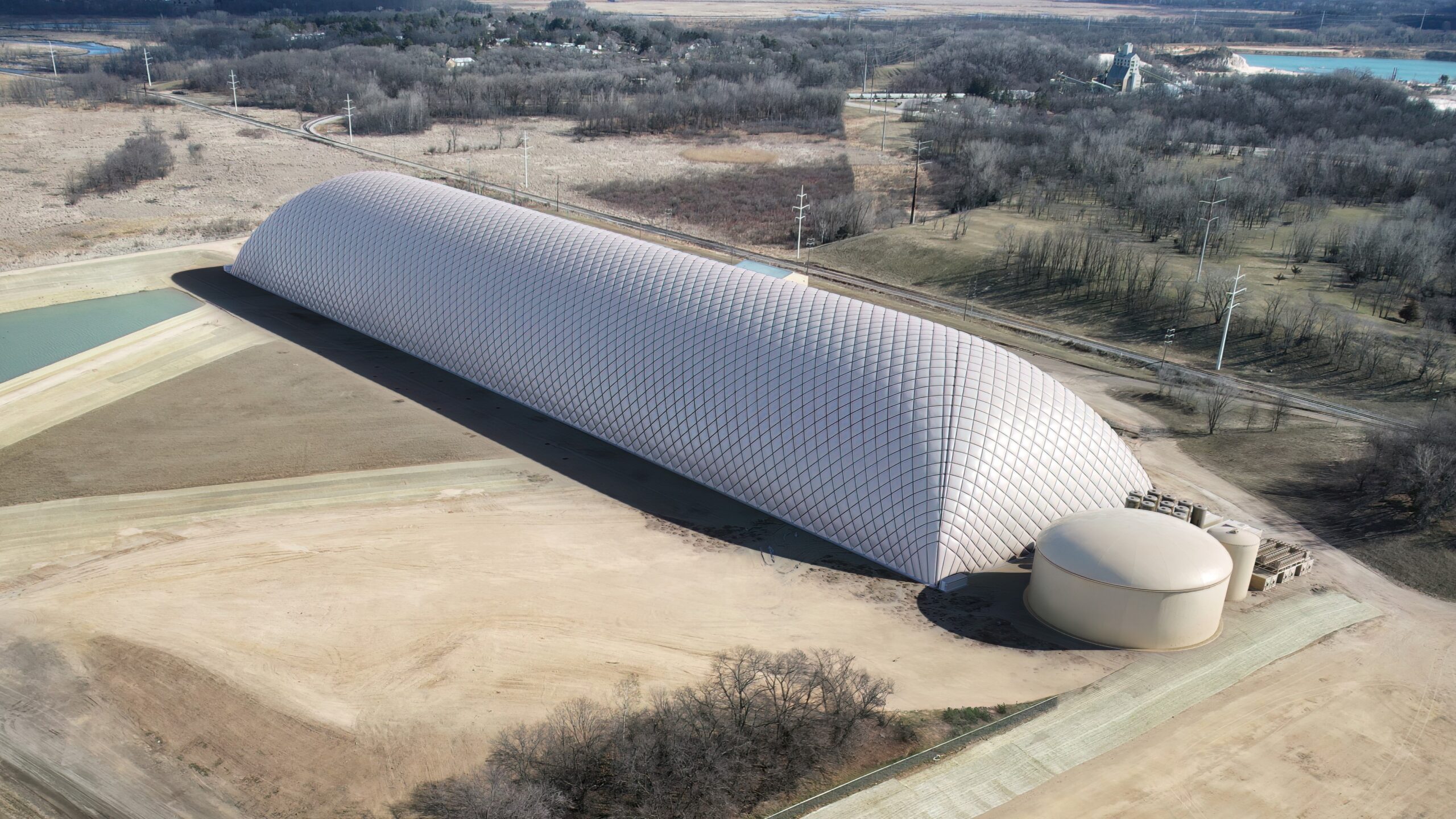
Picture this: a colossal carbon-dioxide bubble in Wisconsin with the power to store renewable energy for at least 10 hours. This isn’t science fiction—it’s the cutting-edge Columbia Energy Storage Project by Energy Dome.
Nestled in Pacific, Wisconsin, this groundbreaking initiative uses carbon dioxide in an innovative way to store energy for up to a full day, far outlasting the typical 4-hour capacity of traditional lithium-ion batteries.
The heart of this system lies in its use of supercritical CO2—a compressed form of carbon dioxide. In a closed-loop cycle, the CO2 is captured and stored, then converted into electricity by expanding the gas through a turbine. Once the energy is generated, the CO2 returns to storage, ready to be used again. This cyclical process not only maximizes efficiency but also promises better integration of renewable energy sources like wind and solar into the power grid.
Backed by a substantial $7 million from the U.S. Department of Energy, the project by Energy Dome and partner Alliant Energy is a leap towards long-term energy storage. This funding, awarded in July 2024, supports the project’s initial phase, focusing on planning and community engagement over the next 16-22 months. It forms part of a broader cost-sharing initiative aimed at promoting the growth of renewable energy.
Energy Dome has been recognized for its low-carbon technology innovation, being highlighted by Bloomberg NEF’s Pioneers program in 2022. The Columbia Energy Storage Project aims not only to smooth out the fluctuations in renewable energy generation but also to beef up renewable energy capacity overall.
This pioneering project is set to be the first of its kind in the United States, representing a significant milestone in carbon-based energy storage systems. With the site expected to be operational by 2027, the future of renewable energy in the U.S. looks brighter and more sustainable than ever.
Dive into the future of energy with the Columbia Energy Storage Project—a revolutionary step towards harnessing the full potential of renewable sources.