Looking back at 2025 through a PC gamer’s lens, it’s been a year of mixed feelings. On paper, it should have been a slam dunk: AMD rolled out its next-gen RX 9000 lineup and Nvidia answered with RTX 50 series graphics cards, giving players a fresh wave of new GPU options. But instead of a smooth upgrade cycle, the year was shaped by two frustrating trends: shaky availability around major launches and a stubborn commitment from both brands to keep pushing 8GB VRAM desktop GPUs into price ranges where that memory capacity no longer makes sense.
A recent “worst GPUs of 2025” roundup from a popular PC hardware channel put a spotlight on exactly why so many gamers feel burned this year. The short version: 8GB VRAM graphics cards dominated the list, and the criticism wasn’t subtle.
Here are the GPUs called out as the worst of 2025:
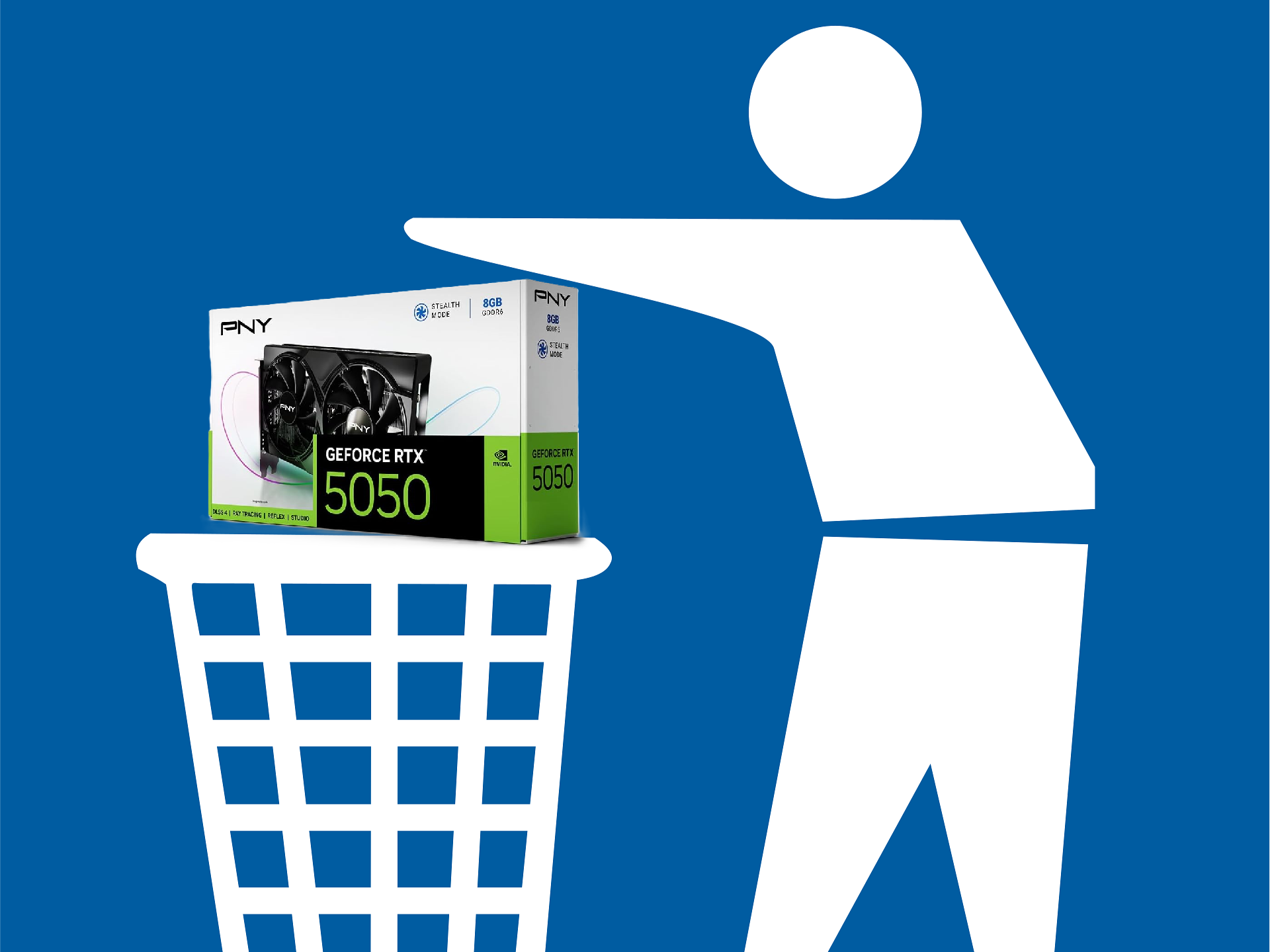
Nvidia GeForce RTX 5050
Nvidia GeForce RTX 5060 Ti 8GB
AMD Radeon RX 9060 XT 8GB
Nvidia GeForce RTX 5080
The RTX 5050: underwhelming specs, underwhelming results
The RTX 5050 arrived quietly in June 2025, and its problem is simple: it doesn’t offer much reason to exist in a market where older cards can match or beat it. With 2,560 CUDA cores, 8GB of VRAM, and 320GB/s of memory bandwidth, it’s not built to impress. It also uses an x8 PCIe configuration, which can shave off performance for anyone still on a PCIe 3.0 system.
Performance is the bigger issue. Even official comparisons showed it trailing behind the RTX 4060, a card released back in 2023. That’s a tough sell for anyone shopping for a “new generation” upgrade, even if pricing is meant to be entry-level.
The real 8GB VRAM controversy: RTX 5060 Ti 8GB and RX 9060 XT 8GB
An 8GB VRAM buffer can be understandable on a budget card, but it becomes much harder to justify once you’re spending more than $300. That’s why the RTX 5060 Ti 8GB and RX 9060 XT 8GB earned especially harsh criticism.
In games that stay within an 8GB memory limit, both cards can look decent enough. The problem is what happens when modern titles push past that limit. When VRAM runs out, performance doesn’t just dip a little—it can fall apart, bringing stuttering, texture cutbacks, and severe frame rate drops depending on the game and settings. The takeaway is that these GPUs can feel “fine” in older or lighter titles, but become a headache in more demanding games where you’d expect a $300+ card to be comfortable.
The RTX 5080: the most disappointing “80-class” release yet?
The RTX 5080 also made the list, and not because it’s slow in an absolute sense—it’s because of what buyers expect from an “80-class” Nvidia card and what they actually got.
The criticism centers on a few points:
It ships with half the VRAM of the RTX 5090
It’s reportedly hard to find at its $1,000 MSRP
The performance gap versus the RTX 5090 is large enough to make the lineup feel poorly balanced
There’s also the uncomfortable comparison to last generation: testing cited in the discussion suggests the RTX 5080 can even land behind the RTX 4090 by around 15%, which is not what most gamers want to hear when considering a pricey current-gen upgrade.
A hopeful sign: gamers are finally rejecting 8GB desktop GPUs
Not everything about 2025 is doom and gloom. One encouraging trend is that buyers appear to be moving on from 8GB VRAM desktop graphics cards, likely because more players have experienced firsthand how often modern PC games can push beyond that memory limit. In fact, a look at a major retailer’s current top-20 best-selling desktop GPUs shows no 8GB models at all—a strong signal that consumer demand is shifting toward higher-VRAM options.
The bigger message of 2025’s “worst GPU” list is clear: VRAM capacity matters more than ever, and 8GB is becoming a difficult long-term buy unless the price is extremely low and expectations are set accordingly. For anyone shopping for a new graphics card, 2025 has made one thing extremely obvious—value isn’t just about raw performance claims anymore, it’s about whether the hardware can keep up with the memory demands of today’s games.