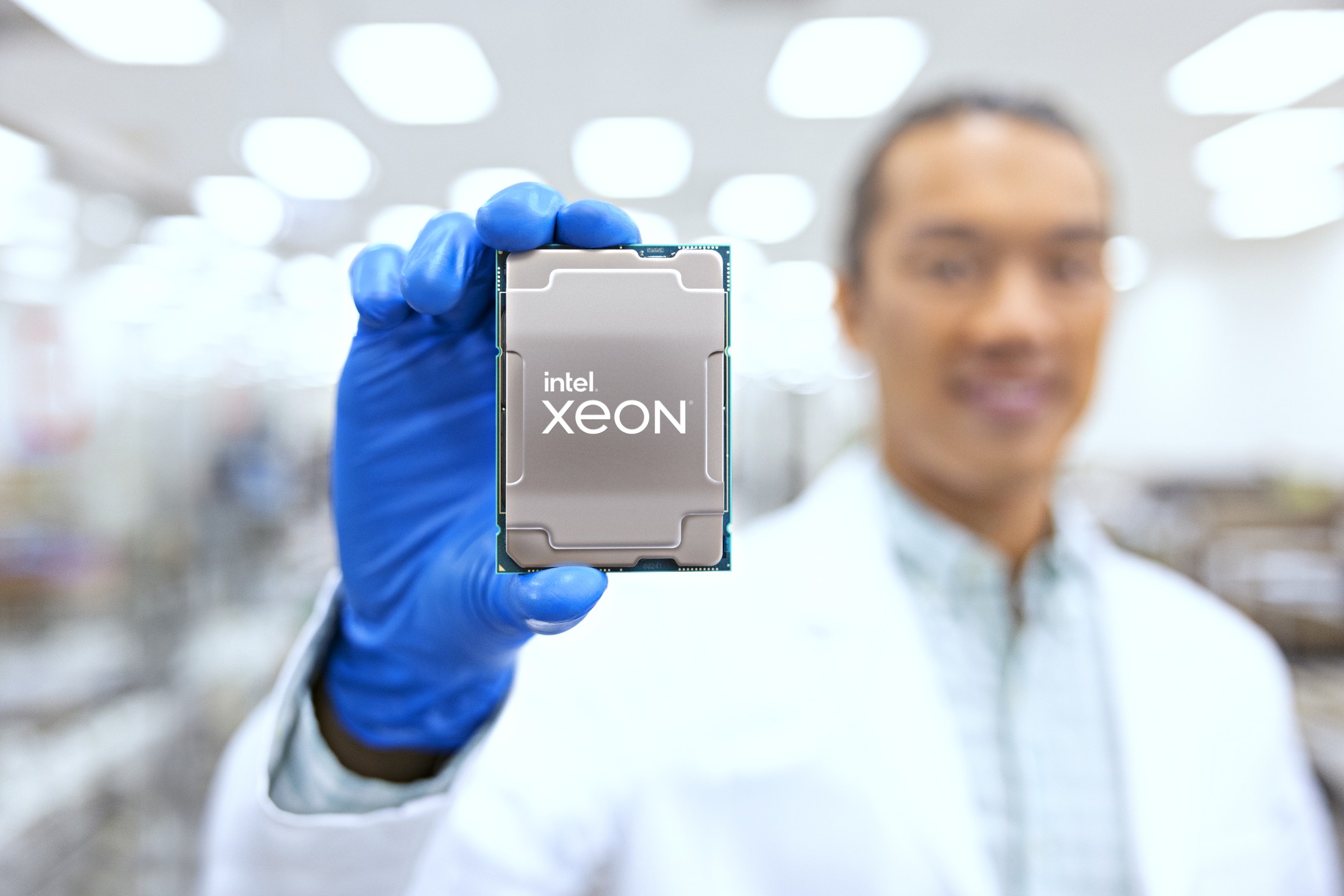
Intel’s next-generation W890 platform, built for Granite Rapids-based Xeon Workstation processors, has surfaced with a trove of details — and it looks tailored for creators, engineers, and studios that need extreme bandwidth, memory capacity, and robust I/O.
At the heart of W890 is the new E2 socket (LGA 4710), shared across Expert and Mainstream workstation tiers. The platform is designed for high thermal envelopes, supporting processors up to 350W TDP, aligning with the demands of heavily threaded workloads and sustained boost clocks. Granite Rapids WS silicon has already been spotted in the wild with up to 86 cores and 172 threads, setting the stage for a serious high-end workstation showdown.
Memory support targets both speed and scale. W890 accommodates standard DDR5 DIMMs and RDIMMs, with RDIMMs running up to 5200 MT/s and capacities reaching as high as 2 TB in a quad-channel, two-DIMMs-per-channel configuration. That mix of bandwidth and expandability is ideal for massive datasets, complex simulations, 3D rendering, and AI-assisted workflows.
PCIe connectivity is a clear highlight:
– Expert CPUs expose 112 total PCIe lanes: 96 PCIe 5.0 lanes and 16 PCIe 4.0 lanes.
– Mainstream CPUs offer 80 lanes of PCIe 5.0 and no PCIe 4.0 lanes.
– The CPU links to the W890 chipset over a PCIe 4.0 x8 DMI interface.
The W890 chipset itself is loaded with I/O for high-performance storage, networking, and device management:
– Integrated Intel I226-V 2.5 GbE controller
– 10 USB 3.2 and 9 USB 2.0 ports
– 8 SATA III ports for broad storage compatibility
– 2 SlimSAS connectors, each supporting PCIe 4.0 x4 for fast NVMe expansion
– ASPEED AST2600 BMC for server-class remote management
– Nuvoton NCT6126D for platform monitoring and control
Power delivery is equally serious. Boards are expected to use a standard 24-pin ATX connector paired with up to four 8-pin ATX/EPS connectors to reliably feed CPUs operating at up to a 350W base TDP. That headroom should help sustain high clocks under multi-hour, compute-heavy sessions.
Competition in this segment is fierce. AMD’s current-generation workstation chips scale to 96 cores, carry 80–128 PCIe 5.0 lanes, pack up to 384 MB of cache, and also top out at 350W TDP. With Granite Rapids WS, Intel appears to be focusing on high lane counts, strong memory support, and platform reliability features to deliver a compelling alternative for professional users.
Timeline expectations point to a launch next year, with a potential showcase on the industry stage around CES 2026. If you’re planning a new workstation for advanced CAD, VFX, scientific computing, or high-speed storage and networking, W890 and Granite Rapids WS should be on your radar.