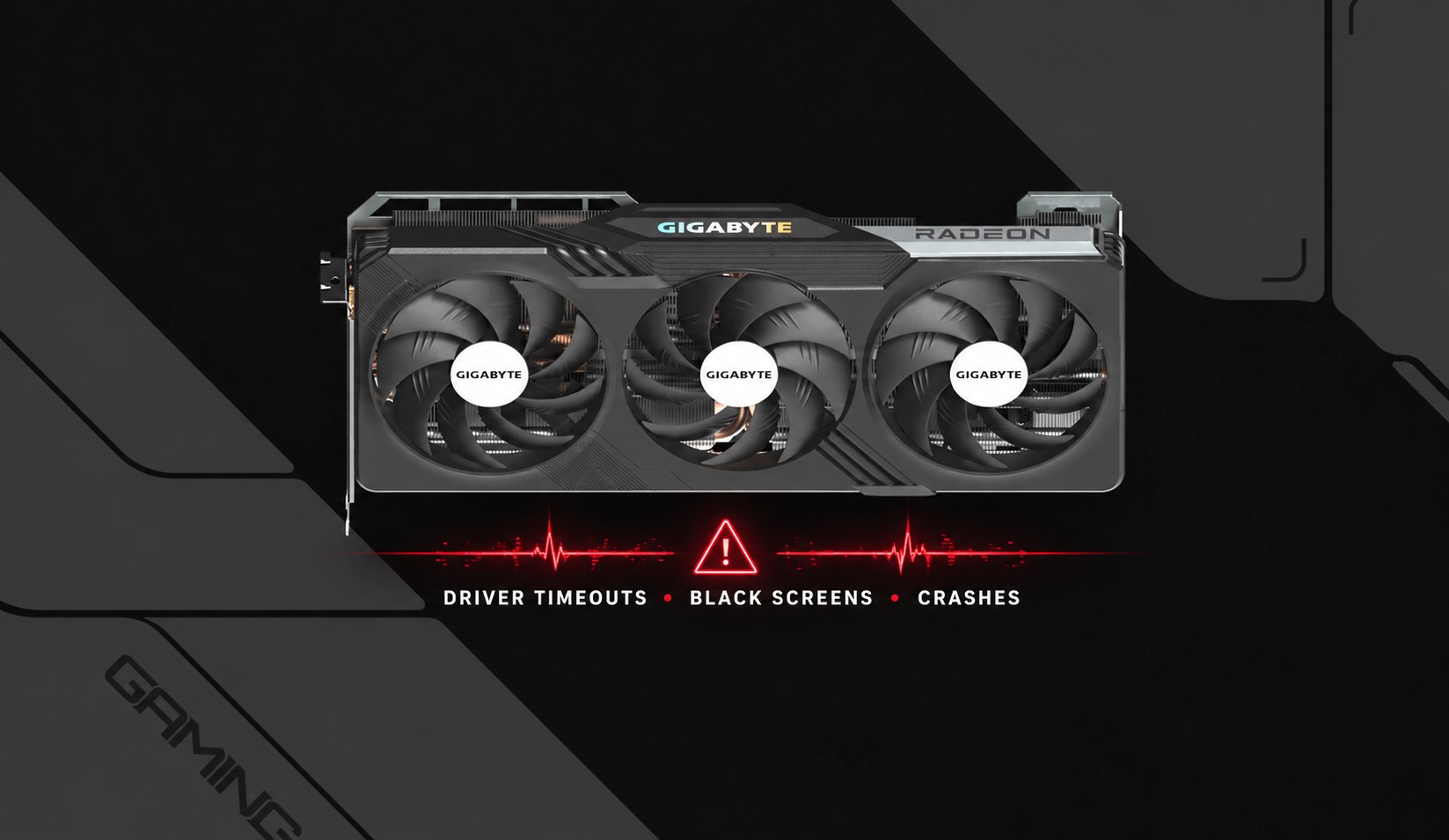
GIGABYTE RX 7900 XTX Owner Claims Missing VBIOS Update May Be Causing Crashes and Black Screens
A Radeon RX 7900 XTX owner is claiming that GIGABYTE’s lack of a newer VBIOS update for some high-end Radeon RX 7000 graphics cards may be behind a series of stability problems, including driver timeouts, black screens, and crashes during gaming.
The issue comes shortly after AMD identified security vulnerabilities affecting the VBIOS firmware on Radeon RX 7000 series GPUs. Following that discovery, several AMD board partners began rolling out updated firmware for affected models. Some brands reportedly made updated VBIOS files available across a wider range of Radeon RX 7000 cards, but GIGABYTE appears to have left certain higher-end models without the latest firmware release.
According to a Radeon RX 7900 XTX user on Reddit, this gap may be creating problems with newer AMD graphics drivers. The user says their graphics card had been stable on AMD Adrenalin Driver 25.9.1, but after moving to newer 26.x.x driver releases, particularly versions 26.6.2 and 26.8.1, the system began showing serious instability.
The reported symptoms include driver timeouts, sudden black screens, and game crashes, especially under heavy low-latency workloads. While these kinds of issues are often blamed on GPU drivers, the user believes the real cause may be a compatibility problem between the newer AMD software and older GIGABYTE VBIOS firmware.
At this stage, there is no confirmed proof that the older VBIOS is directly responsible for Radeon RX 7900 XTX crashes. A GPU’s VBIOS and driver perform different roles, although they do interact closely. If the firmware is outdated or not fully aligned with newer driver behavior, it is possible that conflicts could appear in certain workloads. However, without official confirmation from AMD or GIGABYTE, the cause remains unverified.
The user also pointed to other reports suggesting that similar instability issues on Radeon RX 7000 series cards may be resolved after applying updated VBIOS firmware. That has added to the frustration among some owners who believe GIGABYTE should provide the same level of firmware support for its higher-end models as it has for lower-tier Radeon RX 7000 GPUs.
The situation became more controversial after the affected owner contacted GIGABYTE for support. According to the user, GIGABYTE responded by saying the graphics card was out of warranty and recommended visiting a local repair shop.
The owner argues that this response does not address the actual complaint, since the problem appears to be related to firmware or software compatibility rather than a physical hardware fault. If the card requires a VBIOS update to maintain stability with current AMD Radeon drivers, a repair shop would likely be unable to solve the issue unless an official firmware file is provided by the manufacturer.
For Radeon RX 7900 XTX owners, the case highlights a larger concern around long-term firmware support for premium graphics cards. High-end GPUs are expected to receive timely updates, especially when security fixes or compatibility improvements are involved. When firmware updates are unevenly distributed across a product lineup, users may be left wondering whether their expensive graphics cards are being fully supported.
For now, RX 7900 XTX users experiencing driver timeouts, black screens, or crashes after updating AMD Adrenalin drivers may want to check whether their card has a newer VBIOS available through the manufacturer’s official support tools. Rolling back to a previously stable driver may also be a temporary option, though it is not an ideal long-term solution.
Until GIGABYTE releases updated firmware for the affected high-end Radeon RX 7000 models or provides a clearer explanation, the exact cause of these stability issues will remain uncertain. Still, the complaint has raised an important question for GPU owners: when a graphics card depends on both driver and firmware updates to remain stable, how much responsibility should the manufacturer take after the warranty period ends?


