High-Bandwidth Memory Faces New Questions as AI Chipmakers Look Beyond HBM
High-bandwidth memory, better known as HBM, has become one of the most important building blocks in modern AI hardware. It sits close to powerful processors and helps feed data to advanced AI accelerators at extremely high speeds. As demand for artificial intelligence systems grows, HBM has become essential for training large language models, running data centers, and powering next-generation computing platforms.
But even as HBM dominates today’s AI memory market, industry leaders are beginning to question whether it can keep up with the future of AI.
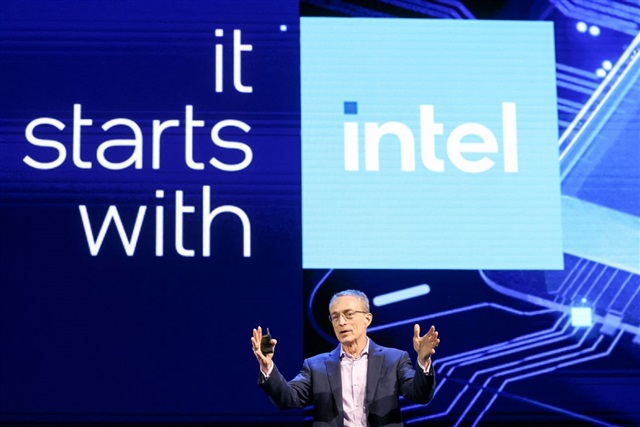
At a recent AI summit in Paris, former Intel CEO Pat Gelsinger drew attention after describing HBM as “lousy.” His comment reflects a growing concern across the semiconductor industry: while HBM is fast and valuable, it may not be enough to solve the long-term memory challenges created by increasingly complex AI workloads.
AI chips are advancing quickly, but memory bandwidth, capacity, power consumption, and cost remain major obstacles. HBM helps reduce some of these bottlenecks, yet it is expensive to produce, difficult to scale, and limited by packaging complexity. As AI models become larger and more demanding, chipmakers need memory systems that can deliver even greater performance while remaining efficient and commercially viable.
SK Hynix, the current leader in the HBM market, has also acknowledged that HBM is not the final destination for AI memory technology. The company’s position highlights a broader shift in the industry: HBM may be critical today, but the race is already underway to develop the next major memory architecture for artificial intelligence.
This does not mean HBM is disappearing anytime soon. In fact, demand for HBM remains extremely strong, especially as AI data centers continue to expand worldwide. Leading AI processors rely heavily on high-bandwidth memory to handle massive data flows, and memory suppliers are investing heavily in newer generations of HBM with improved speed, efficiency, and capacity.
However, the conversation is changing. The industry is no longer asking whether HBM is important. Instead, it is asking what comes after HBM.
The future of AI computing may require new approaches that combine memory and processing more closely, reduce data movement, and improve energy efficiency. Technologies such as advanced packaging, compute-in-memory, new memory materials, and redesigned AI chip architectures are all being explored as possible solutions.
For now, HBM remains one of the most valuable technologies in the AI semiconductor supply chain. But the recent criticism and cautious comments from major industry figures show that even market-leading technologies have limits.
As artificial intelligence continues to reshape computing, memory innovation will be just as important as processor performance. HBM helped unlock today’s AI boom, but the next breakthrough may come from a new memory architecture designed specifically for the scale, speed, and efficiency demands of tomorrow’s AI systems.