Geely’s 2.2 MW AI Smart Charging Could Cut EV Charging Times to Minutes
Electric vehicle charging is quickly becoming one of the biggest battlegrounds in the auto industry. Range still matters, but for many drivers, the real question is simple: how fast can an EV get back on the road? Geely is now aiming to push that answer into supercar-refueling territory with a new ultra-fast charging system capable of delivering up to 2.2 MW per connector.
The Chinese automaker has introduced its new AI Smart Charging technology, a next-generation fast-charging platform designed to dramatically reduce waiting times at charging stations. On paper, the system can deliver as much as 2,200 kW of charging power, putting it ahead of several major high-power charging technologies currently discussed in the EV market.
For comparison, BYD’s Flash Charging system is rated at up to 1.5 MW, while Tesla’s Megacharger, developed primarily for heavy-duty electric trucks, reaches around 1.2 MW. Geely’s 2.2 MW figure suggests the company is preparing for a future where charging stops could become almost as quick as filling a fuel tank.
A key part of Geely’s new system is an AI-based energy management platform called PowerMind. This software is designed to track important charging conditions in real time, including current flow, battery temperature, and cooling performance. Geely says the system can also predict temperature changes roughly 30 seconds ahead, allowing the charger to adjust output before heat becomes a problem.
That predictive approach could be important because ultra-fast charging creates enormous thermal stress. The faster electricity flows into a battery, the more carefully heat must be managed. According to Geely, PowerMind helps maintain high charging speeds while reducing unnecessary strain on the battery pack. However, real-world long-term battery impact will only become clear once the technology is used more widely outside controlled demonstrations.
One of the most eye-catching claims involves the all-electric Lynk & Co 10 sports sedan. Using the new AI Smart Charging system, the car reportedly charged from 10% to 70% in about 4 minutes and 30 seconds. A longer charging session from 10% to 97% reportedly took only 8 minutes and 40 seconds.
Those numbers are impressive, but there is an important detail: the actual peak charging power during the session was around 1.1 MW, not the full 2.2 MW that the charging station is technically capable of delivering. In other words, the 2.2 MW rating refers to the maximum capability of the charging infrastructure, not necessarily the charging speed every vehicle will be able to use.
This distinction matters. Ultra-fast chargers may be built to handle extremely high power output, but the vehicle’s battery system, voltage architecture, thermal management, and charging limits determine how much energy it can actually accept. A charger may be ready for 2.2 MW, but most current EVs are not.
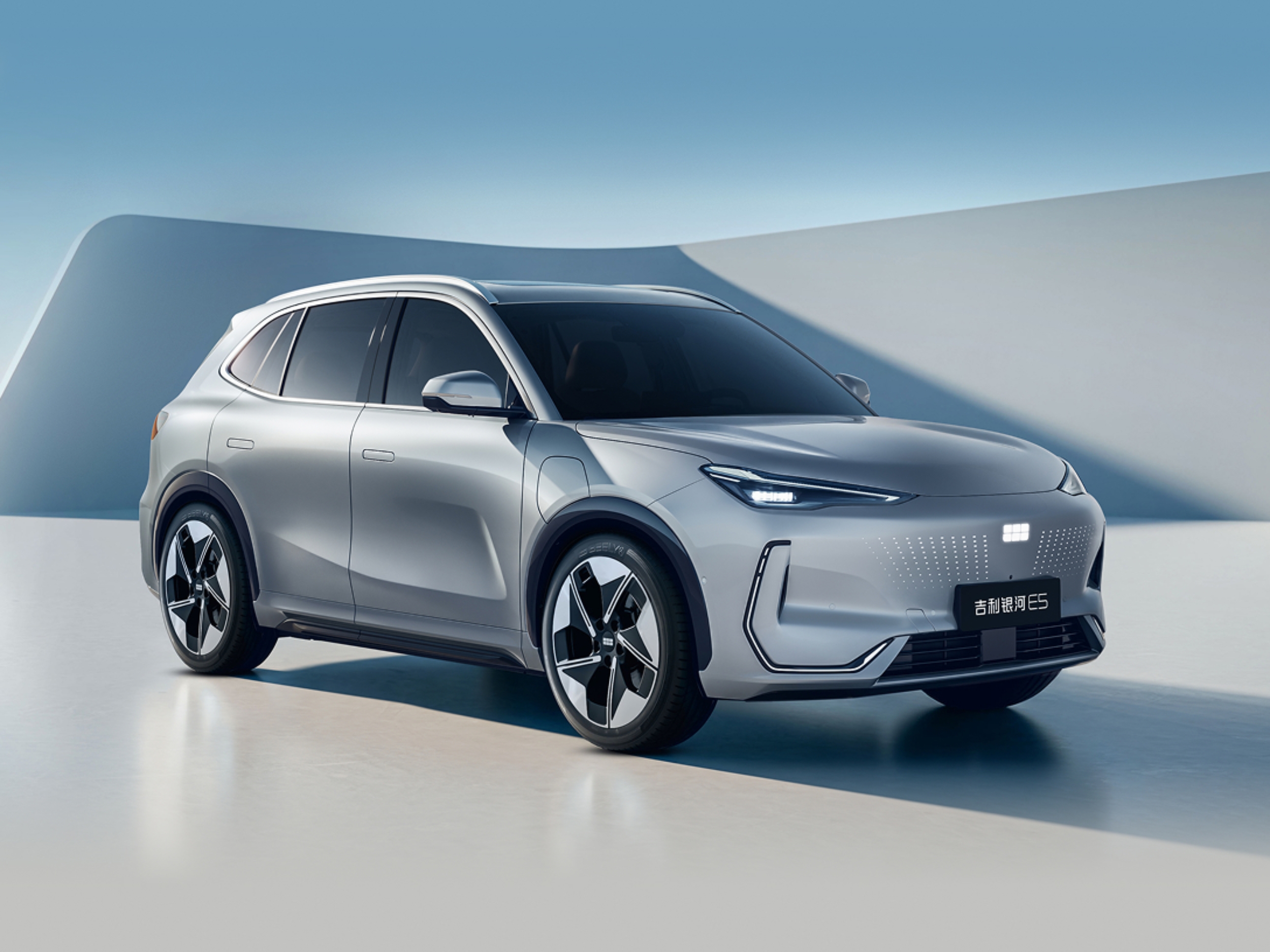
Geely’s updated Galaxy E5 is expected to be among the first production vehicles to benefit from the new charging technology. Higher-end versions of the SUV are said to use an 800-volt electrical architecture and a 6C battery, both of which are important for faster charging. Even so, its maximum DC fast-charging rate is expected to be around 460 kW, far below the charger’s full potential.
Despite that, the charging time is still extremely quick. The Galaxy E5 is reportedly able to charge from 10% to 70% in around 8 minutes and 25 seconds. For everyday drivers, that could make long-distance electric travel far more convenient, especially if similar charging stations become widely available.
Geely’s announcement highlights a major shift in the EV industry. Automakers are no longer focused only on building bigger batteries. Instead, they are racing to make batteries charge faster, handle more heat, and work more intelligently with charging networks. AI-managed charging could become an increasingly important part of that future.
If Geely can bring this technology to market at scale, it could help reduce one of the biggest concerns surrounding electric vehicles: long charging stops. A 10% to 70% charge in under five minutes may not be common across all EVs anytime soon, but the direction is clear. Charging speeds are accelerating rapidly, and Geely wants to be at the front of that race.
For now, the 2.2 MW AI Smart Charging system is best seen as a major step toward the next generation of EV infrastructure. The full benefits will depend on compatible vehicles, advanced battery designs, reliable cooling systems, and widespread charger deployment. Still, Geely’s latest technology shows just how close the EV industry is getting to making ultra-fast charging a normal part of electric driving.