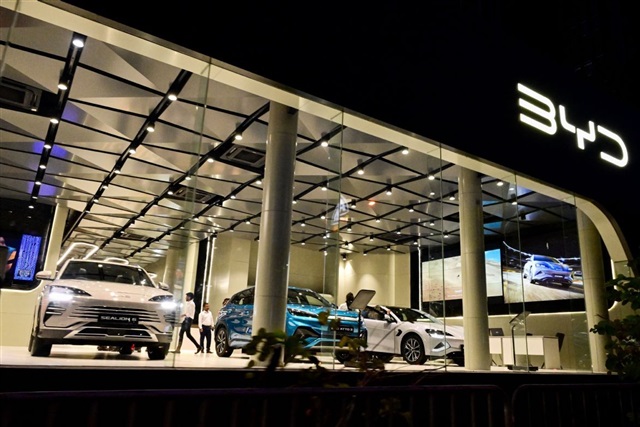
Megawatt Flash Charging Race Heats Up as BYD, Geely, and CATL Push China’s EV Market Forward
China’s new energy vehicle market is entering a new phase, and the spotlight is now on one of the biggest pain points for electric car buyers: charging speed. As more drivers switch to electric vehicles, the ability to recharge quickly and conveniently is becoming just as important as driving range, battery safety, and vehicle price.
BYD, one of China’s leading electric vehicle manufacturers, has already made a major move in this space. The company introduced megawatt-level flash charging technology more than a year ago, signaling its ambition to make EV charging feel closer to the experience of refueling a gasoline car. This technology is designed to deliver extremely high charging power, cutting down waiting times and making long-distance electric driving more practical.
BYD strengthened its position further with the launch of its second-generation Blade Battery in March. The Blade Battery has been one of the company’s most important innovations, known for its focus on safety, durability, and efficiency. With the second-generation version, BYD is aiming to improve not only battery performance but also the overall fast-charging experience for EV owners.
The push toward faster charging is no longer limited to one company. Geely and CATL are also stepping up their efforts, creating a competitive race that could reshape the future of electric mobility in China and beyond. Geely, with its growing electric vehicle lineup, is working to improve charging convenience as a key selling point for its next-generation models. Meanwhile, CATL, one of the world’s largest EV battery makers, continues to develop advanced battery technologies that support higher charging speeds, longer lifespans, and better energy efficiency.
This competition is important because charging time remains one of the biggest concerns for potential EV buyers. Even as modern electric vehicles offer longer ranges than ever before, many consumers still worry about how long it takes to recharge on the road. Megawatt-level charging could significantly reduce that concern by enabling much faster energy replenishment, especially for high-end electric cars, commercial vehicles, and long-distance travel.
For automakers, fast charging is also becoming a powerful way to stand out in a crowded market. China’s EV sector is highly competitive, with brands constantly racing to offer better range, smarter features, lower prices, and more advanced battery systems. The next major battleground appears to be charging speed, and companies that can deliver reliable ultra-fast charging may gain a major advantage.
However, megawatt-level flash charging is not only about the battery inside the vehicle. It also requires a strong charging infrastructure, advanced thermal management, safe high-voltage systems, and stable power delivery. To make the technology widely available, automakers, battery suppliers, charging operators, and energy providers will need to work together. Without enough compatible charging stations, even the most advanced fast-charging vehicles may not reach their full potential.
Still, the momentum is clear. BYD’s early move, Geely’s growing interest, and CATL’s battery expertise all point to a future where EV charging becomes faster, smarter, and more convenient. If these companies succeed, electric vehicles could become even more attractive to mainstream buyers, helping accelerate the shift away from traditional combustion-engine cars.
As the megawatt flash charging competition intensifies, China’s new energy vehicle industry is likely to remain at the center of global EV innovation. Faster charging, improved battery technology, and stronger infrastructure could define the next stage of electric transportation, making EV ownership easier and more appealing than ever.