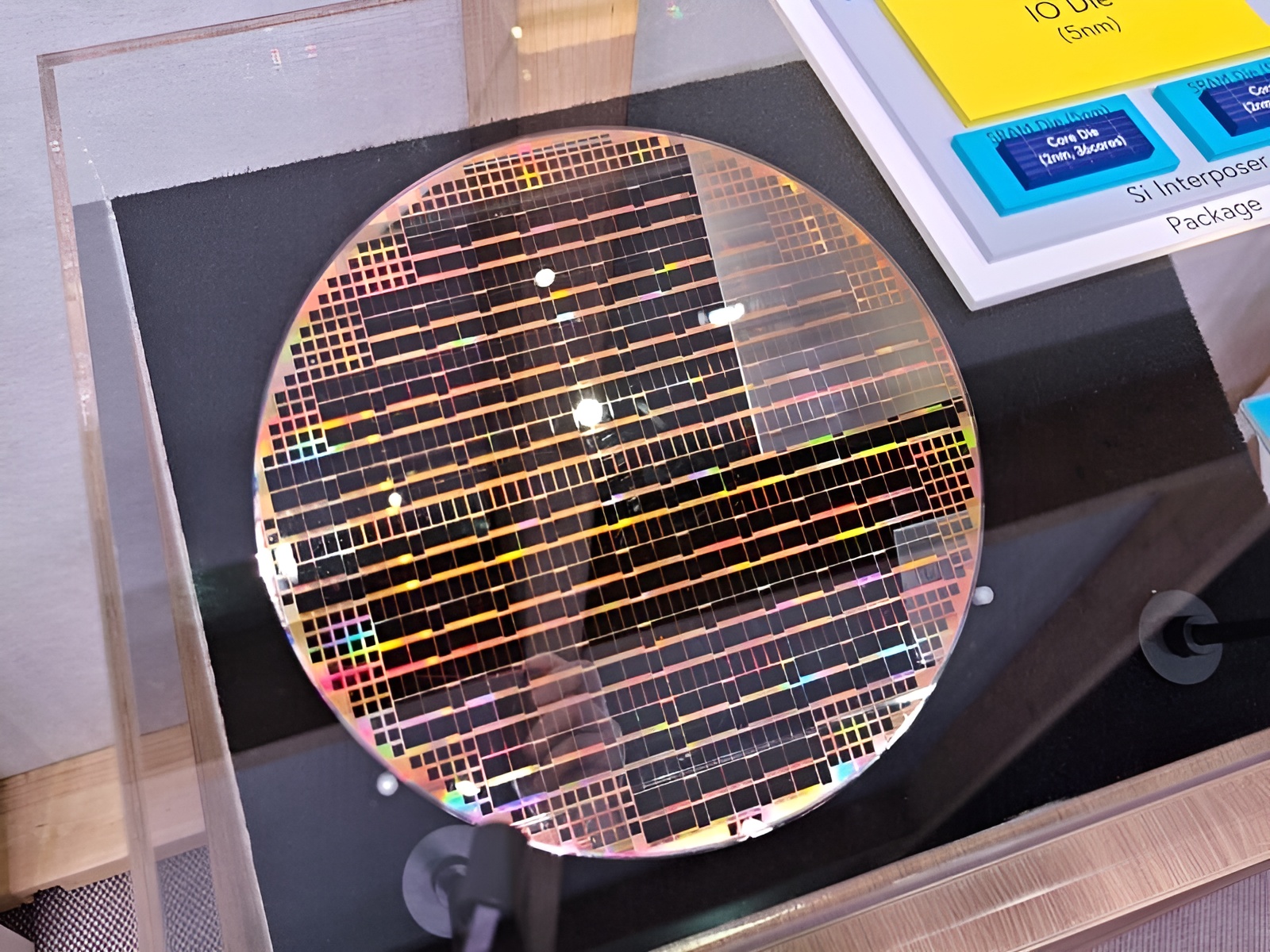
Japan’s push to become a major force in advanced semiconductors is accelerating, and a new collaboration could mark one of the country’s biggest steps yet toward cutting-edge AI hardware. Fujitsu is reportedly preparing to work with Rapidus to develop an ultra-advanced 1.4nm chip designed specifically for artificial intelligence workloads—an ambitious move that would place Japan among a very small group racing toward next-generation process nodes.
According to reports, Fujitsu’s plan centers on building a dedicated NPU (neural processing unit), a specialized AI engine intended to handle machine learning and other data-heavy acceleration tasks far more efficiently than general-purpose compute. What makes the project particularly notable is the manufacturing strategy: Rapidus, Japan’s emerging semiconductor manufacturer, would handle the fabrication. If this proceeds as expected, it would represent a rare example of a leading-edge chip developed and produced using largely domestic resources—an important strategic goal as countries focus more on economic security and resilient supply chains.
Government support is expected to play a meaningful role as well. Japan’s Ministry of Economy, Trade and Industry is said to be positioned to cover part of the development cost, underscoring how high the stakes have become in the global AI chip race. With nations and companies prioritizing AI capability—and the supply chain independence that comes with it—Japan is aiming to ensure it can compete at the forefront rather than relying exclusively on overseas production.
The rumored 1.4nm NPU isn’t expected to stand alone. Fujitsu has already signaled that it wants to pair future AI accelerators with its Fujitsu-Monaka-X processor family, with the combined platform targeting deployment in the Fugaku NEXT supercomputer. That pairing matters: instead of treating AI acceleration as an add-on, Fujitsu appears to be shaping a tightly integrated compute stack for high-performance computing and AI, optimized for next-generation supercomputing needs.
Fujitsu’s Monaka platform itself is positioned as a high-end design. It’s described as featuring up to 144 cores per socket, built with a 3D chiplet approach, and supporting modern interconnect standards like PCIe 6.0 and CXL 3.0. In practical terms, that points to a system architecture designed for massive bandwidth, efficient memory expansion, and fast device-to-device communication—exactly the sort of foundation needed to feed an AI-focused NPU at scale. If Fujitsu can successfully combine a powerful many-core CPU platform with a leading-edge AI accelerator, it could deliver a major leap in compute density and performance for scientific computing, simulation, and AI training or inference workloads.
On the manufacturing side, Rapidus is reportedly targeting trial production of the 1.4nm process as early as 2029, though many technical details remain under wraps. The company has been building partnerships across the supply chain, including work with IBM and Canon alongside other Japanese equipment and component suppliers. The broader goal is clear: build the capability to compete at the most advanced nodes, where only a handful of players have historically operated, and reduce reliance on external manufacturing as global demand for advanced chips continues to surge.
Rapidus’ nearer-term roadmap is also important for judging momentum. Its 2nm process is expected to reach full-scale production by 2028, signaling a stepping-stone strategy toward more advanced nodes. Of course, real-world execution will come down to factors that only become clear once fabs are fully operational—particularly yield, consistency, and the ability to ramp production efficiently. Those will be the true benchmarks that determine how competitive Rapidus can be in advanced semiconductor manufacturing.
The broader context is hard to ignore. Around the world, governments and industries are working to diversify chip production to avoid bottlenecks and reduce exposure to geopolitical and supply risks. Japan is increasingly taking a central role in this shift, alongside the United States, by investing heavily in an in-house semiconductor ecosystem and encouraging domestic innovation. If Fujitsu and Rapidus can successfully bring a 1.4nm-class AI chip to life, it could become a defining moment for Japan’s re-emergence as a top-tier semiconductor power—especially in the era of AI-driven computing.