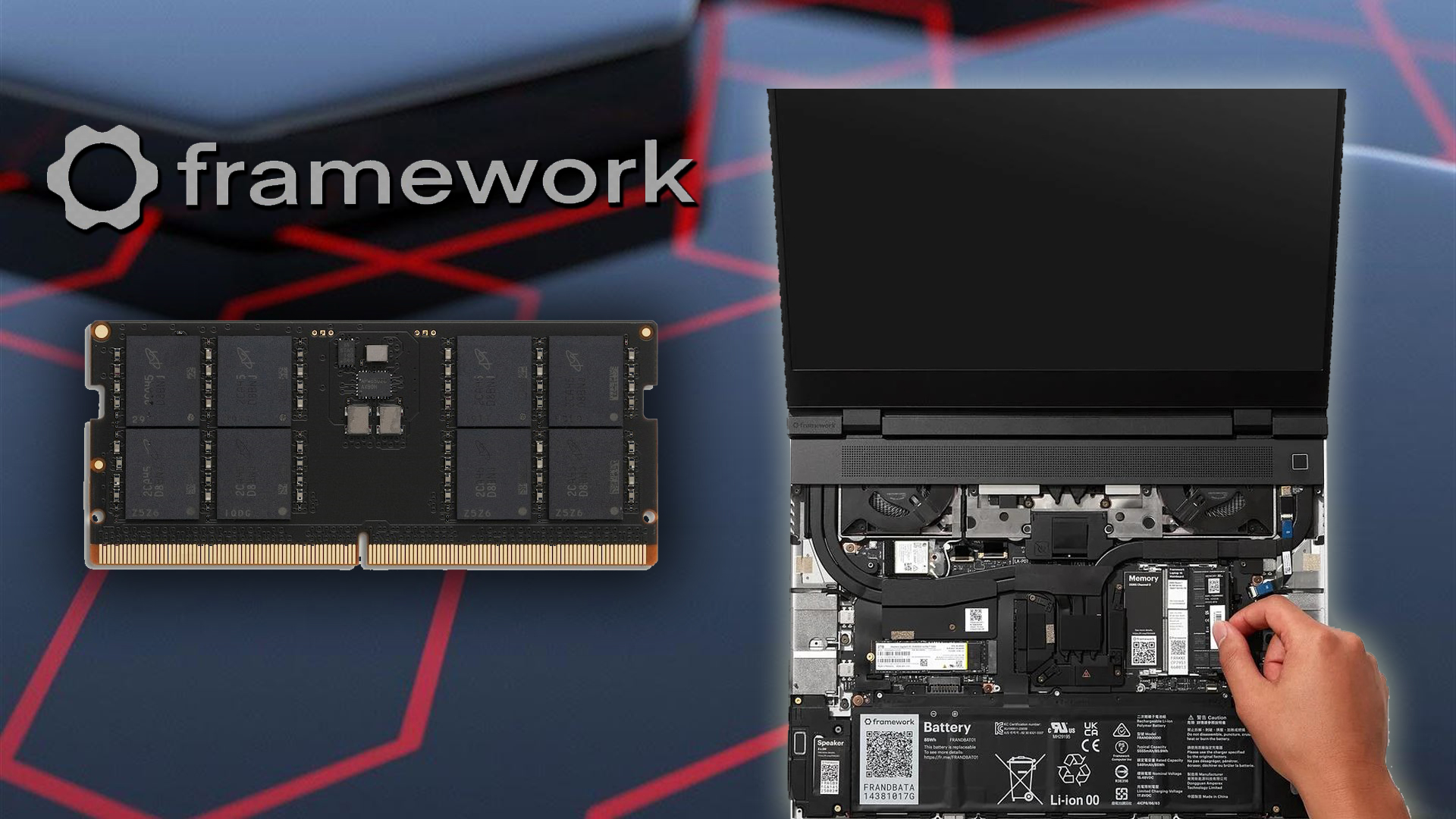
Framework laptop buyers may need to brace for another jump in DDR5 RAM prices. Framework has confirmed a second DRAM price increase for its Laptop DIY Edition memory options, saying supplier and distributor costs keep rising and it’s working to keep customer pricing as close to its real purchase costs as possible.
Just about two weeks ago, the company announced a major increase for DDR5 memory—around a 50% hike at the time. Now, Framework says it has to adjust pricing again because the cost of sourcing DRAM continues to climb. While it didn’t spell out a single percentage for this second increase, it did share a key metric behind the change: the weighted average cost of its inventory is now about $10 per GB for 8GB, 16GB, and 32GB modules, with 48GB modules costing even more.
What does that mean in practical terms for shoppers using the Laptop DIY configurator? The listed pricing appears to have risen by about $20 compared to the previous adjustment. For example, a single 8GB DDR5 module that recently sat at $60 is now $80—roughly a 33% increase in less than two weeks.
Framework also warned that this trend may not be temporary. Based on what memory suppliers are telling the company, DRAM pricing pressure could continue into early 2026. If that happens, entry-level DDR5 modules—like 8GB sticks—could potentially move past the $100 mark before long, especially if broader supply and demand dynamics don’t ease.
To help put pricing into perspective, Framework compared its RAM costs to Apple’s, claiming it still offers memory at a significantly lower effective rate. Framework cited Apple at about $25 per GB, while its own pricing—despite the increases—remains below that level. The company says it’s absorbing as much of the cost increase as it can rather than pushing all of it onto customers.
For buyers who want to reduce costs, Framework is also encouraging DIY-minded users to source compatible memory themselves and install it in their laptops. This approach is specifically relevant for the Laptop DIY Edition, where user-upgradeability is part of the appeal.
Notably, this new wave of memory price hikes currently appears limited to Framework’s laptop lineup. The Desktop DIY Edition has not seen the same RAM pricing changes so far, and the desktop configurator still lists high-capacity options—such as up to 128GB—alongside top-tier processors like the Ryzen AI Max+ 395.
For anyone planning a Framework Laptop DIY build in the near future, the key takeaway is simple: DDR5 pricing is moving fast, and waiting may not lead to lower costs. If your upgrade or build is time-sensitive, it may be worth locking in your configuration sooner—or exploring the bring-your-own-RAM route to keep your total price under control.