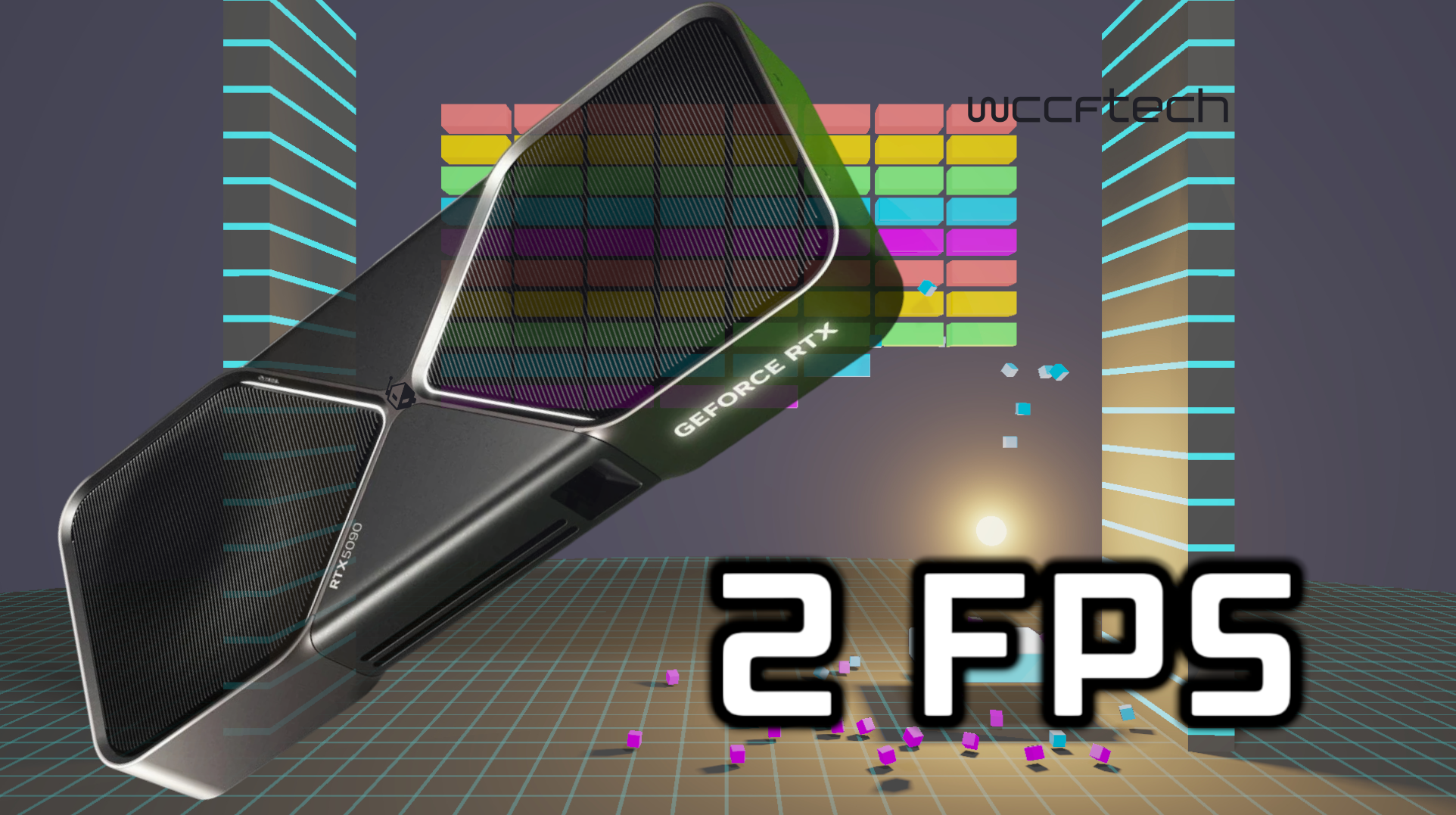
A brand-new DirectX 12 GPU benchmark called Radiance has arrived, and it’s already gaining attention for one big reason: it can overwhelm even top-tier graphics cards, including an RTX 5090. If you’re looking for a fresh way to measure raw GPU compute power—and see just how far today’s hardware can be pushed—Radiance is designed to do exactly that.
Created by tech writer Alan Dong, Radiance began as a weekend experiment and evolved into a purpose-built GPU benchmark that focuses heavily on FP32 compute performance. Instead of leaning on tricks that can skew results—like texture work, pre-baked lighting, ray tracing hardware, or AI acceleration—Radiance runs a raymarched version of the classic game Breakout using pure mathematics. No texture maps. No shortcuts. Just compute.
What makes Radiance different is its use of raymarching, a technique often seen in physics simulations and advanced rendering experiments. Traditional real-time graphics typically rely on rasterization, where geometry is transformed, pixels are filled, and shaders apply materials and lighting. Radiance takes a different route: it dispatches compute threads per pixel, marches rays through a scene defined by signed distance functions, and then calculates lighting, shadows, and global illumination based on those results—writing output directly to a render target. The end result is a benchmark that stresses compute throughput and execution efficiency far more than memory bandwidth or specialized silicon.
Radiance is also surprisingly compact. The benchmark is only around 80KB when compressed, with presets that are tiny enough to fit comfortably within modern GPU caches. There are two main presets:
– A “RTX 5090” preset that runs at 720p with 80 debris elements
– An “Extreme” preset that runs at 1080p with 640 debris elements
In practice, those settings can dramatically change performance. In testing on an RTX 5090 using the 720p preset, the run produced 2085 points with an average of 76.2 FPS and an average debris count of 58.3. Switch to the Extreme preset at 1080p with far higher debris and heavier raymarching workload, and performance can crater hard—during one run, the system reportedly dropped into the 2–3 FPS range once debris ramped up, despite showing a higher average FPS figure before the debris load fully kicked in.
Because the workload is so demanding, the developer includes a clear warning: make sure your graphics card has strong cooling, and double-check cable seating and thermal conditions—especially for high-power connectors such as 12VHPWR. Radiance is the kind of benchmark that doesn’t just test performance; it can expose weak cooling setups and power delivery issues if your system isn’t well-prepared.
Radiance ultimately positions itself as both a stress test for today’s GPUs and a preview of where real-time rendering could be headed. The creator even notes that the full visual vision—especially with advanced lighting and debris at maximum fidelity—appears to be beyond what current hardware can comfortably deliver, hinting that the smoothest experience may require next-generation GPU advances.
For enthusiasts, overclockers, and anyone who likes tracking graphics performance trends over time, Radiance is an interesting new addition to the GPU benchmark landscape—especially because it targets compute capability so directly. If future GPU launches deliver big FP32 gains and better execution efficiency, Radiance could become a go-to test for showing exactly how meaningful those improvements really are.


