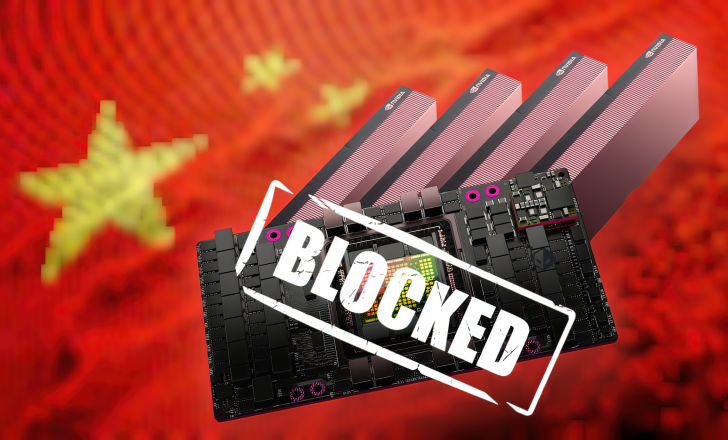
In a revealing turn of events, the co-founder of a burgeoning Chinese AI start-up has highlighted what many see as the ineffectiveness of US-imposed trade restrictions on technology exports to Beijing. Through a display of NVIDIA’s supposedly restricted H100 and H200 AI accelerators, the co-founder has underscored existing trade loopholes that allow such technology to reach Chinese shores despite the prohibitive stance of US policies.
The trade landscape between the US and China has been fraught with tension, particularly with the rise of AI technologies. The US, leveraging its technological edge, has attempted to curb the flow of AI accelerators and servers to China. However, the effectiveness of these measures is now under scrutiny as individuals and organizations in China continue to acquire these devices through alternative channels.
In a recent disclosure via social media, video clips showed access to not only NVIDIA’s AI accelerators but also high-performance AI server racks from SuperMicro. This access suggests that the US export restrictions are not as airtight as intended, with Chinese entities still securing advanced US tech, exploiting loopholes in trade agreements.
The co-founder further claims that additional shipments of NVIDIA’s H100 and H200 GPU units are en route, illuminating that the supply chain remains largely unimpeded by export restrictions. Strategies have been adopted, involving countries like Malaysia and Singapore, legally obtaining NVIDIA’s top-tier AI technology and then rerouting it to China.
Despite the US government’s policy under the Biden administration to stifle AI technological advancement in China, the plan seems only to have spurred innovation within China itself, with local alternatives sprouting. These developments signify that the current methods may not keep pace with technology’s dynamic global landscape. Tightening the entire supply chain might be necessary for substantial impact, though this approach would wrestle with the significant global role China occupies in AI markets.
In this evolving narrative, it remains clear that while technology restrictions are in place, the global connectivity and trade complexities present formidable challenges to enforcing such barriers effectively.


