Intel Wildcat Lake Laptops Arrive With a $600 Challenge to Apple’s MacBook Neo
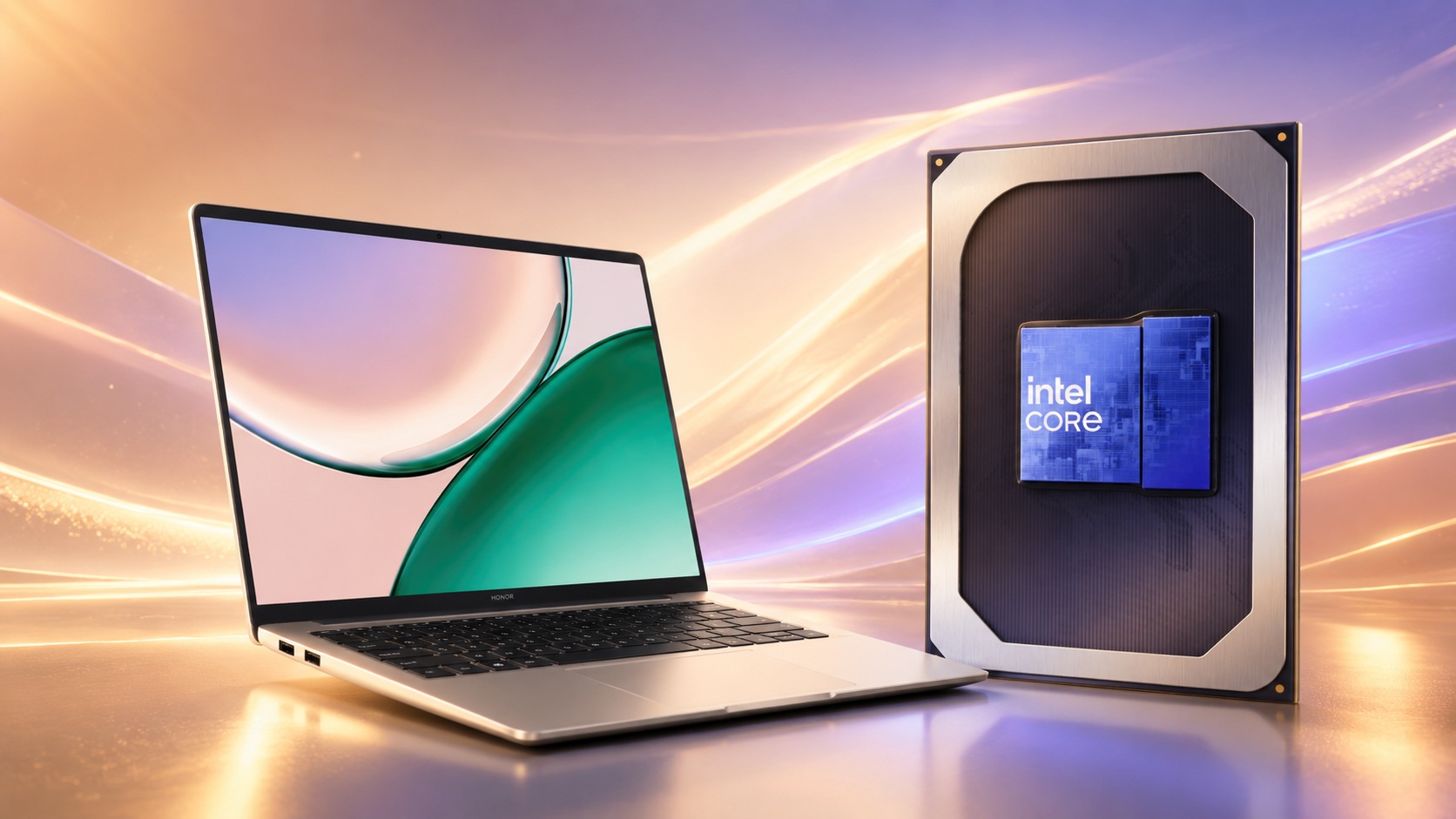
The first laptops powered by Intel’s new Wildcat Lake “Core Series 3” processors are starting to appear at retail, and they could become a serious option for buyers looking for an affordable, thin-and-light notebook. One of the earliest models to reach the market is the Honor X14, a 14-inch laptop equipped with Intel’s Core 5 320 chip and priced aggressively for mainstream users.
This launch comes at an important time for the laptop market. Apple’s MacBook Neo made a strong impression by offering a premium-looking notebook experience at a starting price of $599. With an aluminum body, access to Apple’s ecosystem, and the A18 Pro chip found in iPhones, the MacBook Neo created a compelling entry-level option for everyday computing.
That move appears to have pushed Intel and PC manufacturers to respond more directly. While affordable Windows laptops have existed for years, many of them have struggled to feel premium. Lower-cost models often meant weaker build quality, slower performance, limited memory, or less appealing displays. Intel’s Wildcat Lake platform aims to change that by giving PC makers a way to build compact, modern, and capable laptops at prices that compete more closely with Apple’s budget-friendly MacBook.
The Honor X14 is one of the first examples of this new wave. It features Intel’s Core 5 320 processor, a 6-core chip that can boost up to 4.6 GHz. The CPU includes 6 MB of cache, a 35W TDP, and integrated graphics with 2 Xe3 cores. For everyday tasks such as web browsing, productivity apps, video streaming, online meetings, schoolwork, and light creative workloads, this hardware should be more than enough for most users.
Memory and storage are where the Honor X14 becomes especially interesting. The laptop includes 16 GB of LPDDR5X-7467 memory, which is double what the entry-level MacBook Neo offers. It also comes with a 512 GB SSD, while Apple’s model starts at 256 GB and only reaches 512 GB at the higher end. For students, office workers, and general users who want more breathing room for apps, files, and multitasking, Honor’s configuration looks highly competitive.
The display is one area where Apple still has an advantage. The Honor X14 uses a 14-inch LCD panel with a 1920 x 1200 resolution, a 60 Hz refresh rate, and 300 nits of brightness. That is perfectly usable for daily work, but the MacBook Neo offers a sharper Retina display with a 2408 x 1506 resolution and up to 500 nits of brightness. Users who prioritize screen quality, outdoor visibility, or sharper text may still prefer Apple’s option.
Connectivity is a strong point for the Honor X14. It includes three USB ports, consisting of one USB 3.2 Gen 2 Type-C port and two USB 3.2 Gen 1 Type-A ports. It also offers HDMI, an audio jack, and support for Power Delivery and DisplayPort through the USB-C port. This makes the laptop more practical for users who connect accessories, external displays, storage drives, keyboards, mice, or office equipment without immediately needing dongles.
Battery capacity also favors Honor on paper. The X14 includes a 60Wh battery, compared with the MacBook Neo’s 36.5Wh battery. However, battery size alone does not guarantee longer battery life. Real-world endurance will depend on processor efficiency, display power usage, software optimization, and workload. Independent testing will be needed before drawing firm conclusions.
In terms of portability, the Honor X14 measures 311.5 x 215.5 x 16.9 mm and weighs 1.39 kg. The MacBook Neo is smaller and lighter at 297.5 x 197 x 12.7 mm and 1.23 kg. Apple’s laptop remains the more compact choice, but the Honor X14 is still well within the thin-and-light category and should be easy to carry for school, travel, and work.
Pricing is the biggest reason this launch matters. In China, the Honor X14 has appeared at retail for as low as 3,999 CNY, while Honor’s official pricing is listed at 4,399 CNY. That puts the street price below $600, while the official price converts to around $645. If similar Wildcat Lake laptops arrive in the US and other global markets at around $599, they could become very attractive alternatives to Apple’s entry-level MacBook.
There is also potential for even cheaper models. Laptops based on entry-level Core 3 Wildcat Lake chips could possibly fall closer to the $500 range, depending on configuration and region. If PC manufacturers can maintain good build quality, strong battery life, and solid performance at that price, Intel’s new platform could help revive interest in affordable Windows laptops.
For now, the Honor X14 gives Intel a promising start in the next phase of the mainstream laptop battle. It offers more memory, more base storage, strong connectivity, and a larger battery than Apple’s low-cost MacBook contender, while aiming for a similar price range. Apple still leads in display quality, compact design, and ecosystem appeal, but the gap is narrowing.
The real test will come once full reviews measure performance, thermals, fan noise, battery life, and build quality. If Wildcat Lake laptops deliver as expected, buyers looking for the best budget laptop in 2026 may soon have far more compelling Windows options to consider.


