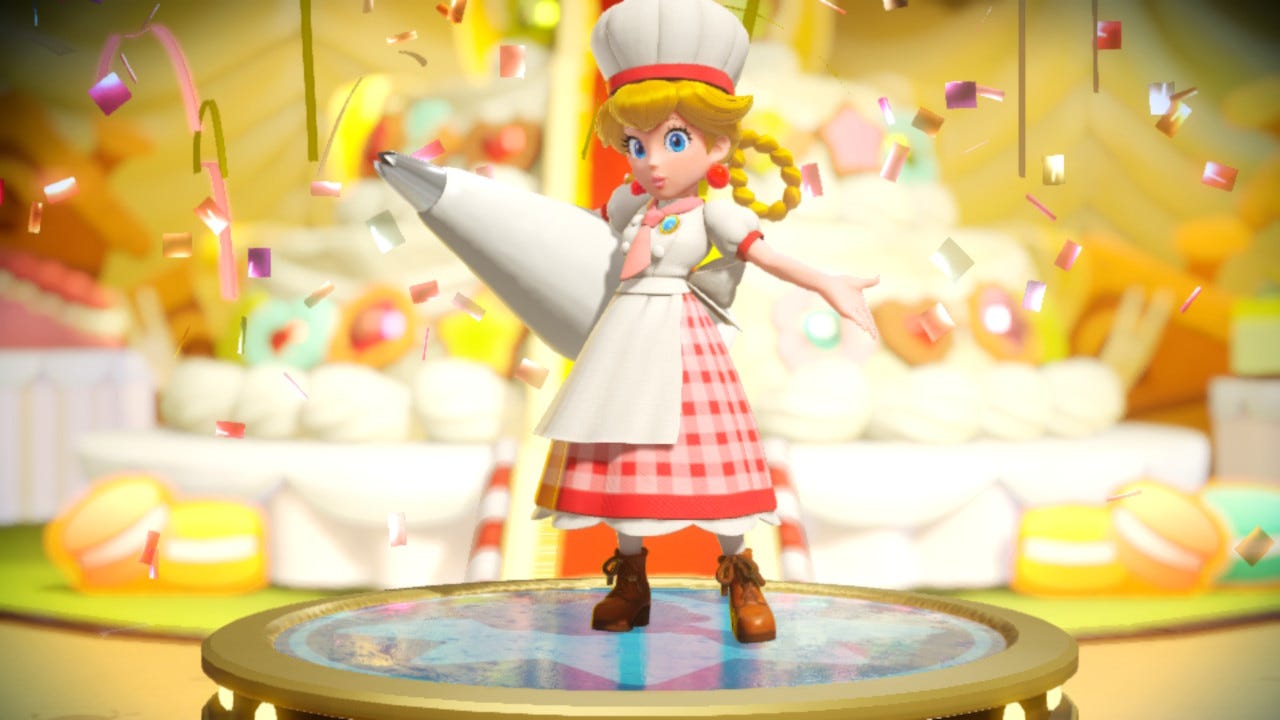
Nintendo has recently graced fans with a delightful addition to their gaming lineup – a new game centered around the beloved Princess Peach character, aptly titled “Princess Peach Showtime.” This game has sparked considerable excitement, especially among younger audiences who have been craving a game with a female protagonist to admire and emulate.
A fitting example of the anticipation comes from the experience of two young children, a seven-year-old girl and her twin brother, who have been avid enthusiasts of various Nintendo Switch games over the years. The young girl’s desire for a Princess Peach-centric game emerged when she encountered the character’s non-playable role in a Paper Mario title. The profound wish for a playable Peach game was expressive of a fundamental desire not just to enjoy the mechanics of the game, but to engage with it on a more personal level – to be represented.
“I wanted to play Princess Peach so I could be a girl,” said the seven-year-old as she articulated her thoughts about the game. This simple yet powerful statement underscores the importance of representation in video games, especially for young players who look to see themselves in the heroes they play.
The release of “Princess Peach Showtime” is notable as it marks the first Princess Peach-led game in over a decade since 2005. It represents a significant moment for Nintendo fans and the gaming community at large, spotlighting the influential role of female characters in what has traditionally been a male-dominated arena.
In delving into why such a game is eagerly anticipated, it becomes evident that children, among others, seek a diverse range of characters with whom they can identify. With this release, Nintendo acknowledges the evolving audience and varying tastes of gamers, introducing narratives and protagonists that resonate on a more inclusive level.
Playing “Princess Peach Showtime” offers an opportunity to step into the shoes of the iconic character, to embark on unique adventures, and to communicate with a variety of other characters within the rich world established by Nintendo. The game’s introduction into the market is a leap forward in empowering gamers of all genders to choose their avatars and heroes without limitations.
This new development in Nintendo’s offerings empowers young players, like the seven-year-old and her brother, to broaden their imaginative horizons. As they maneuver through in-game challenges and converse with the digital inhabitants of Peach’s world, they’re not just playing. They’re seeing a part of themselves reflected back, taking away lessons of empowerment, representation, and the joy that comes with seeing your long-awaited dreams rendered into playable reality.
For the many others who are eagerly anticipating the experience of “Princess Peach Showtime,” this game stands as a beacon of progress, of playfulness, and of the continued evolution of gaming as a medium that celebrates diversity in its storytelling and embraces every player’s right to see themselves as the hero of their own story.