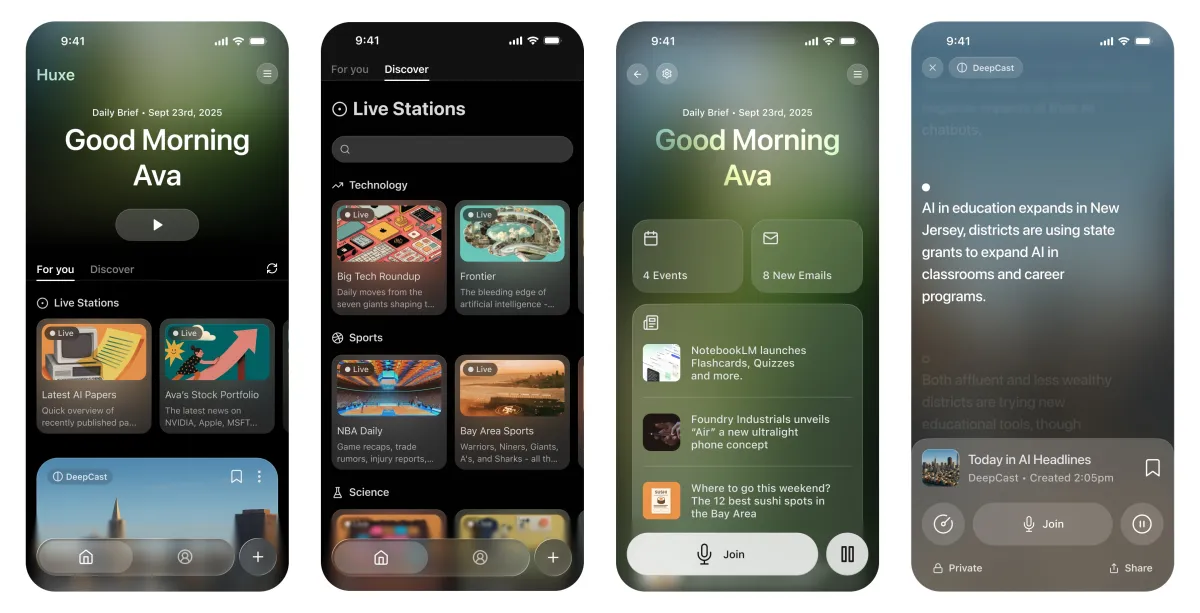
Huxe, the AI Podcast Generator Built by Former Google Developers, Is Shutting Down
Huxe, an AI-powered app that allowed users to create podcasts and podcast series from simple prompts, is officially shutting down. The decision comes at a time when major technology companies are rapidly adding similar AI audio features to their own platforms, making the space increasingly difficult for smaller startups to compete in.
The app let users enter a topic and quickly generate an audio show around it, positioning itself as a tool for learning, research, and personalized audio content. Instead of reading long articles or documents, users could turn ideas into conversational podcast-style episodes.
According to a message sent to customers, the Huxe team has decided to wind down the product and move on to new projects. The company confirmed that the app is being removed from both the App Store and Google Play Store. Users who already have Huxe installed will be able to access it for seven more days before the service stops working.
After that period, Huxe says it will delete all user-related data. The company did not give a specific reason for the shutdown.
Huxe launched in late 2024 and was founded by former Google employees Raiza Martin, Jason Spielman, and Stephen Hughes. The startup attracted attention in the growing AI audio space and raised $4.6 million from investors including Conviction, Genius Ventures, Figma CEO Dylan Field, and Google Research chief scientist Jeff Dean.
The shutdown highlights a larger challenge facing consumer AI startups. Features that once felt unique can quickly become standard additions inside larger apps and platforms. AI-generated podcasts are a clear example. After Google helped popularize the idea of turning information into podcast-style audio, several major companies began experimenting with similar tools for learning, summaries, and personalized listening.
Spotify recently introduced a personal podcast-style feature that works in a similar way, giving users AI-generated audio content based on their interests. Other companies in the AI and media space have also been moving toward tools that transform text, documents, feeds, and prompts into audio experiences.
For Huxe, this shift may have made it harder to build a sustainable business. When large platforms can offer similar AI podcast generation features to millions of existing users, smaller apps often struggle to stand out, grow, and convince people to pay.
The broader trend is clear: AI is making it easier than ever to convert content from one format into another. Text can become audio, audio can become video, and long documents can be turned into short summaries or conversational episodes. While that creates exciting new possibilities for users, it also means startups focused on only one type of content conversion may face pressure as bigger companies catch up.
Huxe’s closure is another reminder of how fast the AI market is moving. A product can feel innovative one year and become a common feature across multiple platforms the next. For users, this may mean more convenient AI tools built into apps they already use. For startups, it means the challenge is no longer just building a useful feature, but building a product that can remain valuable even when that feature becomes widely available elsewhere.
Although Huxe is coming to an end, the idea behind it is likely to continue growing. AI-generated podcasts, personalized audio learning, and on-demand summaries are becoming an important part of how people consume information. The future of audio content may be less about searching for the right podcast and more about creating one instantly around whatever a person wants to learn.