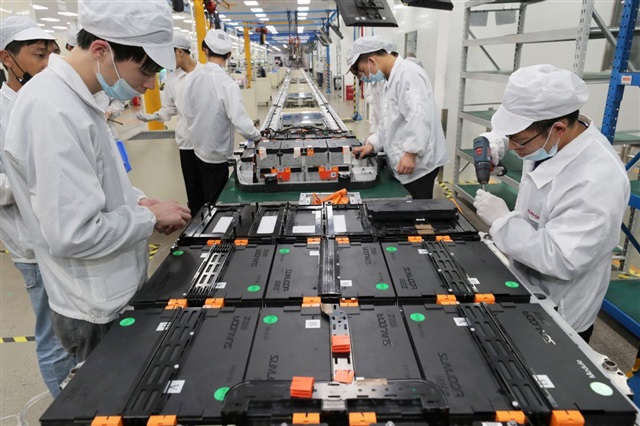
European Automakers Push for Delay on EV Battery Localization Rules
European car manufacturers are urging the European Commission to slow down the rollout of new localization rules for electric vehicle batteries, warning that the region’s battery supply chain may not be ready to meet strict domestic production requirements.
The European Automobile Manufacturers’ Association, known as ACEA, along with major automakers across the continent, is pressing policymakers to revise the timeline included in the draft Industrial Accelerator Act. The proposed rules are designed to strengthen Europe’s industrial base by encouraging more battery production, processing, and sourcing within the region.
While the goal is to reduce reliance on overseas suppliers and build a stronger European electric vehicle ecosystem, carmakers argue that the transition needs more time.
According to the industry, Europe’s battery manufacturing sector is still developing and cannot yet support the full needs of automakers at the scale required. EV batteries depend on a complex supply chain that includes raw materials, cell production, refining, component manufacturing, and recycling. Many of these areas remain heavily dependent on global suppliers, particularly from Asia.
Automakers say that introducing strict localization rules too quickly could raise production costs, slow electric vehicle output, and make European-made EVs less competitive. At a time when manufacturers are already dealing with high energy prices, fierce competition from China, and shifting consumer demand, the industry is warning that additional pressure could hurt Europe’s position in the global EV market.
The draft Industrial Accelerator Act is part of a wider effort to support clean technology manufacturing and strengthen Europe’s economic security. Battery production has become a strategic priority as the automotive sector moves away from combustion engines and toward electric mobility.
However, the debate highlights a major challenge for European policymakers: how to build a local battery industry without disrupting the electric vehicle transition.
Carmakers generally support the long-term objective of expanding battery production in Europe. They argue that a strong regional supply chain would improve resilience, create jobs, and reduce exposure to trade risks. But they are asking for a more flexible approach that reflects the current state of the industry.
A delayed or phased implementation could give battery makers more time to increase capacity, secure raw materials, and develop competitive production facilities. It could also help automakers avoid supply shortages as they scale up electric vehicle production over the next decade.
The issue is especially important as Europe works to meet climate targets and accelerate EV adoption. If localization requirements make vehicles more expensive or harder to produce, industry leaders fear it could slow consumer uptake and weaken the region’s green transition.
The European Commission now faces a difficult balancing act. On one side, it wants to promote domestic battery production and reduce dependency on foreign supply chains. On the other, it must ensure that regulations do not create new obstacles for automakers already navigating one of the most significant transformations in the history of the car industry.
For now, European automakers are making their position clear: they support a stronger local battery sector, but they want the rules to match industrial reality. A carefully timed rollout, they argue, would give Europe a better chance of becoming a global leader in electric vehicles and battery technology without putting its car industry at risk.