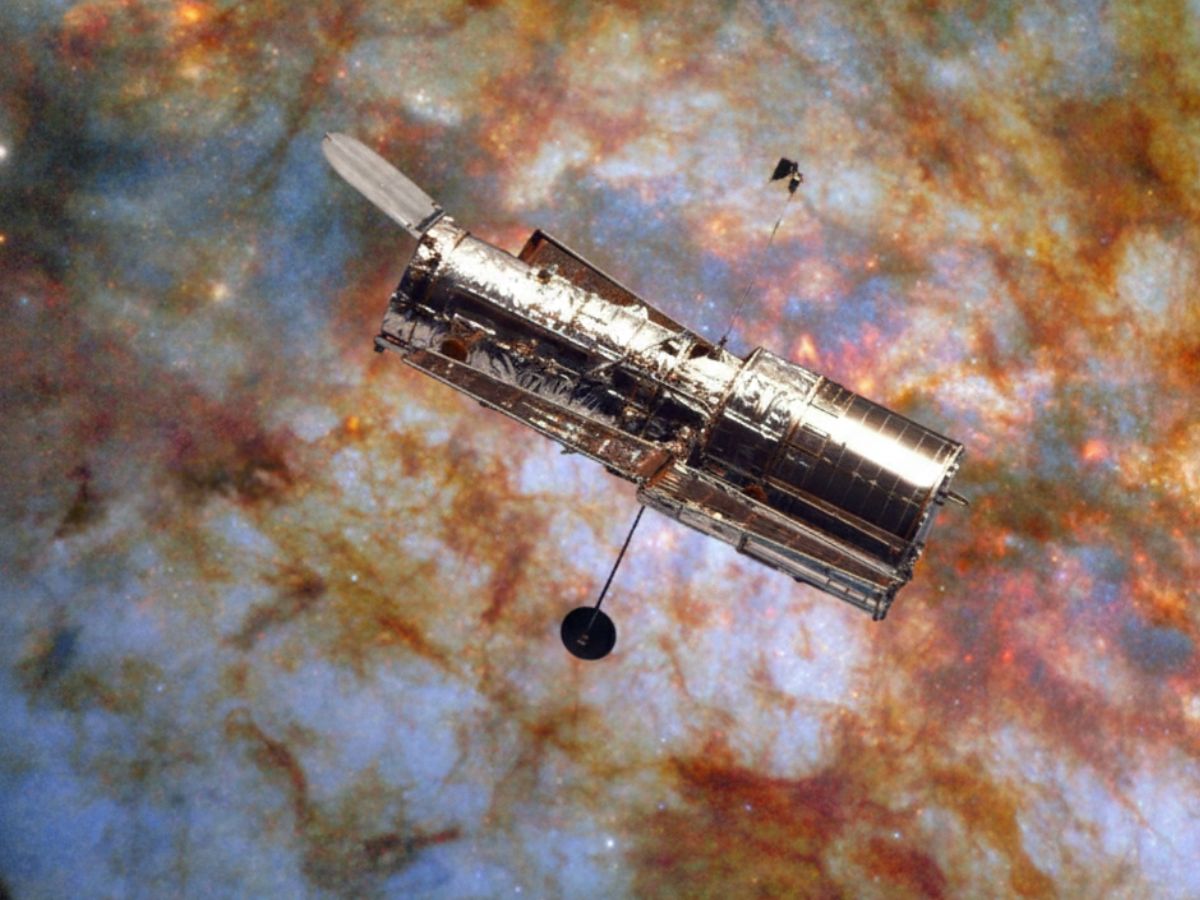
Hubble zooms in on a cosmic overachiever: the heart of Messier 82, better known as the Cigar Galaxy, a star factory churning out suns at a blistering pace. Just 12 million light-years away in Ursa Major, this nearby galaxy is forming stars about ten times faster than the Milky Way and shines roughly five times more brightly, making it a textbook example of an intense starburst galaxy.
The latest NASA/ESA Hubble Space Telescope Picture of the Week reveals the galaxy’s bustling core in stunning detail, packed with massive, youthful star clusters. The image showcases new data from the High Resolution Channel of Hubble’s Advanced Camera for Surveys—an instrument that captured ultraviolet, visible, and infrared light. Although the High Resolution Channel was only active from 2002 to 2007, its ultra-sharp observations add rare, previously unreleased detail to this view.
In the scene, bluish tones flood the center, signaling vigorous, ongoing star formation. Threaded across that glow are thick dust lanes: dark at the core and edged in red where starlight filters through. These dusty clouds obscure much of the stellar light, but they also help tell the story of how stars and clusters emerge from turbulent, gas-rich environments.
Also known as NGC 3034, Messier 82 stands out for its elongated, bar-like structure that gives it a distinctly cigar-shaped silhouette. It’s a familiar target for space telescopes, including both Hubble and the James Webb Space Telescope, yet this release brings forward details not seen in earlier images. By layering in the High Resolution Channel’s data, astronomers can probe the crowded central regions with exceptional clarity and track how tightly bound “super star clusters” take shape and evolve over time.
Why is this galaxy such a prolific star maker? The key lies in density and dynamics. Packed with gas and dust, M82’s core provides the raw material for stellar nurseries. The extreme concentration fuels rapid, clustered star formation, creating hot, massive stars that blaze bright and live fast. These stars then sculpt their surroundings with powerful winds and radiation, triggering more collapse in some regions while clearing others—a feedback loop that astronomers are eager to unravel.
Hubble’s Advanced Camera for Surveys plays a pivotal role in this investigation. With coverage across ultraviolet, visible, and infrared wavelengths, ACS can map everything from searing newborn stars to cooler dust structures that cradle future generations. The High Resolution Channel’s contribution, despite its brief operational window, is especially valuable for dissecting the fine-grained architecture of M82’s core—where precision matters most.
For researchers, M82 is more than a visual spectacle; it’s a close-by laboratory for understanding how star formation ignites, escalates, and organizes into massive clusters. Observations like this help answer fundamental questions: How do super star clusters assemble? How quickly do they mature? And how do dust and gas either nurture or hinder the birth of new stars?
As Hubble continues to target dynamic regions like the center of Messier 82, each new dataset sharpens our view of how galaxies grow and change. The Cigar Galaxy’s frenetic core, glowing in blues and veiled by dusky reds, encapsulates the drama of cosmic creation—reminding us that even in our galactic neighborhood, the universe is alive with stellar fireworks.