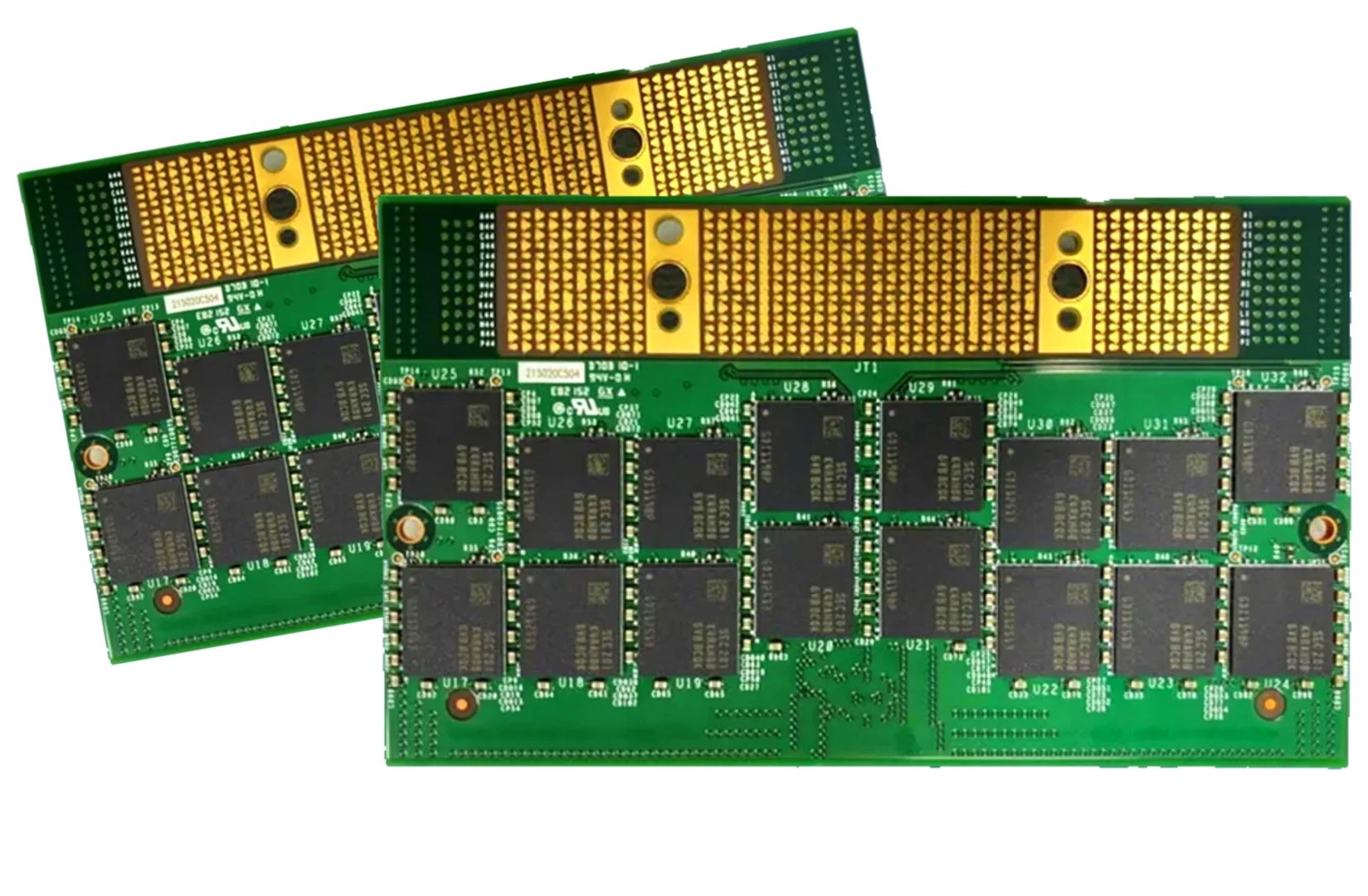
The upcoming DDR6 RAM technology is poised to make a significant leap in computer memory standards with the introduction of the CAMM2 form-factor. This new development promises to double, and potentially even triple, the transfer speeds we’re accustomed to with the current DDR5 RAM when overclocking is included in the equation.
The initial speeds of DDR6 RAM modules are anticipated to start at 8.8 Gbps. As the technology advances, we can expect to see these rates rise, with projections reaching up to 17.6 Gbps, and possibly even 21 Gbps, through overclocking enhancements. There is ongoing deliberation regarding the optimal signaling standard for DDR6, with the NRZ (non-return to zero) standard being a frontrunner to replace the less stable PAM (pulse-amplitude modulation) standard.
The shift from the conventional SO-DIMM form-factor to the new CAMM2 form-factor, which has been adopted by leading manufacturers, will play a critical role in enhancing the performance and reliability of this next-generation memory. This transition is not just about the increase in raw speed, but also about improving energy efficiency, making motherboards less complex, and providing superior upgradability options thanks to potentially larger capacities. The CAMM2 form-factor will enable RAM modules to connect horizontally, parallel to the motherboard—a design reminiscent of how DDR modules are connected in laptop motherboards.
Another exciting feature of the CAMM2 form-factor is its elimination of the need for a soldered connector by incorporating the topology directly onto the RAM module. This innovation paves the way for faster speeds and increased capacities and indicates that a new design for standard motherboard layouts will be necessary. The good news for laptop users is that this form-factor will make LPDDR6 modules easily replaceable and upgradable.
The LPDDR6 counterpart, tailored for mobile devices and slim laptops, is expected to begin with a speed of 10.66 Gbps and max out at 14.4 Gbps. Although it won’t match the top speeds proposed for DDR6, it still offers a substantial performance improvement over current standards.
Looking ahead, we could see the first mass-produced DDR6 and LPDDR6 CAMM2 modules hit the market by 2026. This timeline gives motherboard manufacturers in the desktop and potentially the laptop sector a window to prepare for integrating new layouts compatible with this revolutionary technology.
This evolution in RAM technology is anticipated to open doors for increased memory capability, paving the way for advancements across various applications from gaming to professional software use, ultimately transforming the computational power available to users.