Tesla’s Micron Memory Deal Stands Out as AI Hardware Costs Keep Rising
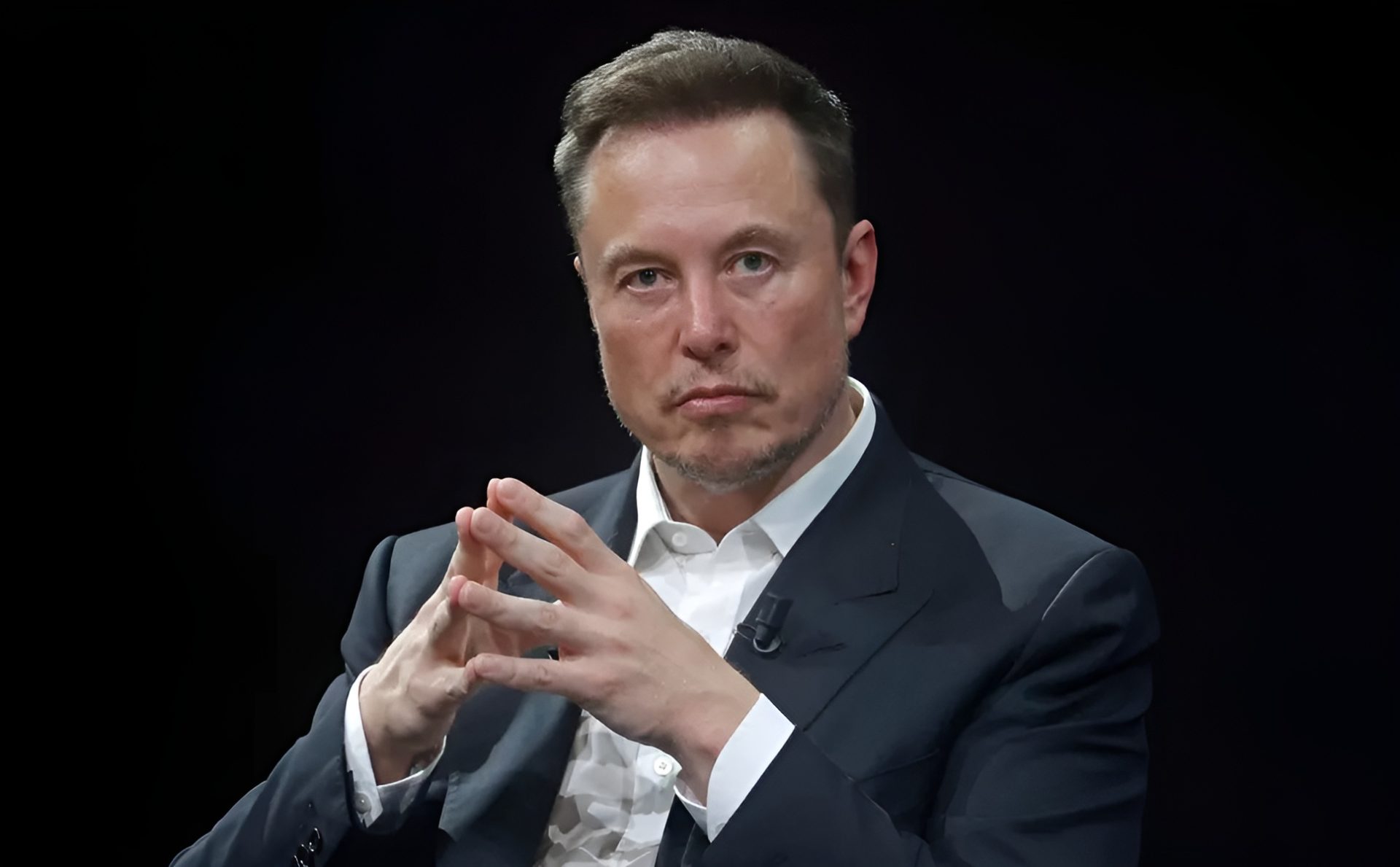
Tesla appears to have secured a valuable supply of memory chips from Micron at unusually reasonable prices, a notable advantage at a time when memory costs are climbing across the technology industry. During Tesla’s latest earnings call, Elon Musk specifically thanked Micron for providing memory allocation at “reasonable prices,” highlighting just how important chip supply has become for companies building large-scale AI and computing infrastructure.
The comment may have seemed brief, but it carried weight. Memory chips have become a critical bottleneck for artificial intelligence, autonomous driving systems, data centers, and high-performance computing. As demand for AI hardware continues to surge, companies are competing fiercely for access to advanced memory components, especially those needed to power GPU-heavy workloads.
Tesla’s latest earnings report was mixed. The company reported revenue of $28.24 billion, topping analyst expectations of around $26.32 billion and marking a 26% year-over-year increase. However, profitability was a concern. Adjusted earnings per share came in at $0.33, below the expected $0.51 and down 18% from the previous year. Gross margin also missed expectations, landing at 16.8% versus the estimated 19.4%. Automotive margin excluding credits reached 16.3%, below forecasts of 18.1%, while free cash flow was negative at approximately $1.09 billion.
Despite those weaker margin figures, Musk’s remarks about Micron gave investors and tech observers something else to focus on. In a market where memory supply is expensive and increasingly strategic, Tesla’s ability to obtain allocation at manageable prices could help the company control costs as it expands its AI ambitions.
Tesla’s computing needs are significant, though still modest compared with the largest cloud and AI infrastructure operators. The company’s Cortex 1 and Cortex 2 compute clusters are said to support roughly 90 megawatts and 115 megawatts of compute capacity, respectively. These systems are expected to play a role in Tesla’s work on autonomous driving, robotics, simulation, and AI model training.
The bigger question is whether Micron’s favorable memory allocation extends beyond Tesla to Elon Musk’s other ventures, particularly his expanding AI infrastructure projects. Musk-linked AI operations have grown rapidly, with massive GPU clusters designed to train and run advanced artificial intelligence models. These facilities require enormous amounts of high-bandwidth memory, making memory pricing and supply agreements just as important as GPU access.
One of the largest AI data center projects associated with Musk is the Colossus infrastructure buildout. As of May 2026, Colossus 1 was said to support more than 220,000 NVIDIA GPUs, including H100, H200, and roughly 30,000 GB200 AI accelerators. Colossus 2 is reportedly even larger, with more than 550,000 GPUs spread across GB200 and GB300 accelerators.
At that scale, memory supply becomes a central issue. Advanced AI accelerators rely on high-performance memory to process enormous datasets and train increasingly complex models. Even a small pricing advantage can translate into meaningful savings when hundreds of thousands of GPUs are involved. That is why Musk’s public appreciation of Micron drew attention: it may signal a deeper supplier relationship that could benefit multiple parts of his business empire.
There are also signs that Musk’s AI infrastructure footprint could expand further in Texas. A large-scale AI data center in the state would fit naturally with the broader relocation and expansion strategy already seen across his companies. Texas has become a major operational base, offering access to land, energy resources, business-friendly policies, and existing company infrastructure.
While Musk did not confirm whether Micron is supplying memory at similar terms to his other ventures, the possibility is hard to ignore. Tesla, AI data centers, robotics, autonomous driving, and next-generation computing all depend on access to advanced chips. If Micron is playing a larger role in that ecosystem, it could become an important partner in Musk’s long-term AI strategy.
For Tesla, the memory deal may not immediately offset concerns about margins, earnings, or cash flow. However, it does show that the company is still finding ways to secure key components in a difficult market. As AI demand continues to pressure semiconductor supply chains, access to reasonably priced memory could become a meaningful competitive advantage.
The broader takeaway is clear: memory chips are no longer just another hardware component. They are now a strategic resource for any company racing to build AI systems, autonomous platforms, and large-scale compute clusters. Tesla’s relationship with Micron may prove especially valuable as the competition for AI infrastructure intensifies.