Eaton Expands AI Data Center Infrastructure From Grid to Chip
As artificial intelligence workloads grow at a record pace, data centers are being pushed to deliver more power, higher efficiency and better thermal performance than ever before. Eaton is responding to that demand by broadening its role in the AI infrastructure market, moving beyond conventional power management into a more complete stack that supports facilities from the electrical grid all the way down to the chip level.
The rapid expansion of AI computing has changed what data center operators need from their infrastructure partners. Training large AI models and running advanced inference workloads require dense clusters of high-performance processors, which consume enormous amounts of electricity and generate significant heat. Traditional facility designs are often not enough to keep pace with these requirements, especially as operators look for faster deployment, better energy efficiency and improved reliability.
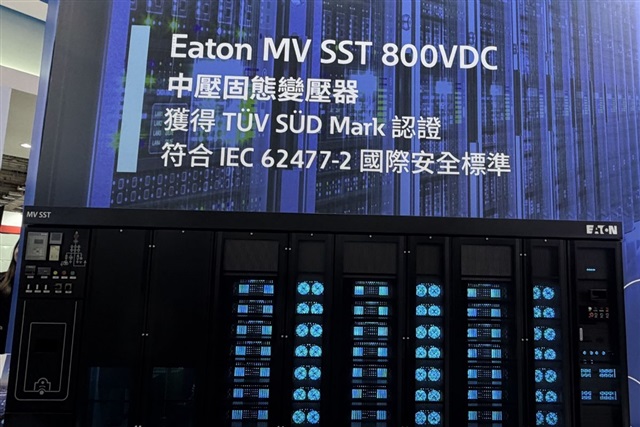
Eaton’s expanded approach focuses on three major areas: modular power deployment, advanced DC power conversion and liquid cooling. Together, these technologies are designed to help data centers scale faster while managing the complex power and cooling demands created by AI hardware.
Modular power systems are becoming increasingly important as operators race to bring new AI capacity online. Instead of relying only on custom-built electrical infrastructure that can take longer to design and install, modular systems can help speed up deployment and improve flexibility. This approach allows data centers to add capacity in stages, making it easier to match infrastructure investment with rising demand.
Another key area is next-generation DC conversion. AI servers and accelerators require highly efficient power delivery, and every step of conversion can affect overall performance, energy usage and operating costs. By improving the way power is converted and distributed closer to computing hardware, data centers can reduce losses and support higher-density deployments. This is especially important as AI chips continue to become more powerful and power-hungry.
Liquid cooling is also becoming a central part of AI data center design. Air cooling is increasingly challenged by the heat generated from dense AI server racks. Liquid cooling can remove heat more efficiently, helping maintain performance and reliability while allowing operators to pack more computing power into the same physical space. For AI facilities, this can be a major advantage as space, power and cooling capacity become critical constraints.
Eaton’s strategy reflects a broader shift in the data center industry. Power and cooling are no longer separate concerns handled after computing systems are selected. Instead, they are becoming core parts of AI infrastructure planning. From grid connection and electrical distribution to rack-level power delivery and chip-level cooling, every layer must work together to support the next generation of computing.
As AI adoption continues to accelerate across cloud services, enterprise platforms, research, automation and digital applications, the need for resilient and efficient data center infrastructure will only increase. Companies building or expanding AI facilities are looking for solutions that can reduce deployment time, improve uptime and lower energy waste while supporting massive compute density.
By extending its capabilities across the full data center power and thermal chain, Eaton is positioning itself as a key infrastructure provider for the AI era. The company’s expanded focus highlights how essential power management, DC conversion and liquid cooling have become in enabling modern AI workloads.
The future of AI data centers will depend not only on faster chips and more powerful servers, but also on the infrastructure that keeps them running efficiently. Eaton’s move from grid-level power support to chip-focused cooling and conversion shows how the industry is evolving to meet the growing demands of artificial intelligence.