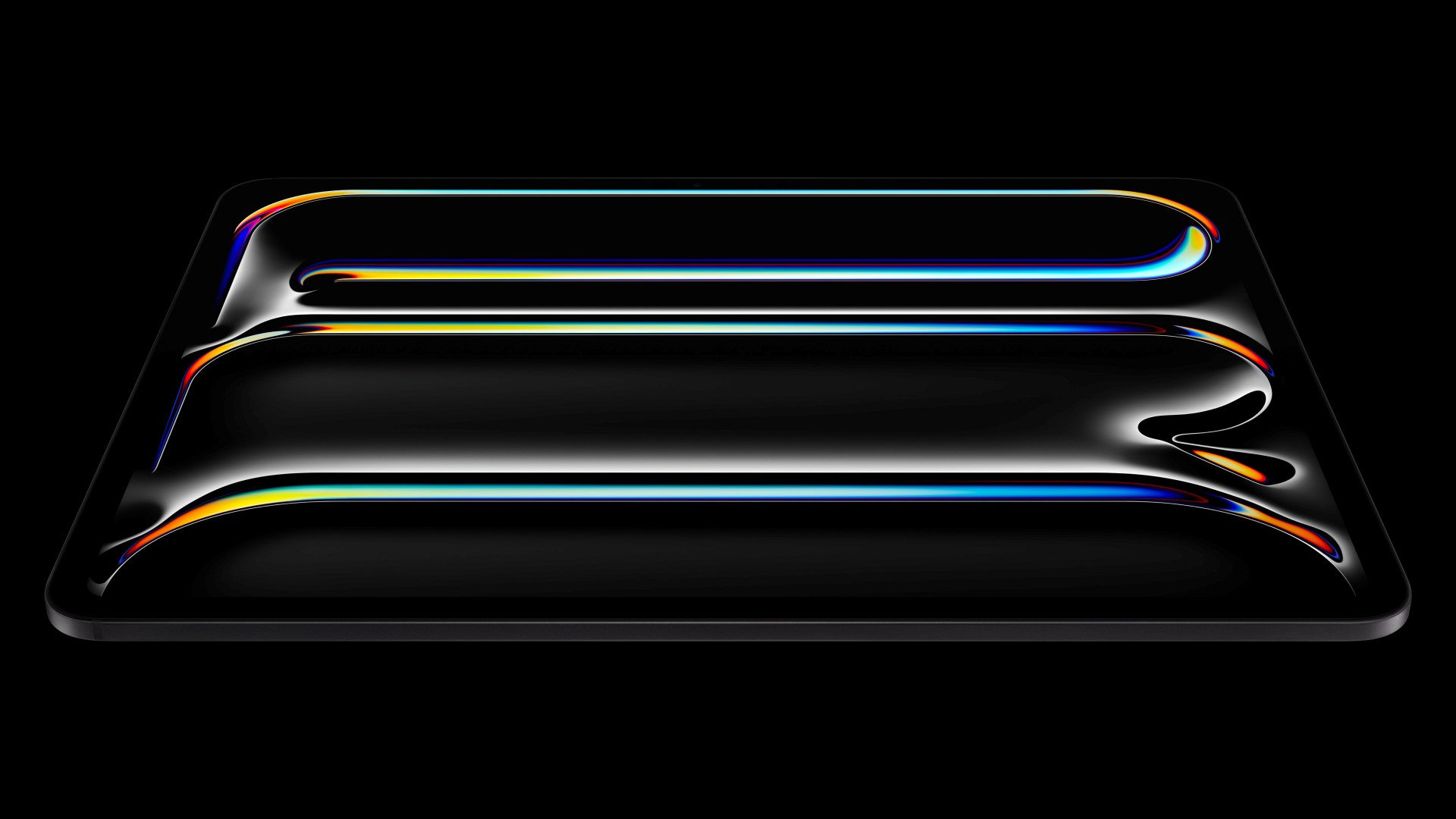
An early unboxing of the M5 iPad Pro has given us a clearer picture of Apple’s next premium tablet, and the takeaway is straightforward: expect a specs-focused refresh rather than a sweeping redesign. Most notably, the rumored dual front-camera setup appears to be missing, despite reports that Apple had planned to include it.
The idea behind two front cameras was simple and user-friendly—one optimized for portrait use and the other for landscape—so video calls and content creation would feel more natural regardless of how you held the device. In the clip circulating online, however, the M5 iPad Pro is shown alongside the M4 model, and there’s no sign of a second selfie camera. The two tablets look nearly identical at a glance.
According to Mark Gurman’s latest newsletter, the dual-camera configuration was indeed on the roadmap. He notes that Apple has a track record of cutting features late in development, citing earlier examples like an additional dock connector planned for the original iPad and alternate storage configurations that never shipped. If accurate, the second front camera may be another casualty of that late-stage decision making.
Why would Apple drop a feature that sounds so convenient? Usage patterns likely played a role. Owners of the larger 13-inch model tend to use the tablet in landscape for streaming, web browsing, and productivity, which already aligns the front camera with how most people interact with the device. On the 11-inch model, rotating the tablet for a call or recording is less of a burden, potentially reducing the real-world value of a second lens.
Cost and component priorities are another likely factor. Apple appears to have focused its bill of materials on performance upgrades instead. The M5 chip is said to be up to 34 percent faster than the M4 in testing, and the base memory is expected to jump to 12GB from 8GB on the previous generation. If the M5 is built on TSMC’s advanced 3nm N3P process, that move alone carries a premium. Industry reports indicate chipmakers have faced up to a 24 percent cost increase to adopt N3P for next-gen mobile processors. It’s reasonable to assume Apple is managing similar cost pressures and is directing resources toward the processor and memory—improvements that benefit every user in everyday tasks and pro workflows.
Put together, the picture that emerges is a familiar one for Apple: keep the design refined, invest heavily in performance and efficiency, and quietly sideline features that may add complexity or cost without a broad payoff. If you’re upgrading from an older iPad Pro, the draw this year is likely the faster M5 silicon, extra RAM for multitasking, and the same sleek hardware—just without the rumored second front camera. As always, final details will only be certain once Apple formally unveils the product, but for now, expect a power-centric update rather than a major hardware shake-up.