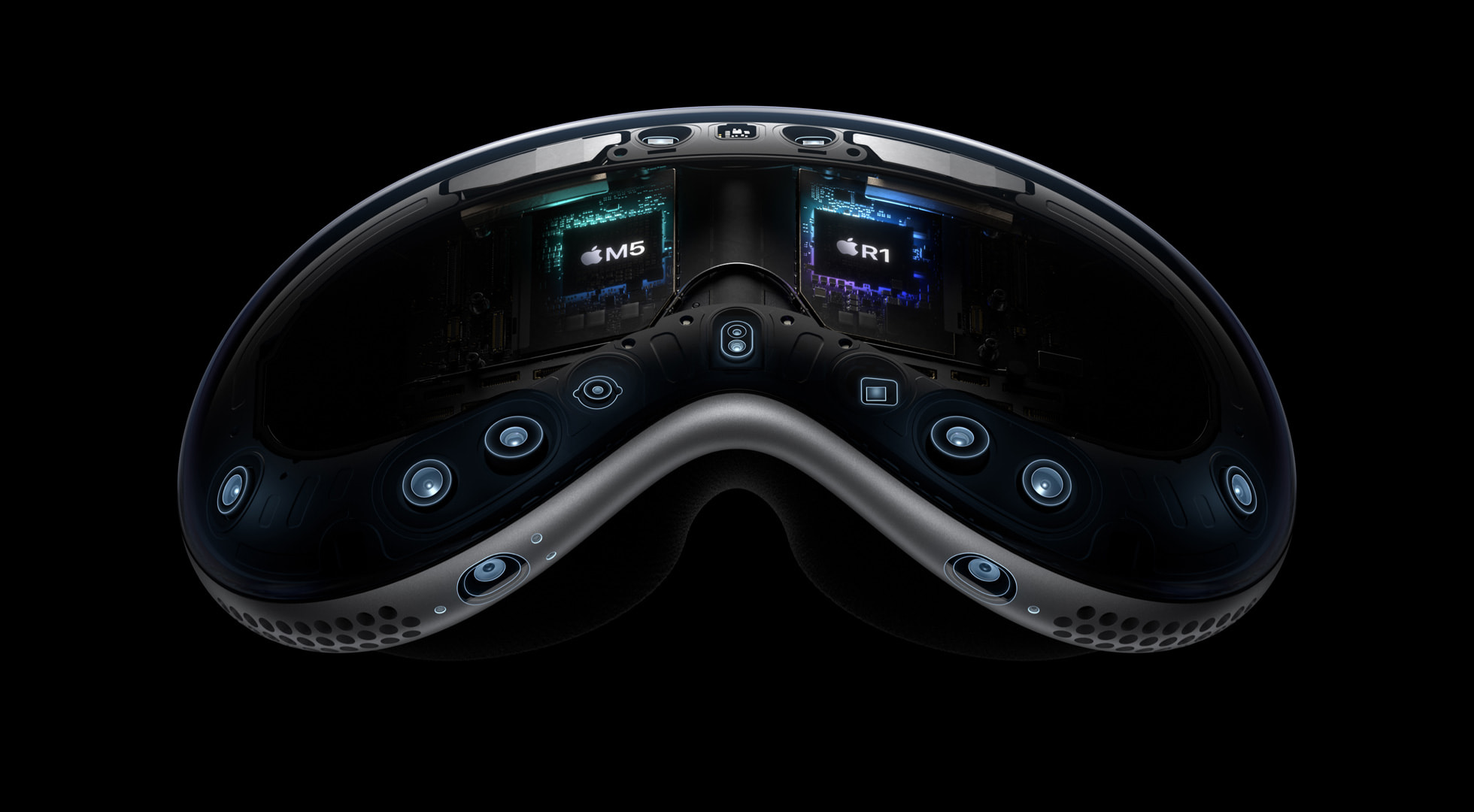
Apple’s first-generation Vision Pro left many early adopters underwhelmed, thanks to a sky-high price and limited day-to-day utility. Now there’s another twist: those original headsets aren’t eligible for trade-in toward a new model.
Tucked into Apple’s latest retail updates is a clear line on upgrade options: Vision Pro units can’t be traded in. You can still trade in other eligible devices for credit toward a new purchase or an Apple Gift Card, but the first-gen Vision Pro isn’t on that list. For a product that launched at around $3,500, the absence of a trade-in pathway is striking. Without an official upgrade route or a price floor, prospective buyers may think twice about jumping into Apple’s mixed-reality ecosystem.
The newest Vision Pro model, referred to as the M5 Vision Pro, starts at $3,499 with 256GB of storage, and scales up to 512GB and 1TB options. That pricing mirrors the original positioning at the very top of the market. Yet the trade-in exclusion raises questions about how Apple sees the product’s lifecycle—and whether it envisions frequent upgrades or a longer replacement cadence.
There may be a broader strategy shift behind the scenes. Reports suggest Apple has paused work on a future Vision Pro iteration internally known as N100, which was previously expected around 2027. Instead, attention appears to be shifting toward AI-enabled smart glasses targeted for 2026. These glasses are rumored to integrate cameras, microphones, and speakers, all tied into an upgraded version of Siri for more natural, on-the-go interaction. If accurate, it signals a pivot toward a lighter, more mainstream wearable that can compete directly with rivals pushing hard into AI glasses.
That potential change in direction could also explain why trade-ins for the original headset aren’t on the table. If Apple’s near-term wearable focus is moving toward AI-first glasses rather than another heavy, high-end mixed-reality headset, the company may be less incentivized to recycle first-gen Vision Pro units into an ecosystem it’s deprioritizing.
Another notable shift is where Apple is building the latest hardware. Packaging for the M5 Vision Pro indicates assembly has moved to Vietnam rather than China. This aligns with a broader supply chain strategy aimed at diversification and resilience. Vietnam has deepened trade ties with the United States, making it an attractive manufacturing base as companies look to hedge geopolitical risk and reduce single-country exposure.
What it means for buyers is simple: if you own the original Vision Pro, you shouldn’t expect Apple to offer trade-in credit toward the new model. If you’re considering entering the ecosystem now, the decision likely comes down to whether the latest Vision Pro’s capabilities and content library justify the premium—especially with AI-centric smart glasses reportedly on the horizon.
Key takeaways:
– Apple isn’t accepting trade-ins for the first-generation Vision Pro.
– The new M5 Vision Pro starts at $3,499 with 256GB, 512GB, and 1TB storage options.
– Reports indicate Apple has paused a next-gen Vision Pro (N100) and is prioritizing AI smart glasses for a potential 2026 launch.
– Assembly for the latest Vision Pro has shifted to Vietnam, reflecting supply chain diversification.
For consumers, the lack of a trade-in path raises the cost of staying current. For Apple, it may be a sign that the company is recalibrating its mixed-reality ambitions toward lighter, AI-forward wearables that could reach a much broader audience.