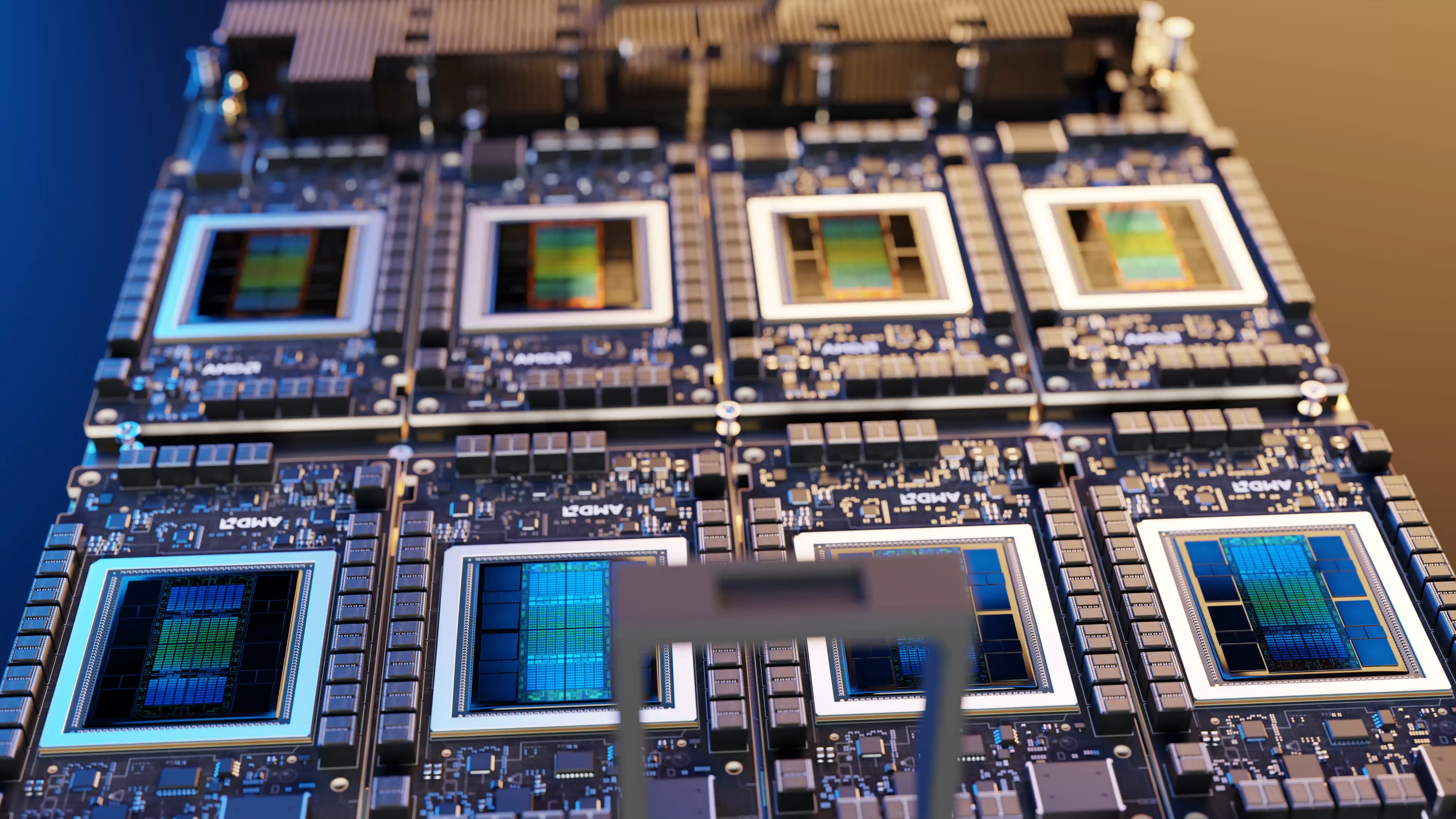
Advanced Micro Devices (AMD) appears to be experiencing lower than anticipated demand for its MI300X AI accelerator. This trend could potentially delay the launch of its upcoming MI350X refresh to 2026. According to an analysis by a financial management firm, the demand issues are leading AMD to order fewer HBM (High Bandwidth Memory) supplies from its main HBM provider, indicating a reduction in production and a scaling back of expectations.
Industry insights reveal that AMD’s rivals, particularly NVIDIA, have had a considerable head start in the AI arena, having established their AI technologies years earlier with the introduction of the Volta V100 GPUs in 2017. This head start has allowed NVIDIA to dominate the AI accelerator market, challenging AMD to play catch-up.
Lack of confidence in AMD’s AI product viability has been highlighted, considering the lower demand levels for their current leading AI offering, the Instinct MI300X. This softening in demand has ramifications for AMD’s supply chain, affecting its decisions on HBM procurement and calling into question its competitiveness in the AI space.
Another pivot point for AMD’s AI strategy is the production timeline of their next-gen Instinct MI350 accelerators. Projections now point towards the first half of 2026 for ramping up production, a stark contrast to NVIDIA’s schedule, which is expected to shift to a new generation beyond Blackwell by the same period.
AMD’s AI future may become clearer with their CEO, Lisa Su’s address at Computex 2024. During this event, the company may disclose more details regarding its AI roadmap and address the current uncertainties facing its accelerator products. With NVIDIA’s strong market position, AMD will need to leverage innovative strategies to bridge the widening gap in the fast-evolving AI market.