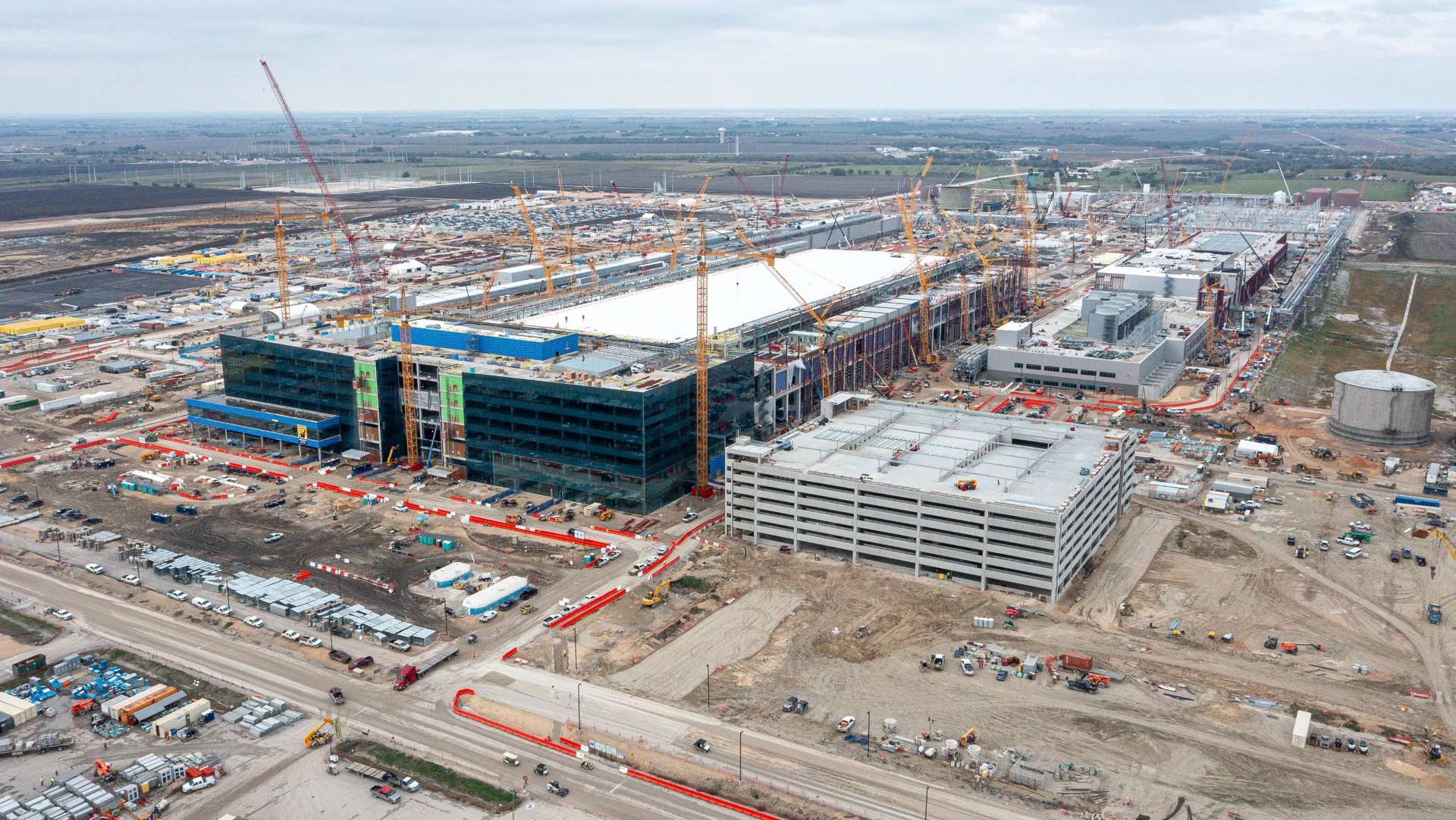
Samsung’s ambitious plans to make a significant mark on the U.S. chip market are hitting unexpected hurdles, as the much-anticipated opening of its flagship Taylor facility has been postponed.
Despite securing incentives exceeding $37 billion, Samsung is struggling to deliver chips to the U.S. on time. Companies like Samsung and TSMC eagerly jumped at the opportunity to set up manufacturing facilities in the U.S., spurred by the CHIPS Act under the Biden administration. Initially, there was optimism that these semiconductor giants would quickly bolster American chip production. However, many large-scale projects, including Samsung’s, have faced delays or remain stagnant. The Taylor facility, slated to begin operations by 2024, has yet to open, illustrating this industry-wide lag.
According to recent reports, Samsung’s Texas facility might now commence operations in 2026, even though it’s nearly finished. The Korean tech giant is reportedly struggling to secure customer orders for this plant. This difficulty stems from the fact that current local chip demand is leaning towards advanced processes like 4nm and beyond. Unfortunately, the Taylor facility lacks adequate production lines to cater to this need.
Customer demand isn’t particularly robust, and the technology Samsung planned years ago no longer aligns with today’s requirements. Revamping the plant to meet these new demands would involve significant costs, prompting Samsung to adopt a cautious, wait-and-see strategy.
Despite these setbacks, the Taylor facility is nearly 92% complete, according to internal documents from March. Samsung is now considering adjusting its technological roadmap to better serve domestic customers. Recently, rumors have surfaced that Samsung is prepping 2nm production lines at Taylor, aligning with a potential rollout by 2026, around the same time TSMC is expected to reach similar capabilities in Arizona.
A major factor in Samsung’s delay is TSMC’s escalating dominance in the U.S. semiconductor scene. TSMC’s success with its Arizona fab has captivated the domestic supply chain, securing deals with industry leaders like NVIDIA and AMD for its 4nm chips. Despite considerable financial backing from the CHIPS Act, Samsung is struggling to establish a similar foothold.