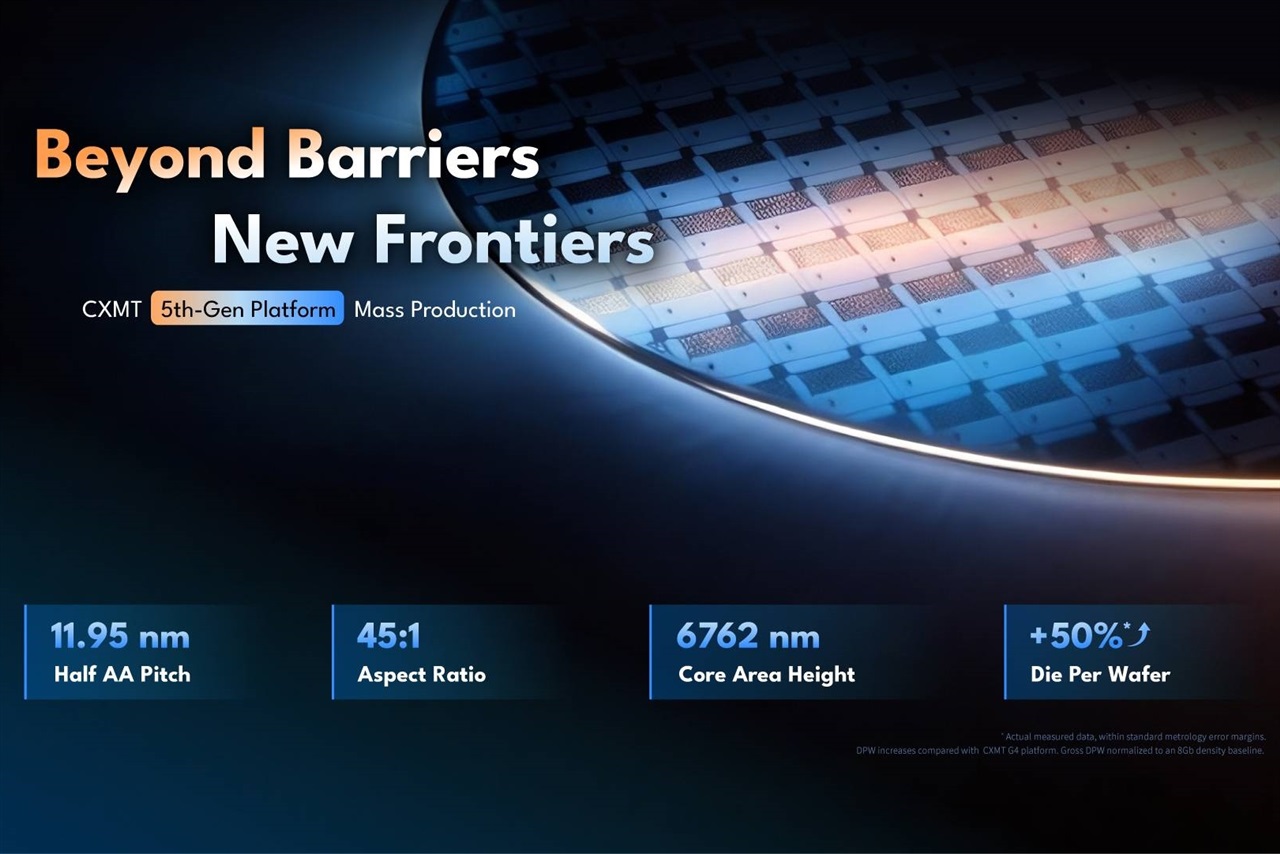
CXMT Gains Momentum in Global DRAM Market as Samsung and SK Hynix Focus on HBM
China’s ChangXin Memory Technologies, better known as CXMT, is becoming a stronger player in the global DRAM market as major memory manufacturers shift more of their production toward high-bandwidth memory. With Samsung Electronics and SK Hynix prioritizing HBM for artificial intelligence and advanced computing demand, the supply of traditional DRAM is becoming tighter, creating a valuable opening for CXMT to expand its presence.
The global memory market is undergoing a major transition. Demand for HBM has surged as AI servers, data centers, and high-performance computing systems require faster and more efficient memory solutions. This has pushed leading DRAM suppliers to dedicate more wafer capacity and investment to HBM products, which offer higher margins and are increasingly essential for next-generation processors.
As a result, conventional DRAM production is facing pressure. Products used in PCs, smartphones, consumer electronics, and mainstream servers may see tighter supply conditions as top-tier manufacturers focus on advanced memory categories. This shift gives CXMT a chance to fill part of the gap, especially in segments where buyers are looking for stable supply and more competitive pricing.
CXMT has been steadily improving its DRAM capabilities in recent years. While the company still trails established global leaders in advanced process technology and premium memory products, it has made noticeable progress in scaling production and improving product competitiveness. Its growing role is particularly important for China’s domestic semiconductor supply chain, where reducing reliance on foreign memory suppliers remains a strategic priority.
The timing could work in CXMT’s favor. When major DRAM producers reduce emphasis on conventional memory, customers may seek alternative suppliers to secure inventory and manage costs. If CXMT can deliver consistent quality and volume, it could strengthen its position in mainstream DRAM markets and increase its share among device makers and component distributors.
This does not mean CXMT will quickly overtake Samsung Electronics, SK Hynix, or Micron in the global DRAM industry. The memory business is highly capital-intensive, technologically complex, and sensitive to market cycles. Leading suppliers still hold major advantages in advanced manufacturing, research and development, customer relationships, and product diversity. However, even a small shift in market share can be meaningful in a sector as large and strategically important as DRAM.
The rise of HBM is also changing how memory companies allocate resources. HBM is more difficult to manufacture than standard DRAM, requiring advanced packaging and tighter integration with high-performance processors. Because of this, companies that can produce HBM at scale are focusing heavily on that area to capture rising demand from AI chipmakers and cloud infrastructure providers.
That leaves the conventional DRAM market in a more interesting position. If supply remains limited while demand stays steady, prices could strengthen. This would benefit companies that continue to support standard DRAM production. CXMT may be one of the beneficiaries, particularly in markets where cost efficiency and supply availability matter more than cutting-edge performance.
For China, CXMT’s progress carries broader significance. Memory chips are a core part of the semiconductor industry, and DRAM is used across nearly every digital device. A stronger domestic DRAM supplier could support China’s electronics manufacturers and help build a more resilient local supply chain. It could also increase competition in the global memory market, especially in entry-level and mid-range DRAM categories.
Still, challenges remain. CXMT must continue improving yields, manufacturing efficiency, product reliability, and technology development. The company also operates in a competitive and politically sensitive semiconductor environment, where access to advanced tools and global markets can influence long-term growth.
Even with those hurdles, CXMT’s opportunity is becoming clearer. As Samsung Electronics and SK Hynix put more attention on high-bandwidth memory for AI and data center applications, the traditional DRAM market is opening space for alternative suppliers. If CXMT can take advantage of this moment, it may become a more visible force in the global memory chip industry.
The DRAM market is entering a new phase shaped by AI demand, HBM expansion, and shifting production priorities. In that changing landscape, CXMT’s growth is worth watching closely.