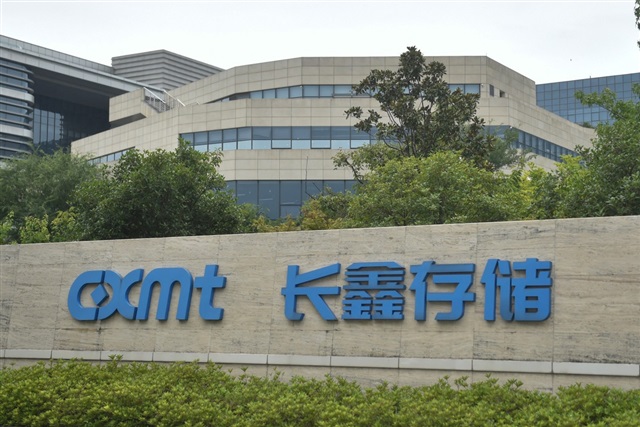
CXMT Moves Closer to LPDDR6 Mass Production, Raising Pressure on Global Memory Giants
China’s ChangXin Memory Technologies, better known as CXMT, is reportedly approaching the final stage of research and development validation for LPDDR6 memory. If completed successfully, the milestone would bring the company closer to mass production of next-generation mobile DRAM, a critical component expected to power future smartphones, tablets, laptops, AI devices and other high-performance mobile electronics.
LPDDR6 is set to become the next major leap in low-power memory technology. Compared with current-generation mobile DRAM, it is expected to deliver faster data transfer speeds, improved energy efficiency and stronger performance for demanding workloads such as on-device artificial intelligence, advanced gaming, high-resolution cameras and multitasking on premium mobile devices.
For CXMT, progress toward LPDDR6 mass production is significant. The company has been working to strengthen China’s position in the global semiconductor supply chain, especially in memory chips, where major international players have long dominated. A successful move into LPDDR6 production would signal that CXMT is becoming more competitive in one of the most advanced areas of mobile memory.
The development could also increase pressure on established memory leaders such as Samsung Electronics, SK Hynix and Micron. These companies currently hold strong positions in the global DRAM market and are expected to play a major role in supplying LPDDR6 to device makers once the technology becomes widely adopted. CXMT entering the race would add another competitive force, potentially influencing pricing, supply availability and future investment in mobile memory innovation.
LPDDR memory is especially important because modern devices require more bandwidth while consuming less power. As smartphones and portable computers become more AI-focused, memory performance is becoming just as important as processor speed. Faster and more efficient DRAM can help devices run complex AI models locally, process images more quickly, support smoother gaming and improve battery life.
Although CXMT still needs to complete validation and prove it can produce LPDDR6 at scale with stable yields, its progress highlights how quickly the memory industry is evolving. Mass production of advanced DRAM is technically difficult, requiring precision manufacturing, strong quality control and consistent output. Reaching this stage suggests that CXMT is making meaningful progress in closing the technology gap with larger global competitors.
The timing is also important. Demand for high-performance mobile memory is expected to grow as device makers prepare for the next wave of AI smartphones and thinner, more powerful laptops. LPDDR6 could become a key feature in flagship devices, helping manufacturers differentiate products through faster response times, improved power efficiency and enhanced AI capabilities.
If CXMT successfully brings LPDDR6 to mass production, it could reshape parts of the mobile DRAM market and give device manufacturers more sourcing options. Greater competition may benefit the broader technology industry by encouraging faster innovation and potentially improving supply chain flexibility.
For now, CXMT’s LPDDR6 progress remains a development to watch closely. The company’s move toward next-generation mobile DRAM production shows that competition in the memory chip market is heating up, and the race to supply the future of AI-powered mobile devices is becoming more intense.