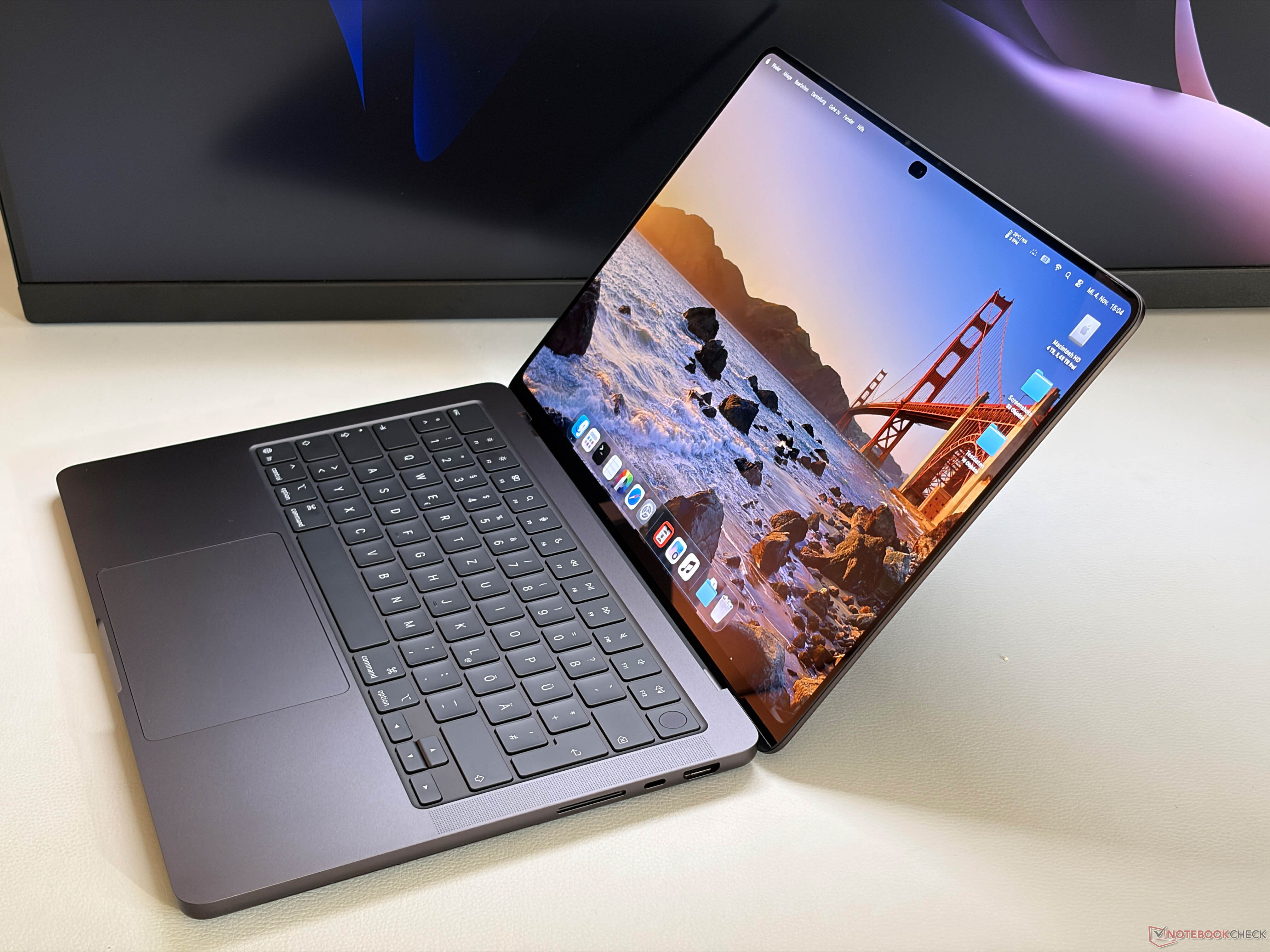
Apple’s first OLED MacBook Pro could signal a major shift for the MacBook lineup, and it may finally open the door for a long-awaited OLED MacBook Air. For years, Apple has carefully separated its laptop models by display quality, using screen technology as one of the clearest reasons to push buyers toward the more expensive MacBook Pro.
The MacBook Air remains one of the best everyday laptops for students, professionals, and casual users. It is thin, light, efficient, and powerful enough for most tasks. However, its display has stayed relatively conservative. Current MacBook Air models still use IPS panels with a 60 Hz refresh rate, a specification that feels increasingly dated as OLED and high-refresh-rate screens become more common across tablets, phones, and premium laptops.
That limitation is unlikely to be accidental. Apple’s MacBook lineup has long been built around clear product tiers. The MacBook Air offers portability and value, while the 14-inch MacBook Pro justifies its higher price with a much better display, stronger cooling, and more premium features. Even when the base 14-inch MacBook Pro uses a chip that is not dramatically different from what is available in the MacBook Air, its Mini-LED display with 120 Hz ProMotion gives it a major advantage.
If Apple were to give the MacBook Air an OLED display today, the entry-level MacBook Pro could become much harder to justify. A slim, lightweight Air with an OLED screen would be extremely appealing to a large portion of buyers, especially those who do not need the extra performance headroom of a Pro machine. That could reduce demand for the more expensive model, and Apple is unlikely to risk that without reshaping the rest of the lineup first.
The arrival of an OLED MacBook Pro changes the situation. By moving the Pro line to OLED, Apple creates a new premium display tier above Mini-LED. Over time, this could allow the company to phase out the older Mini-LED version and reposition the MacBook Air with a more advanced screen of its own. In other words, once the MacBook Pro has moved far enough ahead, Apple may finally have room to upgrade the MacBook Air without weakening the appeal of its professional laptops.
An OLED MacBook Air would make sense from a technology and marketing perspective. OLED panels offer deeper blacks, stronger contrast, faster pixel response times, and potentially better power efficiency depending on usage. For everyday tasks like watching movies, editing photos, browsing the web, and working with documents, the improvement in visual quality would be immediately noticeable.
However, Apple would almost certainly keep some differences between the MacBook Air and MacBook Pro. Even if the MacBook Air eventually gets OLED, it may not receive the same display technology as the Pro models. The company could limit peak brightness, color performance, or sustained HDR capability to maintain a clear gap between the two product families.
The biggest question is refresh rate. Apple may choose to keep the OLED MacBook Air at 60 Hz, reserving 120 Hz ProMotion for the MacBook Pro. This would follow a familiar strategy: give the more affordable product a major screen upgrade, but hold back the smoothest and most premium experience for the higher-end device.
That approach would be disappointing for users who expect modern premium laptops to offer high-refresh-rate displays as standard. A 60 Hz OLED panel would still look better than today’s IPS screens in many ways, but it would not feel as fluid as a 120 Hz display when scrolling, switching apps, or working with motion-heavy content. From a business point of view, though, it would allow Apple to promote OLED on the MacBook Air while still giving buyers a reason to spend more on the MacBook Pro.
The broader strategy is clear: Apple rarely upgrades every product at once in a way that blurs the lines between models. Instead, it carefully staggers features across the lineup. The Pro models receive the newest and best technology first. Once they move to a higher tier, older premium features can trickle down to more affordable devices.
That could be exactly what happens with the MacBook Air. The new OLED MacBook Pro may not just be a display upgrade for professional users. It may also be the first step toward a future where the MacBook Air finally gets an OLED screen.
Still, buyers should not expect Apple to turn the MacBook Air into a cheaper MacBook Pro. If an OLED MacBook Air arrives, it will likely be positioned as a premium upgrade over the current Air, possibly at a higher starting price. Apple may also continue using a more affordable entry-level MacBook to cover the lower end of the market, while pushing the Air slightly further upmarket.
For consumers, this could be both exciting and frustrating. An OLED MacBook Air would be one of the most attractive laptops Apple has ever made, combining portability, battery life, and outstanding image quality. At the same time, Apple’s habit of limiting certain features means it may not deliver the full display experience many users want unless they pay for a MacBook Pro.
The new OLED MacBook Pro therefore matters beyond the Pro lineup itself. It may mark the beginning of a new MacBook display era, one where Mini-LED gradually disappears, OLED becomes the premium standard, and the MacBook Air finally receives the visual upgrade users have been waiting for.
If Apple follows its usual pattern, the MacBook Pro will remain the showcase for the best screen technology, while the MacBook Air gets a carefully controlled version later. The question is not whether Apple can build an OLED MacBook Air. It almost certainly can. The real question is when Apple decides the lineup is ready for it.


