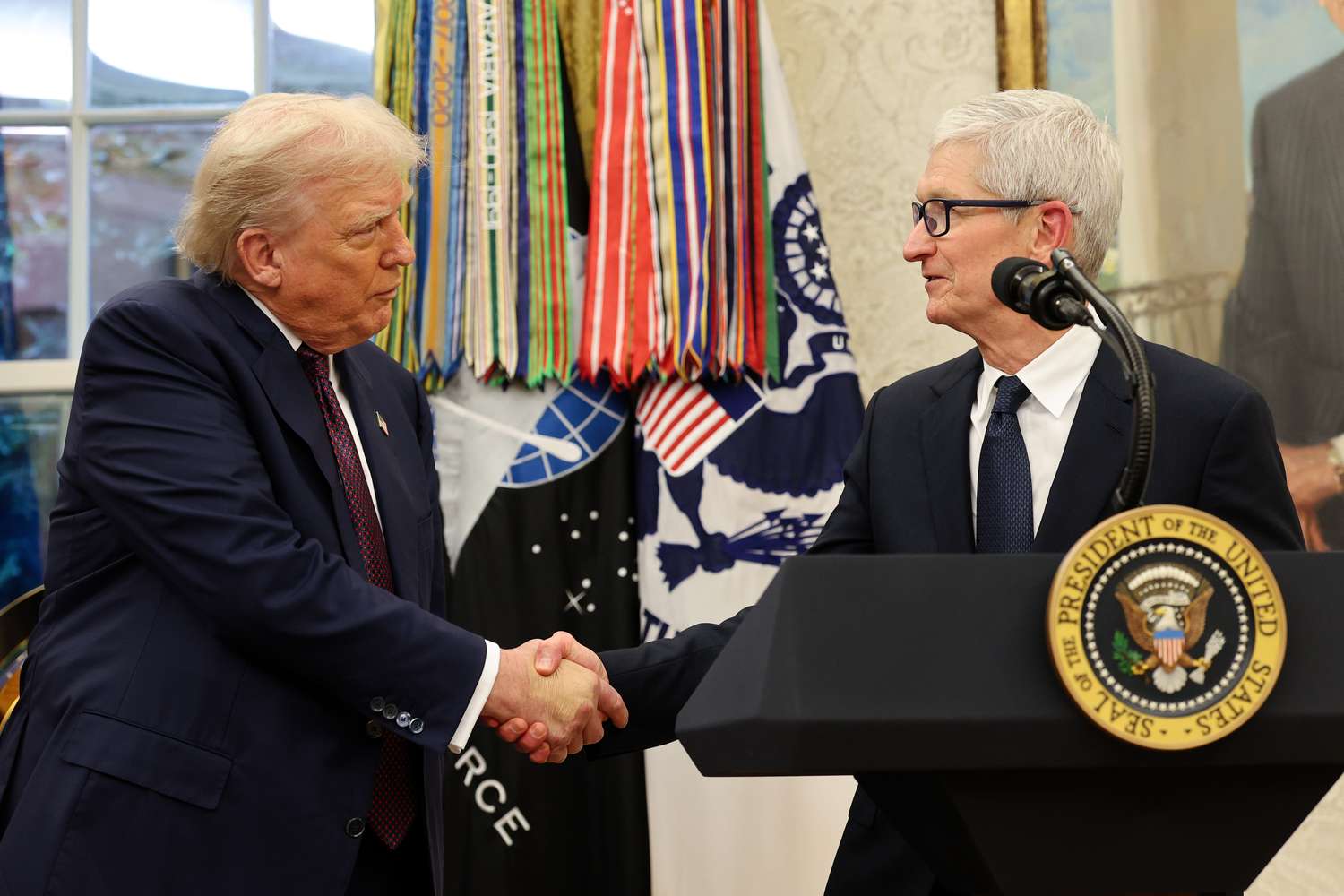
It seems that U.S. President Donald Trump has recognized the challenges in manufacturing iPhones entirely within the country, despite earlier assertions of having the necessary resources. Recently, Apple announced a significant boost in its U.S. investment, raising the amount from $500 billion to $600 billion over four years. When questioned about shifting final product assembly to the U.S., President Trump suggested it could happen if Apple CEO Tim Cook is given enough incentive.
This massive investment is poised to generate thousands of jobs domestically, though iPhone assembly will still predominantly occur overseas. While President Trump desires a local Apple supply chain, it’s a complex issue due to long-established global manufacturing networks.
Apple has been attempting to diversify its production model, moving some assembly to India, partly to align with U.S. trade stipulations. However, the company’s reliance on its mature supply chain in China remains. Shifting iPhone production to the U.S. would mean that while assembly might change locations, the materials and components—over 1,000 per device—would still largely originate from China.
Analysts like Bloomberg’s Mark Gurman have expressed skepticism about a full production shift to the U.S., citing the intricate nature of the 2,700 components in a single iPhone. Even if U.S. tariffs on imported Apple devices persist, experts suggest Apple might absorb those costs to sustain profitability.
In summary, while there are efforts to increase U.S. investments and job creation by Apple, the dream of manufacturing iPhones entirely within the U.S. seems complex and distant.


