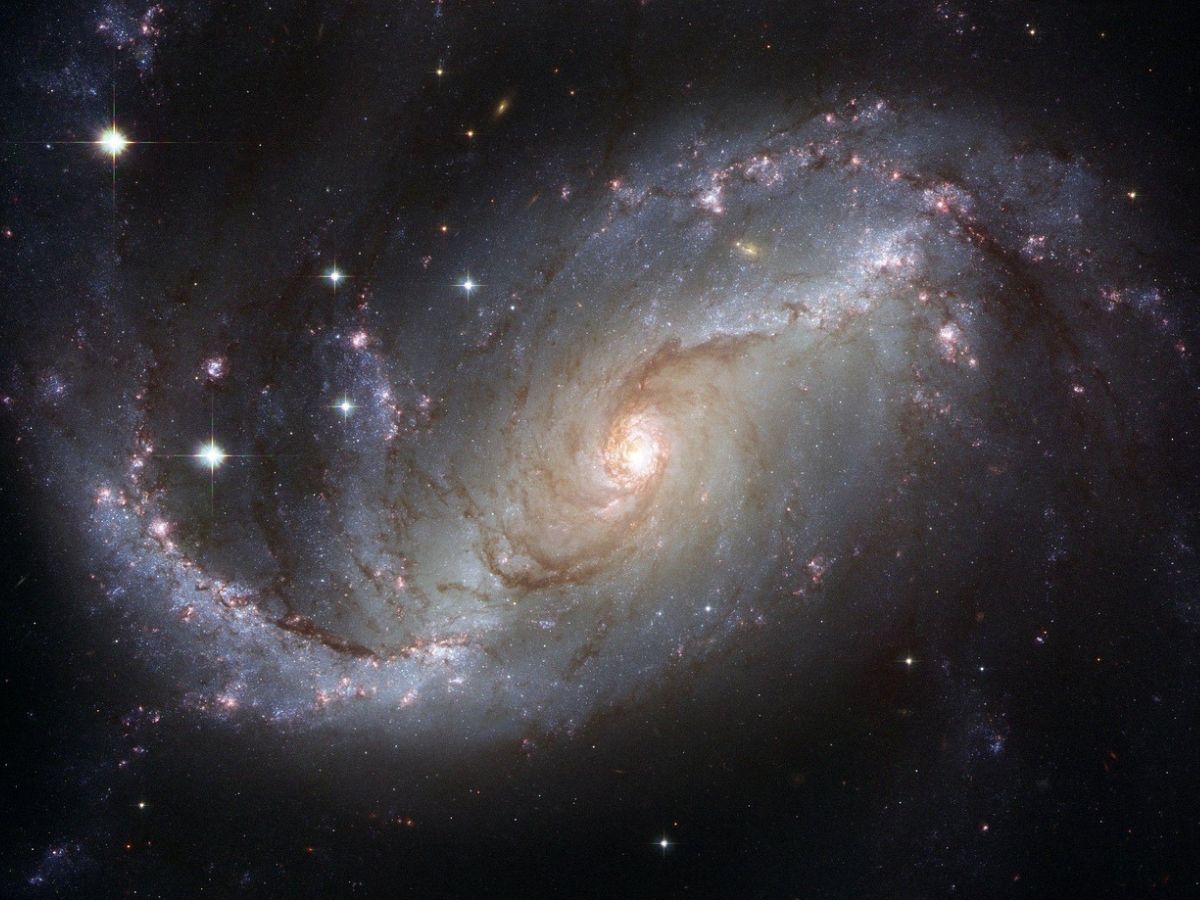
A newborn galaxy from the universe’s youth is turning heads—and cranking out stars at a staggering pace. Astronomers have identified a distant system, dubbed Y1, located more than 13 billion light-years from Earth, that forges stars far faster than the Milky Way does today. Seen as it was in the universe’s earliest era, Y1 offers a rare look at a time when star formation across the cosmos ran hot and heavy.
The discovery, detailed in a study published in Monthly Notices of the Royal Astronomical Society, comes from observations with the ALMA (Atacama Large Millimeter/submillimeter Array) observatory in Chile. By measuring the glow from interstellar dust in Y1, researchers estimated a dust temperature around minus 180 degrees Celsius. That might sound frigid, but for a young galaxy like this, it’s unusually warm—an unmistakable sign that stars are forming at an extreme rate. One of the study’s authors explained that while the dust is chilly compared to what we experience on Earth, it’s warmer than in similar early-universe galaxies, confirming Y1 as an “extreme star factory.”
How extreme? The team estimates Y1 is producing new stars roughly 180 times faster than the Milky Way. Findings like this suggest such hyperactive “starburst” galaxies may have been common shortly after the Big Bang, helping to shape the early cosmic web and enrich space with the heavy elements needed for future stars and planets.
While Y1 provides a striking snapshot of the cosmic dawn, scientists say more observations are needed to understand how galaxies ramped up to such ferocious productivity—and how long these starburst phases lasted. Continued studies with ALMA and complementary observatories will refine dust temperature measurements, star-formation rates, and the physical conditions that fueled these early stellar booms.
For now, Y1 stands as compelling evidence that the young universe was teeming with energetic, rapidly growing galaxies—systems that laid the foundations for the calmer, more mature galaxies we see around us today.