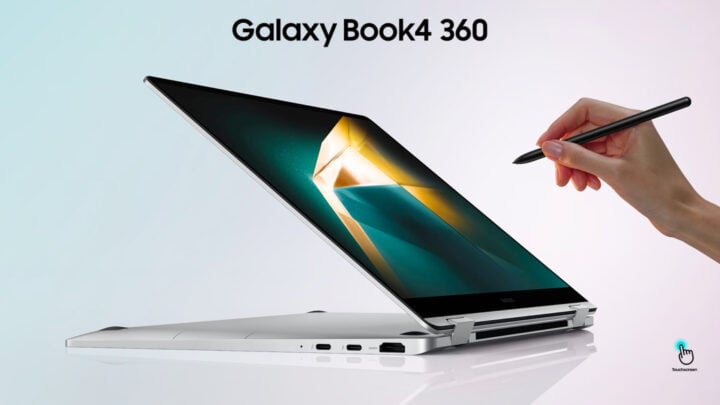
The newly unveiled Galaxy Book 4 360 and Samsung’s Galaxy Tab S9 Ultra serve distinct functions within the tech ecosystem. The former is a Windows-powered convertible notebook, while the latter is a high-end Android tablet. Due to their flexible designs, there’s a bit of overlap in functionality, particularly when considering capabilities like touchscreen interfaces and potential laptop replacement.
The Galaxy Book 4 360, starting at $1,099, boasts an Intel Core i5 processor, 8GB of RAM, 512GB storage, and a 15.6-inch AMOLED touchscreen compatible with an S Pen (sold separately). Meanwhile, the Galaxy Tab S9 Ultra offers a 14.6-inch display with 12GB of RAM and 256GB storage, priced at $1,199, with no included keyboard. If you’re seeking a laptop alternative, the Tab S9 Ultra might require additional investment to utilize Samsung DeX.
Is the Galaxy Book 4 360 a Better Option Than the Tab S9 Ultra?
Price-wise, the Galaxy Book 4 360 seems like a tempting proposition over the Tab S9 Ultra, especially if S Pen usage isn’t a priority. However, questions around Android app compatibility arise when considering using a Windows device in place of an Android tablet.
Microsoft’s Windows Subsystem for Android (WSA) gives users the ability to run Android apps on Windows 11, though it’s limited to those available on the Amazon Appstore, excluding the Galaxy Store or Google Play Store. For those willing to tinker, third-party emulators like BlueStacks offer alternative methods to access Android apps on a Windows system.
In theory, with the use of such tools, the Galaxy Book 4 360 could suffice as an Android tablet and a rival to the Tab S9 Ultra. But the real test comes down to user experience and comfort.
Comfort and Experience in Tablet Use
Transitioning the Galaxy Book 4 360 into tablet mode reveals some design drawbacks compared to the Tab S9 Ultra. Notably, the convertible laptop is thicker at 13mm and heavier at over 1.4 kg, while the Galaxy Tab S9 Ultra stands at a slim 5.5mm and weighs almost half as much. Moreover, the Book 4 360 features an FHD display with a 60Hz refresh rate, which doesn’t quite match the Tab S9 Ultra’s 2960 x 1848 AMOLED panel with a 120Hz refresh rate.
Despite these considerations, the Galaxy Tab S9 Ultra takes the lead in terms of sleek design, comfort, and display quality, as well as being equipped with an S Pen and being both dust and water-resistant. It’s undoubtedly geared towards those seeking a premium tablet experience with multimedia consumption at the forefront.
On the flip side, the Galaxy Book 4 360 shines in its native habitat — as a productivity-centered Windows 11 laptop that can ingeniously handle Android apps with a bit of user intervention.
In conclusion, each device has its merits for their respective prices. The Galaxy Book 4 360 may win on versatility and productivity potential, thanks to Windows 11. The Galaxy Tab S9 Ultra, however, delivers the ultimate Android tablet experience with enhanced portability and multimedia prowess, with the bonus of laptop-like productivity via DeX and an optional keyboard.
Ultimately, neither device can entirely replace the other. Your choice will rest on whether you prioritize tablet-centric qualities or desktop-class versatility and productivity with a side of Android capability.