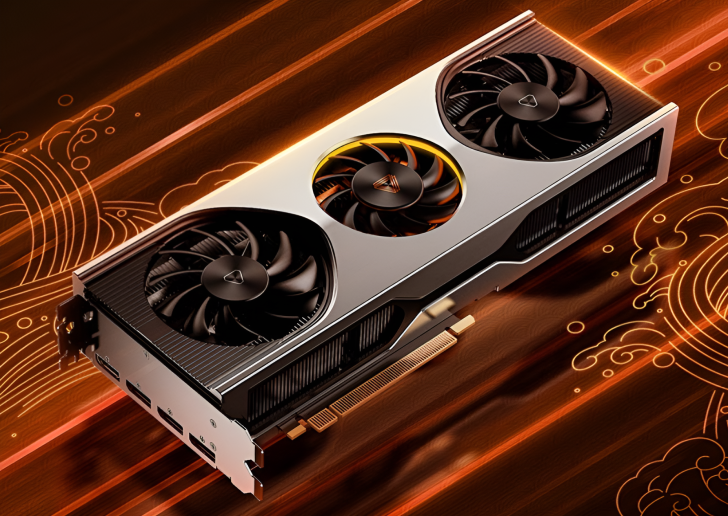
Chinese consumer GPU manufacturers are taking bold steps in the global AI arena by supporting DeepSeek’s R1 LLM models on local systems. Moore Threads and Baidu’s Kunlun GPUs are now fully equipped to run these advanced AI models, positioning China as a competitive force in AI technology.
In their quest to outpace industry giants, Chinese companies are not only creating AI models to rival those from OpenAI but are also enhancing the AI hardware to support them. After reporting on Huawei’s ambitious move to challenge NVIDIA with its Ascend 910C AI chip, it’s now evident that Moore Threads and Baidu’s Kunlun are making significant strides. These companies have integrated support for DeepSeek’s R1 model into their consumer GPUs, boosting the computational capabilities needed in this high-stakes race.
Moore Threads has achieved remarkable success by providing support for DeepSeek’s distillation models through a specialized deployment service. Their MTT S80 and MTT S4000 consumer GPUs, with the latter tailored for workstation tasks, can now run these advanced AI models. The firm’s KUAE cluster, using MTT S4000 GPUs and designed exclusively for AI workloads, further demonstrates Moore Threads’ commitment to enhancing AI capabilities.
This development is a major milestone for Moore Threads, as enabling DeepSeek’s AI models on local machines will likely increase the adoption of their products among professional users. While the performance of these models on Moore Threads’ GPUs remains unverified against competitors like AMD and NVIDIA, the support signifies a significant leap forward.
Meanwhile, Baidu, a renowned Chinese tech giant, has developed its own AI cluster featuring the Kunlun Core P800 AI chips. Reports indicate that the Core P800 outperforms mainstream GPUs by 20-50%, supports 8-bit inference, and offers lower deployment and maintenance costs. These chips fully support DeepSeek’s V3/R1 AI models, with inference deployment being reportedly straightforward.
Baidu’s AI cluster, comprising 30,000 Core P800 GPUs, will soon be operational, underscoring China’s commitment to advancing AI technology. These developments highlight how Chinese manufacturers are not hindered by global influences and are instead focusing on building a sustainable, domestically-driven hardware ecosystem for the future.