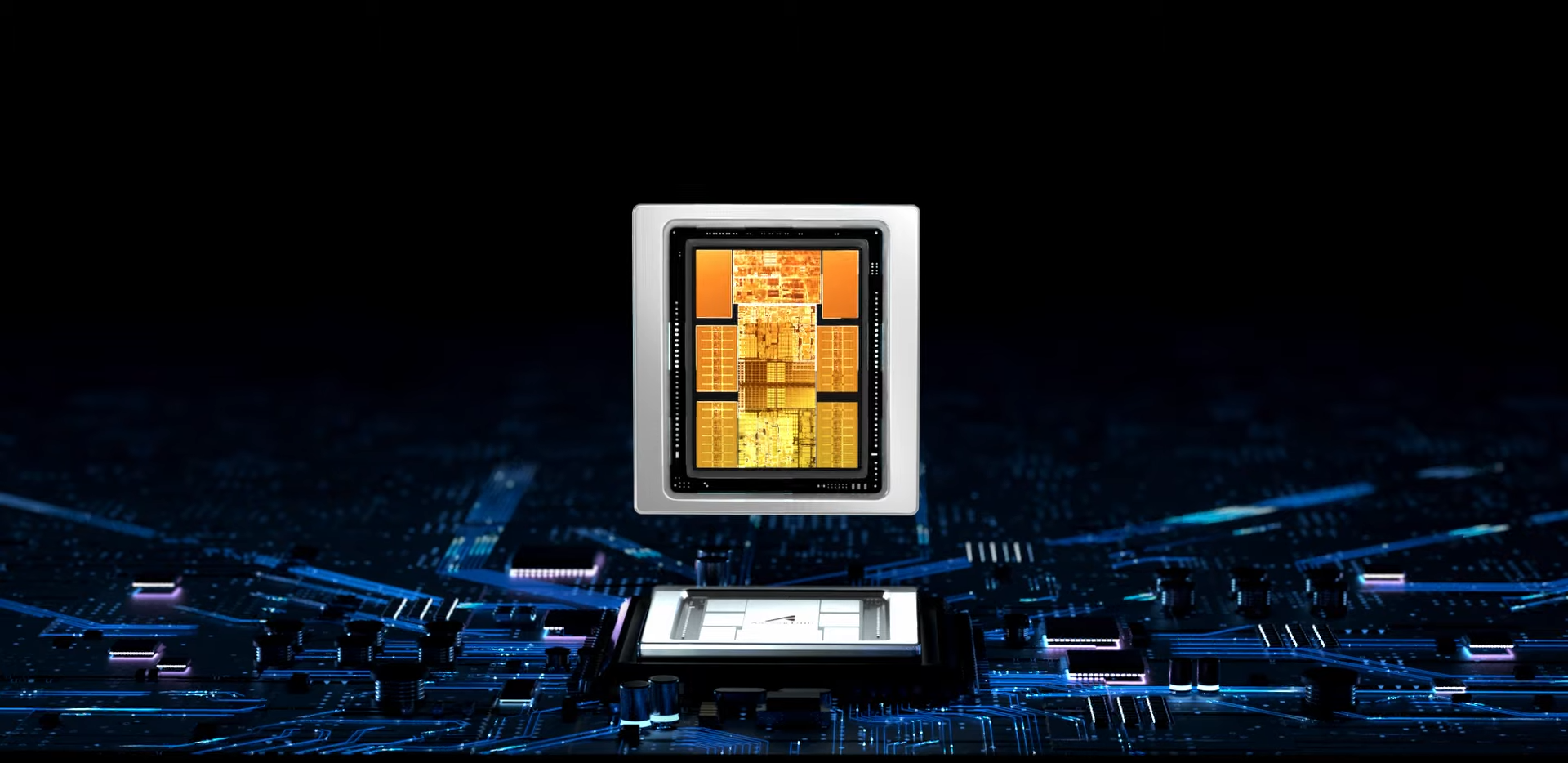
Huawei is gearing up to introduce an AI powerhouse into the market with its latest creation, the Ascend 910C chip. This innovative component is poised to take on the might of NVIDIA’s established H100 in China’s burgeoning AI sector.
Huawei’s initiative comes as a strategic move to capture a significant share of NVIDIA’s market. The Chinese AI industry has experienced a significant boom within a short time frame, encouraging NVIDIA to broaden their offerings with products like the H20 AI GPU tailored for the Chinese market. However, Huawei’s in-house Ascend AI chips have become prominent contenders, vying for market leadership against NVIDIA’s solutions.
The Wall Street Journal has recently shed light on Huawei’s ambitious plan to set a new benchmark in the AI chip segment with the Ascend 910C. Touted as comparable to the NVIDIA H100 AI GPU, the Ascend 910C is anticipated to intensify the marketplace dynamics. This chip is expected to measure up to the performance levels of the H100, which, prior to US sanctions, enjoyed notable success and continues to be a relevant player in the AI chip industry.
Despite facing production delays with its existing chips and the omnipresent threat of further restrictions from the US government, Huawei remains persistent. The company’s outlook is looking promising, buoyed by rumors of large initial order projections. Huawei’s new AI chip is reportedly catching the eye of tech titans such as ByteDance and Baidu. With rumored orders of 70,000 units amounting to around $2 billion, it reflects a unit price of approximately $28,000. These orders would signify a robust market entry for the 910C, highlighting its appealing potential against high-priced competitors.
Supplementing Huawei’s optimism are suggestions from Dylan Patel of SemiAnalysis that the Ascend 910C might offer superior performance when compared to NVIDIA’s B20 “Blackwell” AI chip. This speculation presents Huawei with an opportunity to grab a larger slice of the AI market, particularly as rumors indicate that the Blackwell B20 may not secure approval from the US regulatory body.
With sights set on selling between 1.3 to 1.4 million units of the Ascend 910C by the year 2025, Huawei’s ambition is clear. NVIDIA, however, finds itself in a tricky position. Political tensions have strained its ability to dominate in China, and the rise of domestic alternatives, including Huawei’s latest offering, are heating up the competitive landscape.
It remains to be seen how the scenario will evolve for both Huawei as it pushes forward with the Ascend 910C and for NVIDIA, as the company navigates the complex interplay between market demands and international politics. What’s certain is that the advent of the Ascend 910C underlines a significant phase in the AI technology race, highlighting homegrown innovation and strategic market adaptation.