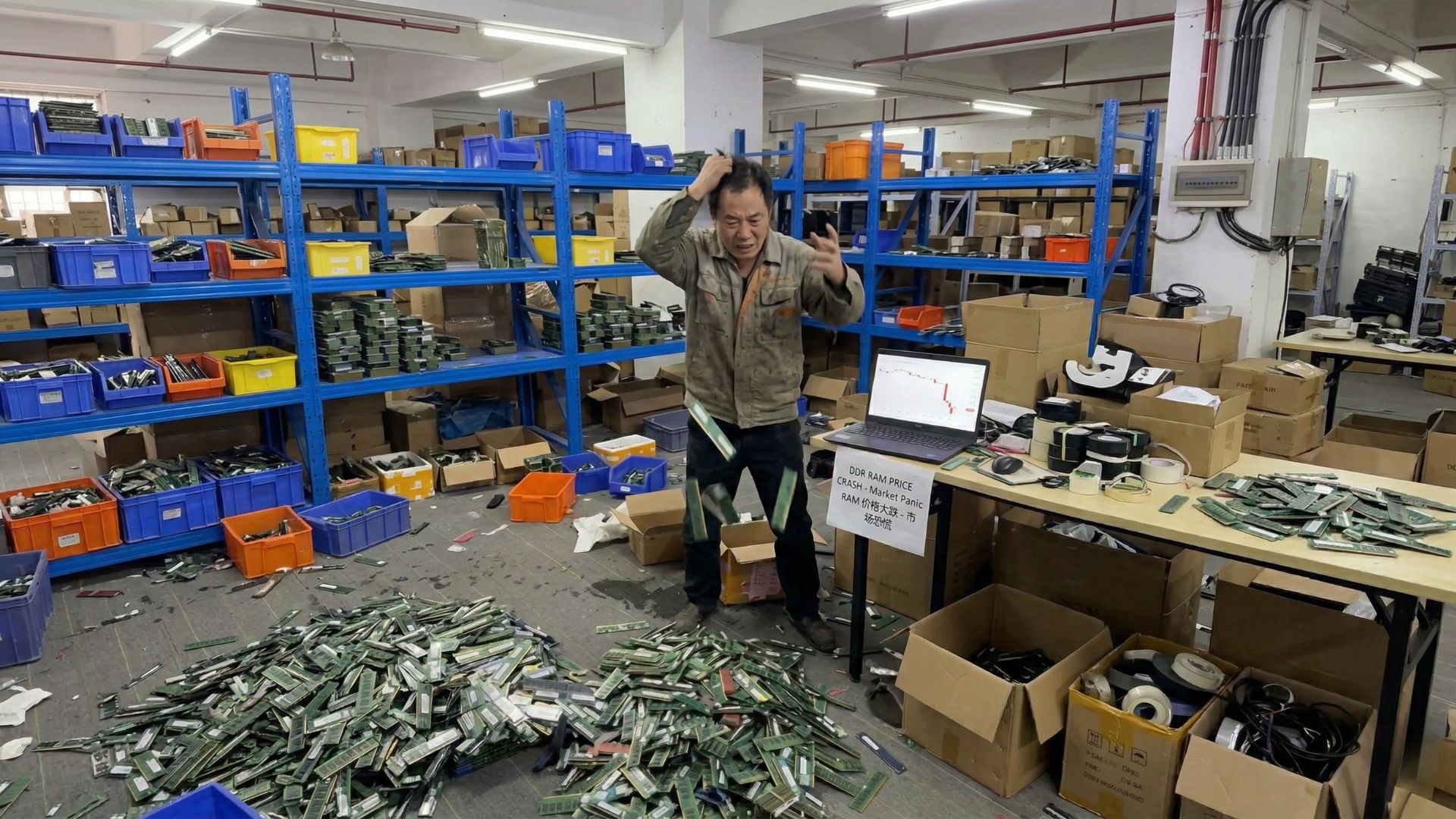
A new video making the rounds from a Chinese media account captures the mood shift now hitting the consumer memory market: DDR sellers who once stocked up expecting higher prices are suddenly panicking as RAM pricing tumbles, leaving them stuck with piles of inventory.
In the clip, a local vendor shows off what looks like a sizable stockpile of DDR memory modules and vents in frustration about how fast prices have fallen. Through automated translation, the message is blunt: memory prices have “taken a massive dive,” and the seller is worried there may be no path back to the higher price levels that would let them sell those parts without taking a loss. It’s the kind of reaction you see when a market that was fueled by optimism—and in some cases hoarding—gets hit with a sharp correction.
This lines up with what’s been happening across multiple retail markets recently, especially with DDR5 RAM. Over the past stretch, DDR5 pricing has dropped aggressively, and in some regions buyers are seeing discounts that put average prices more than 30% below previous highs. For everyday PC builders and gamers, that’s welcome news. For hoarders and resellers who bought in expecting a rebound, it’s the opposite: falling prices can trigger a domino effect where sellers rush to offload inventory before it loses more value, putting even more downward pressure on pricing.
What makes the situation more interesting is that this price weakness appears to be concentrated in consumer and retail channels rather than the entire memory industry. Enterprise demand for DRAM continues to grow, driven by ongoing investment in servers and data infrastructure, and there’s little sign that broader demand disappears overnight. Market watchers have pointed out that the current pullback looks tied to softer near-term PC build demand and downstream companies working through existing inventory, not necessarily the end of a longer-term upward memory cycle.
So, should you buy DDR5 RAM now or wait?
It depends on your tolerance for risk. Retail pricing is clearly favorable at the moment, and if you’re upgrading a gaming PC or building a system soon, today’s deals may already represent strong value compared to recent months. At the same time, continued inventory digestion and seller panic could push prices down further in the short term—especially if more stockpilers decide to cut losses and sell quickly.
A practical approach for most buyers is simple: if you need RAM now, current DDR5 prices are compelling enough that buying isn’t a bad move. If your upgrade can wait, monitoring prices for a short period could pay off—but there’s no guarantee the market will keep sliding, particularly if supply tightens or demand rebounds faster than expected.