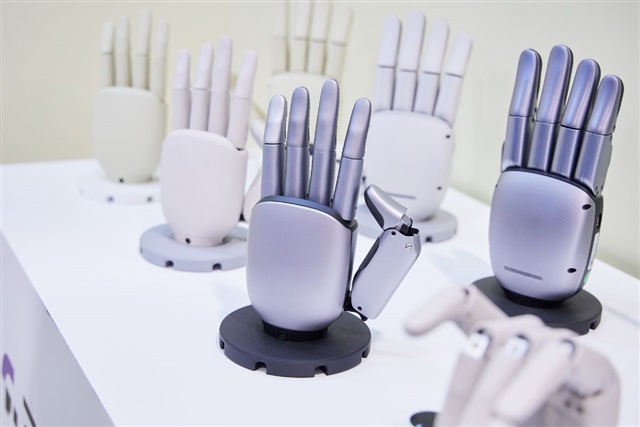
China’s Humanoid Robot Price War Is Making Dexterous Robot Hands Much Cheaper
China’s fast-moving humanoid robot industry is entering a new phase: a fierce price war that is rapidly lowering the cost of key components, especially dexterous robotic hands. As more companies race to build affordable humanoid robots for factories, service roles, research labs, and commercial use, suppliers are being pushed to deliver better parts at lower prices.
One of the biggest changes is happening in the market for humanoid robot hands. These advanced hands are among the most complex parts of a humanoid robot because they must combine strength, precision, flexibility, and durability in a compact design. They often include motors, sensors, gears, control systems, and high-precision mechanical structures that allow a robot to grasp, pinch, lift, and manipulate objects more naturally.
Until recently, these components were expensive, limiting their use to premium robotics projects or specialized research. But growing competition in China is cutting prices dramatically. In some cases, the cost of dexterous robot hands has reportedly fallen by around half, making the technology more accessible to a wider range of manufacturers and buyers.
This price drop could have a major impact on the global humanoid robot supply chain. Lower component costs may help robotics companies build more affordable machines, bringing humanoid robots closer to real-world commercial deployment. For buyers, this could mean cheaper robots for manufacturing, logistics, retail, healthcare support, education, and other industries exploring automation.
However, falling prices also create pressure for suppliers. Companies that once relied on high margins for specialized robotic parts now face intense competition. To survive, they must improve production efficiency, reduce material costs, and shorten development cycles without sacrificing reliability. In a market where humanoid robot designs are evolving quickly, suppliers that cannot keep up may struggle to stay relevant.
Rapid product cycles are another major force reshaping the industry. Robotics companies are updating designs at a fast pace as they test new models, improve motion control, increase battery efficiency, and refine artificial intelligence systems. This constant change means component makers must adapt quickly. A part that is competitive today may need to be redesigned within months to meet new performance demands or cost targets.
Despite the falling prices, technical barriers remain high. Humanoid robot hands may look simple from the outside, but they require advanced engineering. Precision motors, compact transmission systems, tactile sensors, and control algorithms must work together smoothly. If even one part is poorly designed, the hand may lack the accuracy or reliability needed for practical use.
High-precision components continue to separate leading manufacturers from weaker competitors. Companies with strong expertise in miniaturized motors, sensors, materials, and mechanical design are better positioned to compete not only in China but also in international markets. Meanwhile, low-cost producers may win short-term attention but could face challenges if their products fail to meet global quality standards.
The trend also highlights a bigger shift in humanoid robotics. The industry is moving from experimental prototypes toward scalable production. As costs fall and supply chains mature, humanoid robots may become less of a futuristic concept and more of a practical tool for businesses. Hands are especially important in this transition because manipulation is one of the hardest tasks for robots to perform. Walking is impressive, but the ability to pick up tools, sort items, open doors, and handle delicate objects is what makes humanoid robots useful in everyday environments.
For global buyers, China’s price war may bring both opportunities and risks. Lower prices can reduce the cost of entry and speed up adoption, but buyers will need to evaluate product quality carefully. The cheapest component is not always the best choice, especially for robots expected to work long hours in demanding settings.
As competition intensifies, the humanoid robot market is likely to see more consolidation, faster innovation, and continued pressure on prices. The companies that succeed will be those that can balance affordability with precision, reliability, and scalable production.
China’s robotics sector is sending a clear signal: the race to build practical humanoid robots is accelerating, and the cost of critical parts is coming down quickly. If this trend continues, dexterous robot hands could become a standard, affordable component in the next generation of humanoid machines, helping push the industry closer to widespread real-world use.


